


SURABAYA, JurnalPost.com — Public speaking skills and English proficiency are increasingly vital competencies for the younger generation. These abilities not only support academic learning but also help students build the confidence to express their ideas to others.
Efforts to strengthen these skills were highlighted during the English Speech Competition, part of the Jatim Fest 2026 series held at Grand City Surabaya on Sunday (4/10/2026).
Zahrotul Munawwaroh, a lecturer from the Communication Science Study Program at the Universitas Pembangunan Nasional “Veteran” Jawa Timur (UPNVJT), served as one of the judges for the event.
The competition, organized through a collaboration between Jatim Fest and the environmental organization Tunas Hijau, saw participation from elementary and junior high school students from across East Java.
English Language Meets Environmental Issues
The English Speech Competition featured the theme “Save the Forest, East Java is Full of Charm.”
Through this theme, participants were challenged not only to demonstrate their English language skills but also to present ideas regarding environmental conservation and actions that can be taken to protect forest areas in East Java.
Participants had to package environmental messages into speeches that were communicative, easy to understand, and capable of capturing the audience's attention.
The involvement of communication academics in the judging process provided a broader perspective, as speech quality is not determined solely by language mastery.
Public speaking also involves the ability to structure messages, build arguments, utilize nonverbal communication, and persuade the audience.
Public Speaking Is More Than Just Being Brave
During the event, participants were evaluated based on several criteria.
In addition to content and thematic relevance, the assessment covered grammar and vocabulary, pronunciation and fluency, gestures, eye contact, vocal usage, creativity, and persuasiveness.
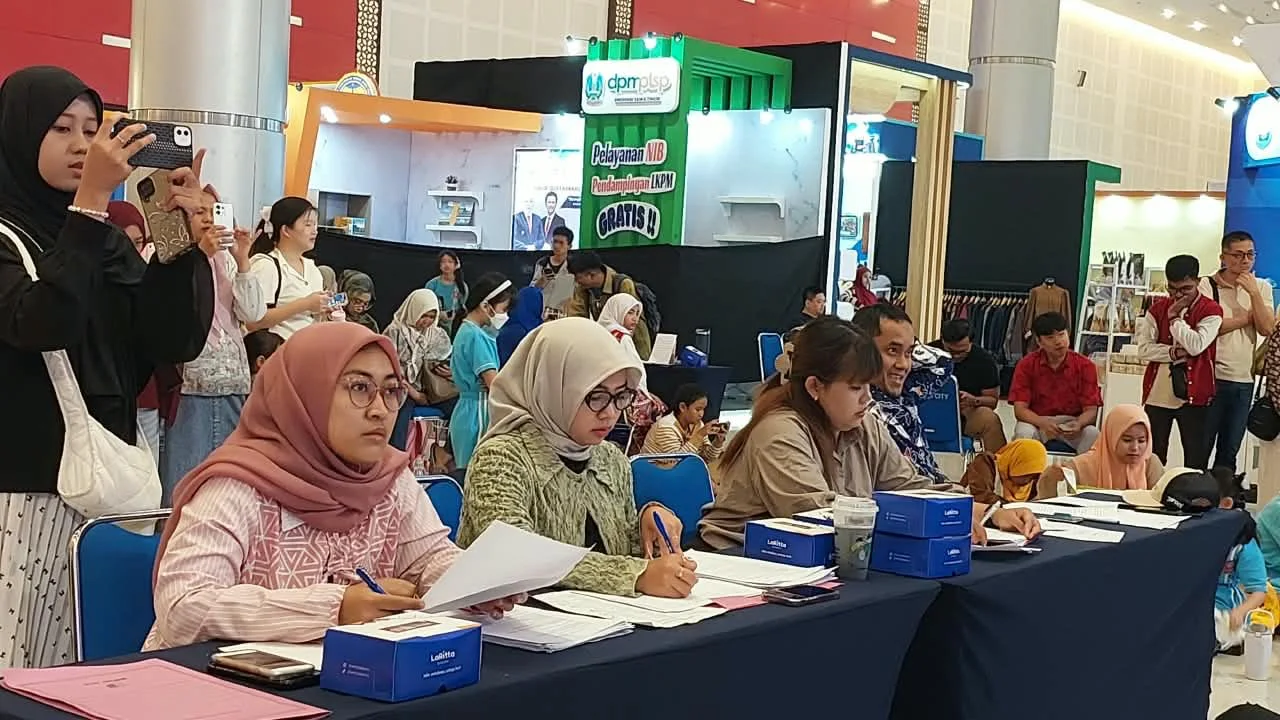
Participants were also permitted to use props to support their performance, provided they did not disrupt the competition.
Zahrotul noted that the participants showed good preparation in both material development and their stage presence.
Several students were able to combine English proficiency with communicative delivery techniques. Some participants also used props to reinforce the messages in their speeches.
The experience of performing in a public space is considered important because public speaking is not just about speaking loudly.
It encompasses the ability to manage self-confidence, structure messages systematically, read the audience, use body language, and convey ideas persuasively.
English Skills Are Increasingly Needed
Strengthening English skills from a young age is increasingly relevant to educational developments and global communication needs.
Foreign language proficiency allows students to access broader information while communicating with people from diverse backgrounds.
Therefore, English learning should go hand-in-hand with practical communication exercises such as speeches, presentations, discussions, and competitions.
This approach allows students to not only understand vocabulary and grammar but also become accustomed to using them to express ideas directly.
Practical Experience Builds Confidence
Activities like the English Speech Competition provide students with the opportunity to test their learned skills in real-world situations.
Speaking on stage in front of judges and an audience offers a different experience compared to practicing in a classroom.
Students are challenged to control nervousness, maintain eye contact, manage intonation, remember speech structures, and ensure their message is received by the audience.
This experience can be a crucial part of building confidence during school years.
The involvement of UPN “Veteran” Jawa Timur communication lecturers in the event also serves as a form of applying communication science to the community.
Academic and professional perspectives in communication can be used to provide assessments while encouraging students to understand that the quality of a speech lies not only in the language used but also in how the message is delivered.
Through such activities, the development of communication skills does not stop at theoretical learning.
Students gain a space to practice speaking, convey ideas about environmental issues, and improve their English proficiency.
This experience is expected to equip the younger generation to be more confident in expressing opinions, possess strong communication skills, and be better prepared for future educational and professional demands.

Comments 0
Write a Comment Share your response