


JurnalPost.com - The waste problem in Indonesia does not end with the high volume of trash generated daily. A more fundamental issue is how that waste is managed after it leaves homes, markets, industrial areas, and public spaces.
Final Disposal Sites (TPA) should be part of a waste management system that is safe for the environment and the public. However, in several regions, the practice of open dumping or open dumping remains a problem, even though the state has regulations that strictly prohibit such practices.
Article 29 paragraph (1) letter f of Law Number 18 of 2008 concerning Waste Management states that everyone is prohibited from handling waste through open dumping at final disposal sites.
This provision has provided clear direction. Waste should not simply be collected, piled up, and left in the open without an adequate management system.
The problem is how to ensure that this prohibition is truly implemented, including at landfills within the local government management system.
When Rules Meet Reality
Law Number 18 of 2008 grants authority to regency/city governments in organizing waste management. Among other things, local governments have the authority to organize waste management and determine the location of final disposal sites.
This means that local governments are not just parties providing land to accommodate waste. There is an inherent responsibility to ensure that the management system operates in accordance with applicable norms and provisions.
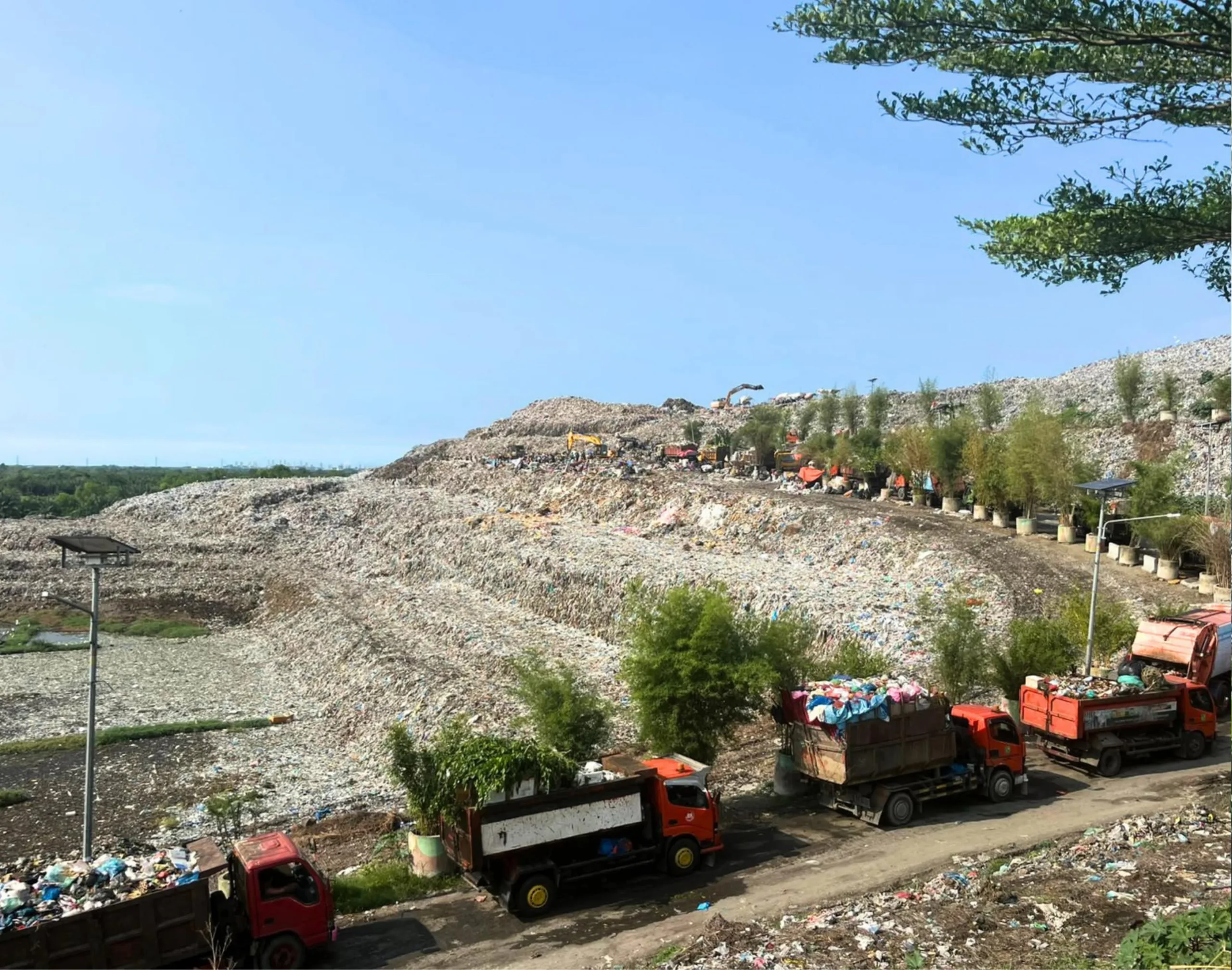
This is where the issue of open dumping becomes important to view, not merely as a technical waste issue, but also as a matter of law and government governance.
When the state already has rules prohibiting open dumping, but there are still landfills that use or have a history of using such methods, questions arise regarding the effectiveness of legal implementation and oversight.
In other words, the issue is not just whether rules have been made, but whether those rules are actually carried out in the field.
TPA Terjun and Regional Issues
This issue can be seen in Medan City through the existence of the Terjun Landfill. This landfill previously used an open dumping system and faced various challenges, including high waste volumes and limited storage capacity.
This condition shows that the issue of landfill management does not only occur in metropolitan areas like Jakarta. Other cities also face similar challenges, namely increasing waste volumes that are not always matched by the development of capacity and management systems.
The Medan City Government has sought to change the landfill management system toward methods that are more in line with environmental provisions. These efforts include facility development and plans to implement more modern waste management systems.
This change is important because the issue of open dumping cannot be solved just by expanding storage land. Increasing capacity without improving the system has the potential to delay the same problem for several years to come.
What is needed is a paradigm shift, from merely dumping waste to managing it in a planned, safe, and sustainable manner.
Bantar Gebang and the Risks Behind Waste Piles
A similar issue can be seen from the waste management at the Integrated Waste Treatment Site (TPST) Bantargebang, Bekasi City, which for years has been one of the main locations for processing and storing waste from the Jakarta area.
The massive volume of waste makes the piles in the area a constant concern. On March 8, 2026, a waste pile collapse occurred that caused fatalities. The incident again showed that waste management issues can develop into threats to human safety.
Waste piles that are not managed optimally do not only cause aesthetic or environmental comfort issues. Piles of waste can present various risks, ranging from landslides, fires, foul odors, pollution due to leachate, to the formation of gas from the decomposition process of organic waste.
Therefore, the safety of the community, workers, and other parties operating around the landfill should be an inseparable part of waste management policy.
The incident in Bantargebang also shows that landfill capacity and its management methods are closely related to safety. The larger the volume of incoming waste, the higher the need for adequate management systems, oversight, and risk control.
However, the size of the waste pile does not in itself prove that a facility is practicing open dumping. Assessments regarding management compliance still require an examination of the operational methods and environmental standards used.
More Than Just a Cleanliness Issue
Waste issues are often categorized as cleanliness issues. In fact, the impact is much broader and touches on various aspects of people's lives.
Suboptimal landfill management has the potential to cause soil and water pollution through leachate, air pollution, foul odors, fires, and the risk of landslides.
In addition, organic waste that undergoes decomposition in anaerobic conditions can produce methane gas, which contributes to climate change if released into the atmosphere.
Thus, waste management is directly related to environmental protection, public health, and efforts to maintain ecosystem sustainability.
This is in line with Article 28H paragraph (1) of the 1945 Constitution of the Republic of Indonesia, which guarantees the right of every person to obtain a good and healthy environment.
This right should not stop as a constitutional norm. The guarantee of a good and healthy environment must be reflected in public policy and services, including how the government manages the waste produced by the community every day.
In this context, the existence of a safe landfill managed according to standards is not just a technical necessity, but part of fulfilling the public's right to a good and healthy environment.
When the Government Becomes Both Supervisor and Operator
There is another issue that needs attention in the waste management system in Indonesia, namely the position of the government as the party that has the authority to regulate as well as the responsibility for implementation.
The government has the authority to set policies and conduct oversight. However, at the same time, local governments are also directly involved in providing waste services, including landfill management.
This condition makes oversight a very important element.
When violations are committed by the public or business actors, the government has instruments to provide guidance, supervision, and law enforcement in accordance with its authority.
However, when problems arise in a system organized by the government itself, a more complex question arises: who ensures that the government follows the rules it has made?
This is where the principle of the rule of law gains its relevance.
Rules do not only apply to the public, but must also be a guide for the government in exercising its authority. Every government policy and action should have a legal basis and be carried out responsibly.
The prohibition of open dumping should not stop as a normative provision in the law. The prohibition needs to be translated into policy, budget allocation, infrastructure development, oversight, and concrete actions in the field.
Without such steps, the existence of regulations risks becoming only a measure of administrative compliance, while environmental problems persist.
From Prohibition to Enforcement
Law Number 18 of 2008 has provided a clear legal basis regarding the prohibition of open dumping.
On the other hand, Law Number 32 of 2009 concerning Environmental Protection and Management provides a legal framework regarding environmental protection, prevention of environmental pollution and damage, and supervision of activities that have the potential to cause environmental impacts.
Government Regulation Number 22 of 2021 is also one of the implementing instruments in the implementation of environmental protection and management.
However, the existence of these various regulations will ultimately be tested through their implementation.
Landfill management shows that waste handling requires more than just prohibitions. It requires local government capacity, availability of infrastructure, adequate funding, processing technology, oversight systems, and consistent law enforcement.
The government also needs to ensure that changes in the management system do not just stop at planning or building new facilities. The success of management must be measurable through operational conditions, reduction of environmental impacts, and public safety.
At the same time, the community has an important role in reducing waste generation and managing it from the source.
Sorting household waste, reducing the use of single-use items, and increasing reuse and recycling practices can help reduce the burden that must be handled at the landfill.
Thus, the responsibility for waste management is a shared responsibility, even though the authority and obligations of each party are different.
Measuring the Effectiveness of Rules from the Field
The issue of open dumping ultimately brings us to a bigger question: how to measure the effectiveness of a rule?
A prohibition can be considered strong normatively because it has a clear legal basis. However, its effectiveness is also determined by the extent to which the rule is implemented, obeyed, and supervised.
When prohibited practices are still found, what needs to be examined is not only the behavior of the public, but also the system that allows such practices to continue.
In the context of landfill management, local governments have a strategic position. The government is not only tasked with providing a place for waste generated by the community, but also ensuring that the place is managed without sacrificing the environment, health, or human safety.
Bantargebang and TPA Terjun are illustrations that this issue has broad dimensions. Both show that waste management is closely related to facility capacity, environmental risks, safety, and the effectiveness of government governance, although the conditions and management methods of the two locations cannot simply be equated.
Therefore, the conversation about waste should not just stop at the question of how much waste is produced by the community every day.
An equally important question is whether the government has managed that waste in accordance with the rules it made itself.
In a rule of law, the quality of a rule is not only determined by how firm the wording of its articles is, but also by how consistently the rule is implemented.
Landfill management is not just a matter of dumping trash. Such management is part of the state's responsibility in protecting the environment, health, and public safety.
When the state has prohibited open dumping, the next job is not just to make new rules, but to ensure that existing rules are actually working.
Ultimately, the success of waste management is not sufficiently measured by how much waste is successfully transported from residential areas, but also by how that waste is processed without causing new problems for the environment and the community.

Comments 0
Write a Comment Share your response