


JAKARTA, JurnalPost.com — The rise in beef prices across several traditional markets in the Jakarta, Bogor, Depok, Tangerang, and Bekasi (Jabodetabek) area has not necessarily been followed by an increase in the quantity of goods offered by traders. Amidst soaring prices, some traders have chosen to reduce their stock due to declining sales and the rising capital required for procurement.
This condition is evident in field data from Pasar Anyar and Pasar Ciputat. Beef prices, which previously hovered around Rp130,000 per kilogram, have increased to between Rp145,000 and Rp150,000 per kilogram.
However, this price hike has not prompted traders to increase the amount of meat sold. At Pasar Anyar, the volume of slaughter, which previously reached about one cow, has dropped to half a cow, consistent with a reported decline in sales of approximately 50 percent.
This phenomenon demonstrates that price changes are not always directly followed by changes in supply. Consumer purchasing power, procurement costs, limited capital, and dependence on imported cattle supplies all influence traders' decisions.
Beef Prices Rise in Several Markets
The increase in beef prices at the trader level is consistent with several food price records in the Jabodetabek area and its surroundings.
Based on data compiled in research materials, the average price of beef hindquarters in Banten was recorded at Rp144,375 per kilogram on September 23, 2026. Meanwhile, in DKI Jakarta, the price of the same commodity reached Rp143,343 per kilogram on August 31, 2026.
Both figures are above the government's reference price of Rp140,000 per kilogram, which is used as a benchmark in the research.
Meanwhile, the price of grade 2 beef in West Java was recorded at Rp148,900 per kilogram, although the recording date was not included in the initial data.
Table 1. Comparison of Beef Prices by Location and Data Source
| Location | Price per Kilogram | Notes |
|---|---|---|
| Pasar Anyar and Pasar Ciputat | Rp145,000–Rp150,000 | Field data |
| DKI Jakarta | Rp143,343 | Hindquarters, August 31, 2026 |
| Banten | Rp144,375 | Hindquarters, September 23, 2026 |
| West Java | Rp148,900 | Grade 2 |
| Government reference price | Rp140,000 | Benchmark in research |
Price records from several other markets also show significant variation.
In January 2026, the price of beef at Pasar Palmerah was recorded at around Rp130,000 per kilogram. Entering August 2026, the price at Pasar Rumput reached Rp150,000 per kilogram, with traders' purchase prices at around Rp145,000 per kilogram.
At Pasar Tomang Barat, prices were reported to range from Rp160,000 to Rp180,000 per kilogram. Meanwhile, at Pasar Kebayoran Lama, prices were in the range of Rp138,000 to Rp150,000 per kilogram.
These price differences must be understood by considering the location, time of recording, and the type of meat traded. Therefore, all figures cannot be compared directly without considering the characteristics of each data set.
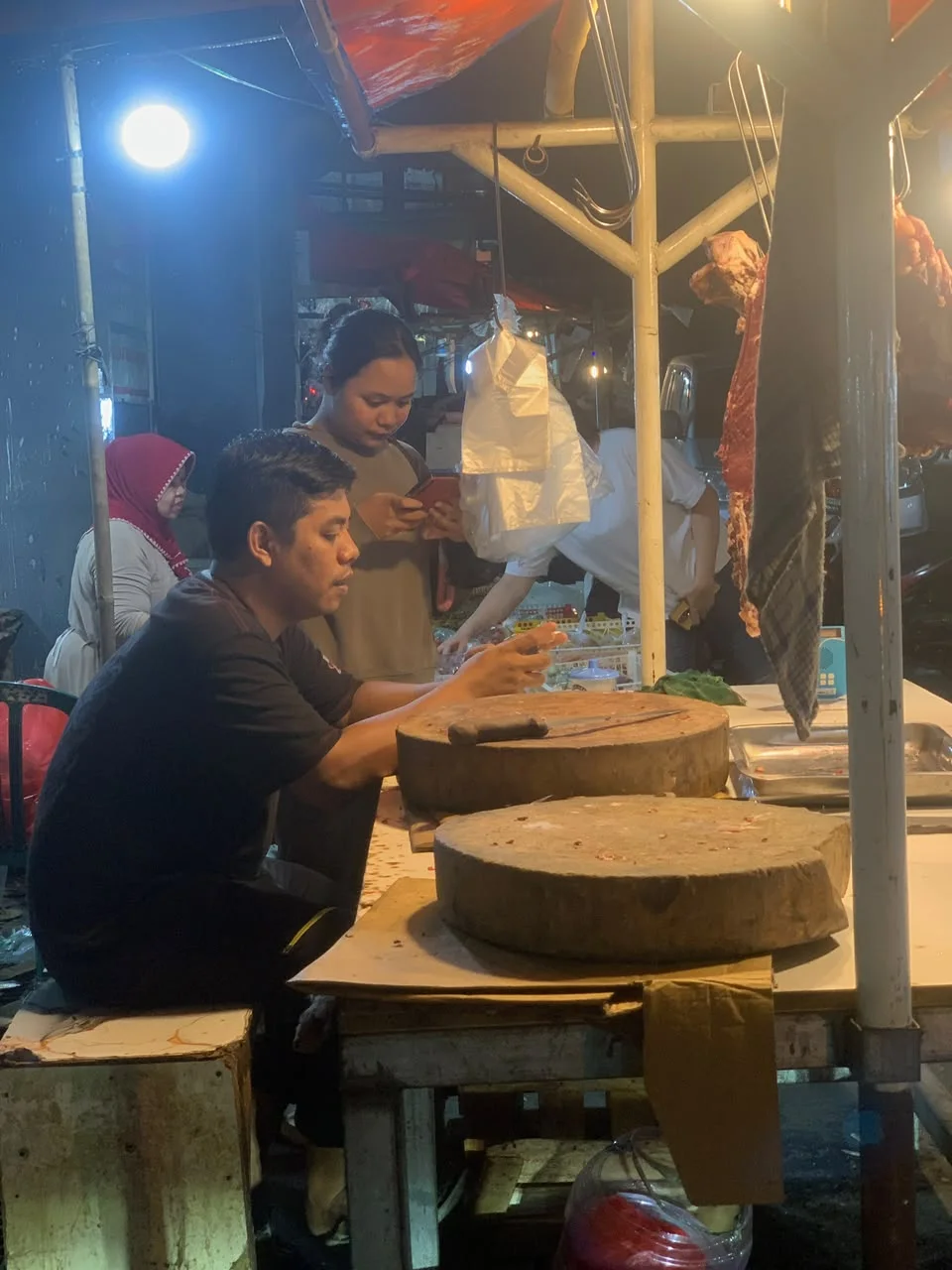
Purchasing Power Weakens, Trader Sales Decline
The rise in beef prices has put pressure on public consumption patterns. When prices increase, some buyers begin to adjust their spending amounts to their respective economic capabilities.
In field data, the decline in sales at several stalls was reported to reach approximately 50 percent.
Purchasing activity is generally busier in the morning, especially by retail traders and food business operators. By midday, the number of buyers tends to decrease.
Changes in consumer behavior are seen in the reduced amount of meat purchased. Consumers who previously bought one kilogram have started reducing their purchases to half a kilogram.
Some buyers also choose cheaper types or cuts of meat as an alternative.
Similar adjustments are occurring among food business operators. To maintain product selling prices, some operators are reducing portion sizes, cutting down the amount per serving, or using mixtures of fat and offal.
Businesses with stable sales levels tend to maintain their purchasing. Conversely, businesses experiencing a decline in customers more frequently reduce their raw material purchases.
On the other hand, there are lower-priced animal protein alternatives.
The price of broiler chicken in DKI Jakarta traditional markets was recorded at Rp43,200 per kilogram on September 11, 2026. Meanwhile, in Banten, the price of broiler chicken was Rp39,208 per kilogram on September 23, 2026.
These prices are about 70–73 percent lower than the price of beef hindquarters in the respective regional benchmark data.
Some traders also provide mixed ground meat at prices around Rp120,000 to Rp140,000 per kilogram.
This price difference provides options for consumers, while also showing how changes in the price of one commodity can affect demand for substitutes.
Traders Reduce Stock to Mitigate Risk of Loss
The decline in the number of buyers makes traders more cautious in determining inventory.
Beef is a commodity that requires relatively large capital and carries the risk of quality degradation if stored for too long.
In the research materials, a local slaughter cow with a live weight of about 250–350 kilograms is estimated to produce a carcass of about 50–52 percent of its live weight, or about 130–180 kilograms.
If a trader only takes half a cow, the carcass amount obtained is estimated to be around 65–90 kilograms, with an additional 10–15 kilograms of offal if it is also traded.
The value of this inventory is estimated to reach Rp9 million to Rp16 million, depending on the type, weight, and price of the commodity in each market.
The large amount of capital that must be spent makes traders consider the risks when demand is weakening.
If the meat is not sold as expected, traders risk losses due to quality degradation, storage costs, or the need to sell goods at lower prices.
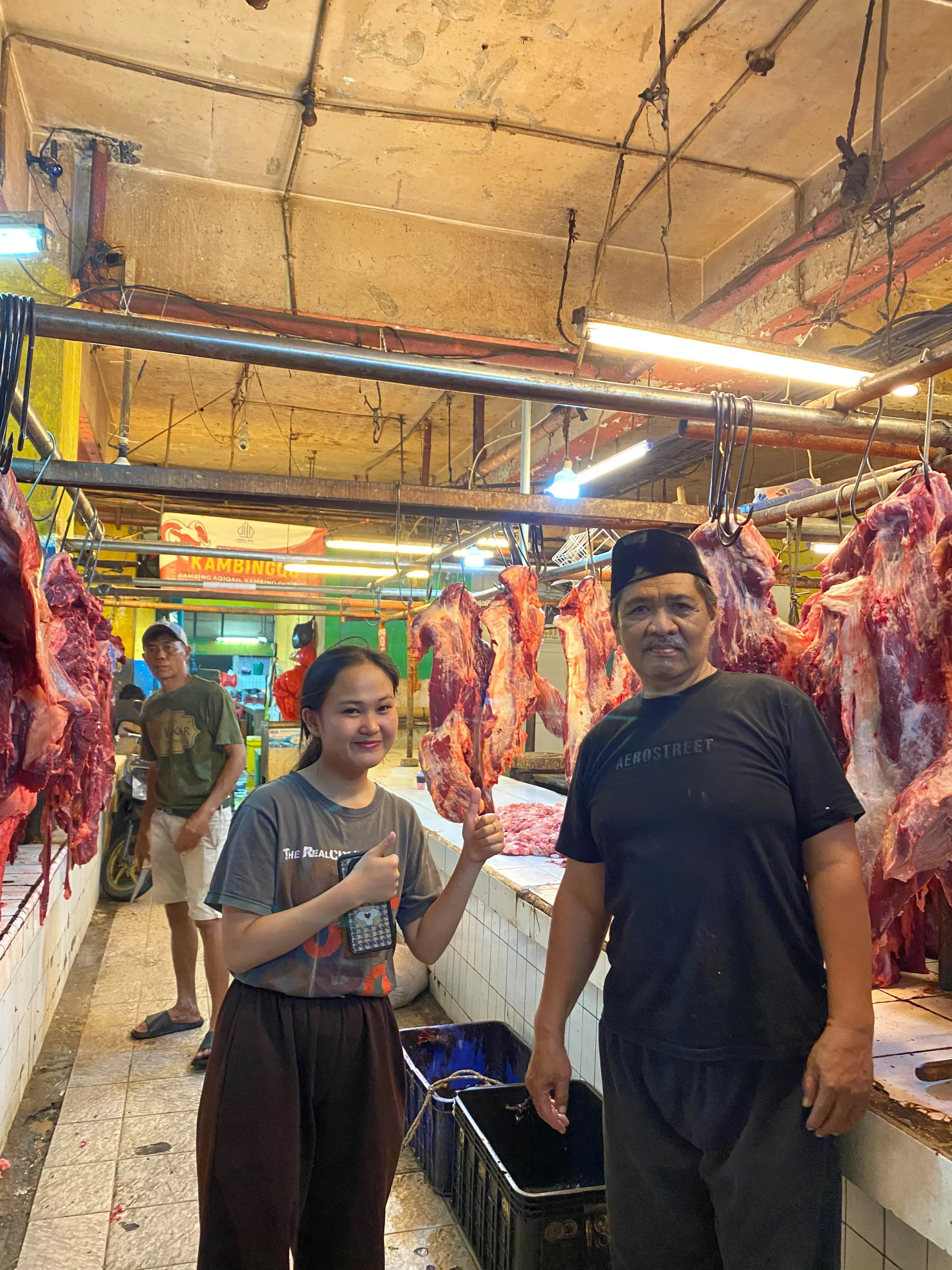
Therefore, some traders choose to buy meat from wholesalers according to daily needs rather than slaughtering a whole cow at once.
Inventory conditions at each stall are not always the same. Some traders experience supply limitations, while other traders state that stock is relatively normal outside of periods of increased demand, such as leading up to Lebaran.
In addition to the purchase price of meat, traders also face operational costs.
Daily expenses for table rental, levies, electricity, ice cubes, plastic bags, transportation, and assistants are estimated to range from Rp125,000 to Rp220,000.
When turnover decreases, these costs must still be paid. At Pasar Anyar, there are traders who have reduced their use of labor, eventually carrying out sales activities themselves.
This condition shows that the decision to reduce stock is not solely influenced by changes in selling prices, but also serves as a trader's strategy to maintain business continuity.
Price Pressure Originates from the Supply Chain
The issue of beef prices does not only occur at the market trader level but is also related to supply conditions from farmers, feedlot companies, slaughterhouses, and distributors.
On January 22–24, 2026, the Indonesian Beef Traders Association (APDI) of DKI Jakarta held a three-day strike.
The action was triggered by the rise in cattle prices from feedlot companies, feedlotwhile public purchasing power was considered to be weakening.
In the records collected, a number of beef stalls at Pasar Palmerah and Pasar Cimanggis were reported to be empty during the strike.
The Network of Indonesian Beef Traders and Entrepreneurs Association (JAPPDI) stated at the time that about 90 percent of traditional market traders and slaughterhouses in Jabodetabek participated in the action.
On January 22, 2026, an online meeting involving the Ministry of Agriculture, the National Food Agency, Gapuspindo, and feedlot companies reached an agreement on a live cattle price of Rp55,000 per kilogram until Eid al-Fitr 2026, without purchase quota restrictions.
Initial data shows that the price of live cattle increased from about Rp47,000 per kilogram in September–October 2025 to Rp53,000 in December 2025.
The price then hovered in the range of Rp55,000 to Rp56,000 per kilogram in February–March 2026.
Thus, there was an increase of about 17–19 percent compared to the September–October 2025 period.
Additional pressure came from the price of Australian feeder cattle, which was reported to have increased from about US$3.3–3.5 to US$3.8 per kilogram.
During the period discussed, the rupiah exchange rate was in the range of Rp16,800 to Rp17,000 per US dollar.
Changes in prices and exchange rates can affect the cost of procuring imported cattle.
Carcass prices at slaughterhouses were also said to have increased from about Rp85,000–Rp90,000 to Rp110,000 per kilogram.
This series of cost increases left market traders with limited room to lower selling prices.
Import Dependence Limits Supply Adjustment
Dependence on imported cattle is one of the structural problems in the national beef trade.
The study by Suhendar and Sukardi (2022), referenced in the research materials, states that about 30–40 percent of domestic beef demand depends on imports, especially to meet demand in Jakarta and its surroundings.
Meanwhile, the study by Firman et al. (2018) explains that the availability of beef in the Jabodetabek area is heavily influenced by supplies from outside the province because the local cattle population is not yet sufficient to meet demand.
Increasing local cattle production cannot be done instantly either.
The reproductive and growth cycle of cattle requires a relatively long time. The gestation period lasts about nine months, while rearing to reach slaughter weight requires additional time depending on the type of livestock and the farming system.
This condition makes it difficult to increase beef supply quickly when market prices rise.
In addition to production issues, distribution from farming areas to consumption markets also requires adequate transportation, storage, and slaughter infrastructure.
Government Response and Debate on the Impact of the MBG Program
Facing price and supply pressures, the government is said to have taken a number of oversight measures on the beef trade chain.
In the initial research data, the government warned of the possibility of revoking licenses for importers engaged in unfair trade practices.
Field inspections were also reported to have been carried out at the Dharma Jaya Slaughterhouse, Cakung, East Jakarta.
On the other hand, data cited from the Jakarta Food Security Agency stated that there was no shortage of beef, although retail prices increased by about 0.17 percent to Rp138,227 per kilogram during the recording period.
The difference between government data and the experience of traders shows the importance of distinguishing between aggregate supply availability and distribution conditions in each market.
The Free Nutritious Meal (MBG) program also appeared in discussions regarding beef demand.
However, traders' views regarding the influence of the program are not uniform.
In the research materials, there was a Pasar Rumput trader who made claims regarding the use of 19,000 cows per day for the MBG program. That figure is unverified and cannot be used as a basis for concluding the magnitude of the program's meat requirements.
Other traders stated that the implementation of the MBG did not directly reduce the supply of meat to their stalls.
Thus, the relationship between the MBG program and changes in beef prices or supply still requires more complete data before conclusions can be drawn.
Why Do Prices Rise but Supply Does Not Increase?
In economic theory, the law of supply explains that when the price of a good increases, the quantity that producers or sellers are willing to offer tends to increase, assuming other factors remain constant.
However, conditions in several Jabodetabek traditional markets show a more complex situation.
Based on field data, beef prices increased by about 11.5 percent when moving from Rp130,000 to Rp145,000 per kilogram.
If the price reaches Rp150,000 per kilogram, the increase is about 15.4 percent.
Nevertheless, the volume of meat provided by some traders has actually decreased.
This condition does not necessarily contradict the law of supply. Changes in the quantity of goods sold can occur due to several factors simultaneously, including declining demand, changes in production costs, and supply limitations.
When public purchasing power weakens, traders face the risk of unsold inventory. At the same time, purchase costs from suppliers remain high.
As a result, some traders have neither the incentive nor the financial ability to increase stock.
In terms of commodity characteristics, beef supply in the short term tends to be difficult to adjust quickly.
These obstacles include the need for cattle fattening before slaughter, high purchase capital, limited storage facilities, and the risk of product spoilage.
The technology used by traders is also relatively simple, such as freezers for storage, telephones and WhatsApp for receiving orders, and manual cutting equipment.
In field data, the process of slaughtering half a cow is said to take about one to two hours.
This shows that sales capacity depends not only on equipment but also on the availability of raw materials, capital, labor, and the number of buyers.
Conceptually, this condition indicates supply rigidity in the short term. However, measuring the elasticity of supply precisely still requires more complete price and supply quantity data while controlling for changes in demand and other factors.
Beef Price Outlook and Future Challenges
In the short term, beef price movements are still influenced by domestic supply conditions, import costs, the rupiah exchange rate, and public purchasing power.
If the price of feeder cattle in the international market increases again or the rupiah exchange rate weakens, procurement costs have the potential to rise and put additional pressure on selling prices.
Conversely, supply stabilization and improved distribution can help reduce cost pressures at the trader level.
In the long term, increasing local farming capacity is one of the steps that can be considered.
The study by Suhendar and Sukardi (2022) highlights the potential of livestock partnership models, while Priyanto et al. (2023) discuss opportunities for increasing local cattle productivity, including Bali cattle and Ongole Crossbreed (PO) cattle.
Strengthening production also needs to be followed by improvements in the supply chain, starting from slaughter, storage, to transportation that meets food safety standards and halal requirements, as is the concern in the study by Rahmadana and Basya (2025).
For traditional market traders, stability in purchase prices and supply certainty are important factors for maintaining business.
Meanwhile, for consumers, affordable prices determine the ability to meet household food needs.
The phenomenon of rising beef prices followed by stock reductions in several Jabodetabek markets shows that supply behavior in practice is not always simple.
High prices do not necessarily encourage traders to increase merchandise if demand is weakening and procurement costs are increasing.
Therefore, resolving the beef price issue does not only focus on retail prices but also needs to pay attention to production costs, distribution structures, supply availability, and public purchasing power.
Source Notes:
This article was compiled based on field data from Group 3 at Pasar Anyar, Pasar Ciputat, and Pasar Palmerah; food price data for DKI Jakarta, Banten, and West Java; and research materials on beef supply conditions in 2026.
Study references include Suhendar and Sukardi (2022), Firman et al. (2018), Priyanto et al. (2023), and Rahmadana and Basya (2025).
A number of figures, trader statements, and references in the initial materials have not been independently verified against their original sources.


Comments 0
Write a Comment Share your response