


JAKARTA, JurnalPost.com – Chicken meat is a primary source of animal protein for households across the Jakarta, Bogor, Depok, Tangerang, and Bekasi (Jabodetabek) region. Beyond its accessibility, it is generally more affordable than many other types of meat.
However, the current state of the chicken trade reveals a stark contrast between the consumer level and the producer level. In various traditional markets, rising prices have made shoppers more selective. Conversely, at the farm level, the price of live birds has plummeted below production costs due to an oversupply.
This disparity highlights a significant imbalance in the chicken supply chain, spanning production, distribution, and retail.
Price is the Primary Consideration for Consumers
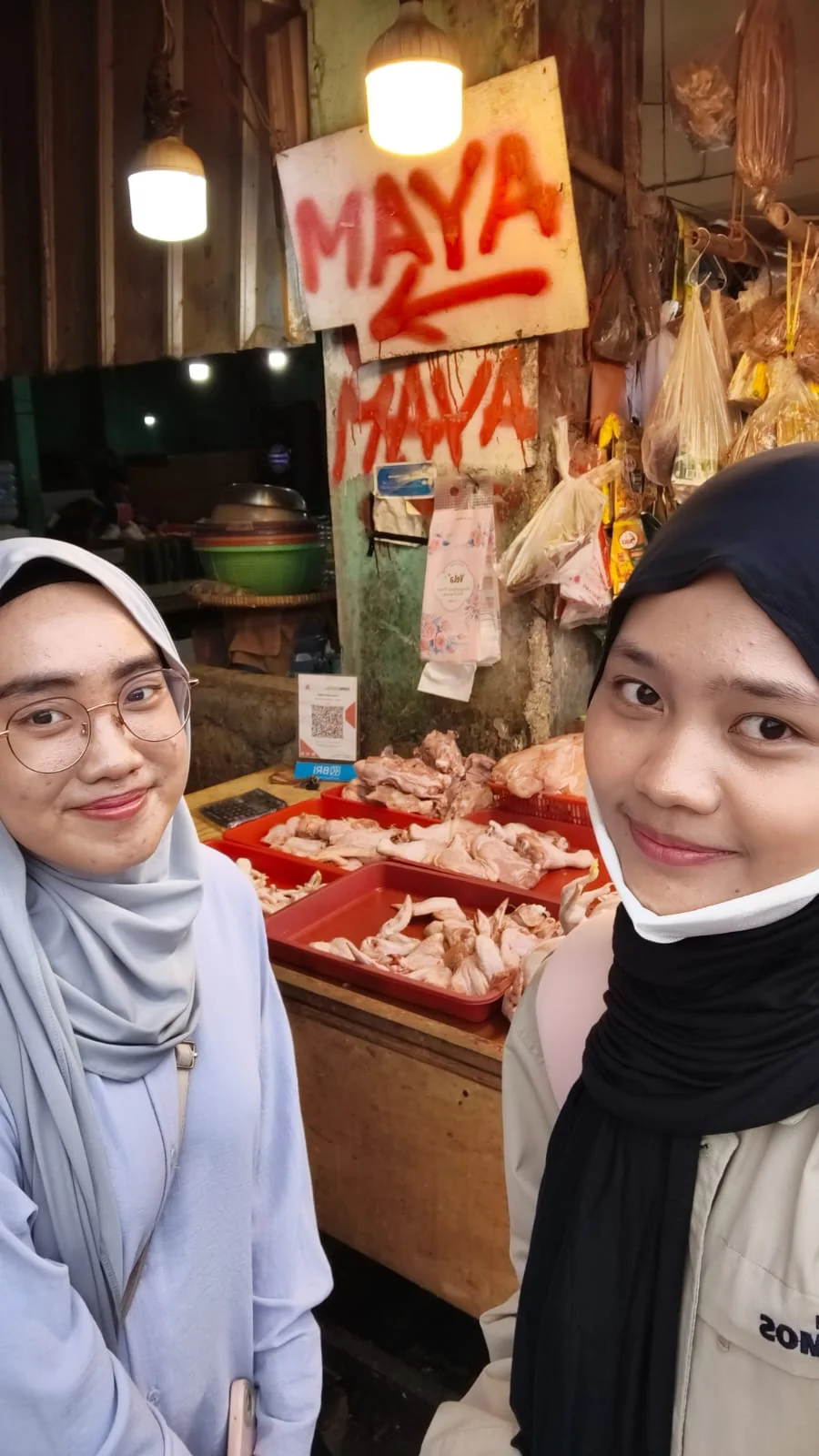
Observations across several traditional markets in Jabodetabek indicate that price is a key factor influencing consumer purchasing decisions for chicken.
At Lembang Market, chicken prices range from Rp40,000 to Rp55,000 per kilogram. Meanwhile, at Sipon Market, chickens are sold for between Rp38,000 and Rp45,000 per bird.
A similar situation exists at Cigudeg Market, where a price hike from Rp40,000 to Rp45,000 per kilogram has led some consumers to reduce their purchase volume.
At Ciputat Market, prices vary by size. Small chickens sell for Rp40,000–Rp43,000 each, medium-sized for Rp75,000, and large ones reach Rp85,000. During the Eid period, prices even hit Rp100,000 per bird.

In practice, the government's reference price of Rp40,700 per kilogram is not strictly followed by traders, as retail prices are influenced by procurement costs, bird size, and supply conditions.
A sharp price increase was also observed at Ceger Market in Pondok Aren, where prices rose from the Rp35,000–Rp40,000 range to Rp60,000 per bird.
This trend has reportedly caused a roughly 50 percent drop in trader turnover. One contributing factor is supply disruption caused by extreme weather, forcing traders to seek alternative suppliers at higher costs.
These price variations demonstrate how supply conditions, distribution costs, and market characteristics influence retail pricing.
Consumers Switch to Fish and Eggs as Chicken Prices Rise
Fluctuating chicken prices are shifting consumer food choices.
At Lembang and Sipon markets, consumers tend to compare prices between traders before buying. A similar habit is seen at Cigudeg Market, where shoppers prefer chicken priced at Rp40,000 over those at Rp42,000 if the quality is comparable.
Meanwhile, at Ciputat Market, the price difference for small chickens between traders can reach Rp4,000 to Rp5,000 for similar quality products.
Beyond price comparison, consumers are inclined to replace chicken with other protein sources when prices spike significantly.
At Sipon Market, tilapia (mujair) priced at Rp30,000–Rp35,000 per kilogram and eggs at Rp24,000–Rp25,000 per kilogram serve as alternatives. At Ciputat Market, Nile tilapia at Rp35,000 per kilogram and eggs at Rp25,000–Rp26,000 per kilogram are popular choices.
In economic terms, this relates to the existence of substitute goods, which are products that can replace others to meet consumer needs.
When chicken prices rise, some households opt for fish or eggs. However, observations at Sipon Market suggest that consumers often return to buying chicken once prices stabilize.
These findings indicate that consumer response to price changes varies depending on the magnitude of the increase, purchasing power, and the availability of alternatives.
Minor price hikes may be absorbed, but sharp increases often lead to reduced consumption or a shift to other commodities. However, the exact elasticity of demand cannot be determined without further quantitative analysis.
Household Income and Complementary Goods Affect Purchases
Beyond the price of chicken itself, income levels are a critical factor in determining a consumer's ability to purchase meat.
For illustration, if a household earns Rp2,000,000 per month and buys a small chicken for Rp40,000 daily, monthly expenditure on chicken would reach Rp1,200,000, or about 60 percent of total income.
Conversely, if purchases are made every three days, monthly expenditure is estimated at Rp400,000, or about 20 percent of income.
This is a simplified illustration assuming fixed prices and one chicken per transaction. Actual spending varies based on family size, consumption needs, and shopping patterns.
Data from Cigudeg Market shows some consumers buying 1–2 kilograms of chicken per transaction.
Furthermore, the price of complementary goods can influence purchasing decisions.
At Cigudeg Market, for instance, the rise in cooking oil prices from Rp17,000 to Rp20,000 per liter has caused some consumers to reconsider their chicken budget.
A similar situation occurred when chili prices rose. At Ceger Market, bird's eye chili prices reportedly jumped from Rp60,000 to Rp100,000 per kilogram in December 2025. At Ciputat Market, chili prices reached Rp80,000 per kilogram.
These price hikes for complementary ingredients increase overall household food preparation costs, forcing consumers to weigh the total cost of a meal rather than just the price of the chicken.
Demand Increases on Weekends and Holidays
Demand for chicken in traditional markets is not constant. Beyond price and income, purchase volume is linked to timing, consumption habits, and holidays.
Observations show that traders at Lembang Market sell about 30–50 chickens per day. At Sipon Market, sales range from 70–100 per day, rising to 100–300 during peak demand.
At Ciputat Market, sales volume varies significantly between stalls, with some selling 60 chickens daily while others reach 300.
During Christmas, New Year, and Eid, sales at certain stalls can reach 800–1,000 chickens.
The Free Nutritious Meal (MBG) program is also credited with adding demand for about 30 chickens per day at one of the observed trading points in Ciputat Market.
This increased demand shows that household consumption, religious celebrations, and institutional food programs influence trade volume.
However, increased demand does not always lead to uniform price hikes across all markets, as it depends on a trader's ability to secure supply and the level of local competition.
Trader Competition Drives Price and Service Differences
Traditional markets are highly competitive, as many traders offer similar products with comparable quality.
Field data shows that the number of chicken traders at Lembang, Sipon, and Cigudeg markets ranges from 20–30. At Ciputat Market, the number is estimated at 25–40 or more.
The high number of traders allows consumers to compare price, quality, freshness, size, cleanliness, and service before purchasing.
This competition acts as a check on excessive price hikes, as consumers can easily switch to other vendors.
Beyond price competition, traders offer product variations to meet specific consumer needs.
At Lembang Market, popular cuts include breast, thigh, and wings. Meanwhile, some housewives at Ciputat Market prefer small whole chickens for daily consumption.
At Ceger Market, traders apply different prices based on the cut, such as whole chicken, breast fillet, liver, and gizzard.
Regarding customer volume, one stall in Ciputat Market with a capacity of 60 chickens per day serves 40–50 customers. During Christmas, New Year, and Eid, this can rise to about 400 customers.
These variations in customer characteristics, trader numbers, and consumption patterns demonstrate that market structure plays a role in price formation and sales volume.
Live Chicken Prices at the Farm Level Fall Below Production Costs
Amidst the price hikes experienced by some consumers, the situation at the farm level is quite different.
Broiler farmers in Jabodetabek and Banten are reportedly under pressure as the selling price of live birds falls below the cost of production (HPP).
According to data from the Indonesian Independent Farmers Association (Permindo), the price landscape and potential losses are as follows:
| Indicator | Value |
|---|---|
| Live chicken price at farm gate | Rp15,000–Rp16,000/kg |
| Cost of Production (HPP) | Rp21,000–Rp22,000/kg |
| Difference between selling price and HPP | Rp5,000–Rp7,000/kg |
| Estimated loss for a 2 kg chicken | Rp10,000–Rp14,000/bird |
Source: Permindo. Losses calculated based on the difference between selling price and HPP.
Permindo Chairman Kusnan stated that farmers are squeezed from two sides: falling live bird prices and rising production costs.
Feed prices at the factory level are reported to be in the range of Rp8,800–Rp9,400 per kilogram, with an increase of about Rp800 per kilogram throughout 2026.
Meanwhile, the price of day-old chicks (DOC) ranges from Rp5,000 to Rp6,000 per bird.
This shows that rising prices at the consumer level do not automatically translate into higher income for farmers.
The price gap between the farm gate and retail markets must be analyzed by considering costs for slaughtering, weight shrinkage, transportation, storage, distribution, and margins for actors along the supply chain.
Furthermore, live bird prices and retail meat prices cannot be compared directly without accounting for differences in product form and weight.
Chicken Meat Demand Increases Ahead of Eid al-Fitr 2026
Increased chicken consumption ahead of religious holidays is reflected in government food requirement data.
Ahead of Eid al-Fitr 2026, the Jakarta Food, Marine, and Agriculture Security Agency (KPKP) recorded a 10.77 percent increase in chicken meat demand, from 10,904 tons to 12,078 tons.
Meanwhile, based on monitoring by the Jakarta Provincial Government in the second week of March 2026, chicken prices rose by about 1.24 percent, or Rp546, to Rp44,680 per kilogram. This increase remains below the five percent fluctuation threshold used for monitoring.
In the Tangerang region, broiler chicken prices during Ramadan 2026 were reported to range from Rp35,000 to Rp50,000 per kilogram.
To maintain supply and price stability, the Jakarta Provincial Government has implemented several measures, including joint monitoring with the Police Food Task Force, distribution of subsidized food, and mobile food programs.
These programs involve regional-owned enterprises (BUMD), including PT Food Station Tjipinang Jaya, Perumda Dharma Jaya, and Perumda Pasar Jaya.
Stabilization efforts are necessary to maintain public purchasing power, especially when demand spikes during holidays.
Banten Has Potential to Strengthen Jabodetabek Chicken Supply
In terms of production and distribution, Banten Province has the potential to strengthen the supply of chicken and eggs for the Jabodetabek region.
Banten reportedly has 14 animal feed factories that can support farming activities in the region.
Banten Governor Andra Soni also stated that the Productive Economic Business Assistance program is directed at supporting community business development, including the broiler farming sector.
The presence of the feed industry and support for business development can be key factors in increasing production capacity.
However, increased production must be accompanied by planning that considers market needs. Without a balance between supply and demand, production growth could potentially depress prices at the farm level.
Therefore, strengthening the farming sector requires not only increased production capacity but also better distribution management, market access, and price information.
The Importance of Supply and Demand Balance
The state of the chicken trade in Jabodetabek traditional markets shows that price, income, consumer preferences, and the availability of substitutes are all linked to purchasing decisions.
At the consumer level, price hikes can lead to reduced purchase volumes or a shift to alternative protein sources like fish and eggs.
Meanwhile, at the farm level, oversupply and high production costs can lead to losses even when retail prices are relatively high.
This disconnect between the upstream and downstream sectors is a critical issue in food supply chain management.
Better coordination between farmers, distributors, traders, and the government is needed to maintain a balance between production and market needs.
Strengthening price information systems, distribution oversight, supply chain efficiency, and production planning based on demand forecasts are essential steps to improve the chicken trade.
Ultimately, price stability is not only aimed at keeping food affordable for consumers but also at ensuring the sustainability of small-scale farmers as a vital part of the animal protein supply system.
Data and Information Sources
Field Observation Data. Document 13 Points of Chicken Meat Demand, including observations at Lembang, Sipon, Cigudeg, Ciputat, and Ceger markets. Data covers chicken prices, sales volume, customer numbers, trader competition, substitute and complementary goods, and consumer characteristics.
Jakarta Food, Marine, and Agriculture Security Agency (KPKP) and the Jakarta Provincial Government. Data on chicken meat demand ahead of Eid al-Fitr 2026, price monitoring in the second week of March 2026, and food supply and price stabilization policies.
Indonesian Independent Farmers Association (Permindo). Statement by Permindo Chairman Kusnan regarding live chicken prices at the farm level, cost of production, feed costs, and day-old chick (DOC) prices.
Banten Provincial Government. Information regarding the presence of the animal feed industry and the Productive Economic Business Assistance program as stated by Banten Governor Andra Soni.
Monitoring of Broiler Chicken Prices in Tangerang During Ramadan 2026. Data included in the DeepSeek research compilation. Primary sources and publication dates have not been included in the original document.
Delgado et al. (2016). Study on factors influencing chicken meat demand, as mentioned in the SciSpace summary. Full bibliographic information needs to be completed.



Comments 0
Write a Comment Share your response