


JurnalPost.com - Changes in the business world are occurring at an accelerating pace. Technological advancements, economic conditions, regulatory shifts, and new work patterns require companies to constantly adapt. These conditions affect not only business strategies but also the human resources within an organization.
Today, it is not enough for employees to simply complete their assigned tasks. They are also expected to keep up with developments, adapt to technology, and learn new skills as required by the company. Consequently, companies that fail to properly prepare their human resources risk facing significant difficulties when navigating change.
For a long time, human resource (HR) management has sometimes been viewed merely as an administrative function, such as recruitment, attendance tracking, task distribution, or employee data management. In reality, the function of HR is far broader.
Companies need to determine whether their current workforce size aligns with their needs, whether employee competencies support the work being performed, and whether they are prepared to face ongoing developments.
Without proper planning, companies may face various issues. Workloads can become unbalanced, productivity may decline, and the company may even struggle to acquire talent with the necessary competencies. This is where HR planning becomes a crucial part of organizational management.
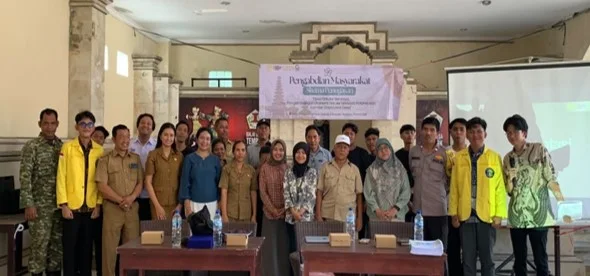
Personal photo
Fundamentally, HR planning is the process of determining a company's workforce requirements, both for the present and the future. The goal is to ensure that the number of employees and their capabilities align with the organization's needs.
Andrew F. Sikula explains that HR planning relates to a company's efforts to identify workforce needs and determine how to meet them in accordance with organizational strategy. Meanwhile, Thomas H. Stone emphasizes the importance of forecasting future workforce requirements.
John B. Miner and Mary Green Miner also explain that companies need to have the right number and type of employees in the right place at the right time.
From these various perspectives, it is clear that HR planning is not just about calculating how many employees are needed. Companies must also consider the quality, skills, competencies, and readiness of their workforce.
T. Hani Handoko and Mangkunegara explain that HR planning relates to workforce needs, recruitment processes, training, and employee development. This means companies must ensure that their workforce is not only sufficient in number but also possesses skills relevant to the evolution of their work.
Understanding the 5P Framework in HR Planning
In human resource planning, there is a 5P framework consisting of philosophy, policies, programs, practices, and processes or philosophy, policies, programs, practices, and processes.
These five elements are interconnected.
Philosophy serves as the foundation for how a company views and treats its human resources. From this philosophy, policies are born that govern workforce management according to the company's conditions and goals.
Programs can be realized through various activities, such as recruitment, training, competency development, and career advancement for employees.
Furthermore, practices become the implementation of these programs in daily work. Meanwhile, processes encompass the stages of HR management, such as job analysis, recruitment, selection, placement, development, and performance evaluation.
This framework demonstrates that HR planning must be conducted systematically and should not stop at administrative activities.
HR Planning to Anticipate Change
HR planning can be a key factor for companies in navigating change. Companies should not wait for problems to arise before seeking solutions.
For example, when a company plans to implement new technology, human resource needs must be prepared from the start. The company must identify the necessary skills and determine how employees can master them.
Training can be conducted before the technology is fully utilized. In this way, change does not immediately become an obstacle because employees are already equipped to adapt.
It is also not enough for a company to simply focus on the number of employees. Having many employees does not necessarily make work more effective if their capabilities do not match the organization's needs.
Therefore, the quality of the workforce must be a priority. Companies need to provide opportunities for employees to learn, improve their skills, and develop their competencies through training and various other forms of development.
Mapping Workforce Conditions
Before determining future HR needs, companies must understand the current state of their workforce.
Several factors to consider include the number of employees, education levels, skills, competencies, experience, and individual performance. This data can be used as a basis for forecasting the company's needs for the next period.
Planning must also account for various potential changes in the workforce. For example, employees receiving promotions, transfers to other departments, resignations, layoffs, or reaching retirement age.
If a company does not account for these changes, labor shortages can occur suddenly and disrupt operations.
Conversely, planning from the outset allows companies to prepare replacements or develop employees who have the potential to fill specific positions.
HR Must Align with Company Goals
HR planning must also be aligned with the direction and business goals of the company.
When a company wants to expand, open branches, develop new products, or enter new markets, its workforce needs will naturally change. Therefore, HR management strategy cannot be separated from the company's overall strategy.
The same applies when a company faces technological transformation. Digitalization can cause some types of jobs to change, decrease, or even create a need for new skills.
Employees need to be prepared through skill enhancement or upskilling as well as learning new skills or reskilling. By doing so, the company does not always have to look for new talent when needs change, as some competencies can be developed from the existing workforce.
The Role of Leadership in HR Development
The role of leadership is also a critical part of successful HR planning. No matter how well a plan is drafted, the results will not be optimal if it is not implemented seriously.
Leaders need to create a fair work environment and provide opportunities for employees to grow based on their abilities, performance, and achievements.
The recruitment and selection process must also be conducted openly, objectively, and professionally. Practices of corruption, collusion, and nepotism (KKN) must be avoided, as they can lead the company to acquire talent that does not match the actual competencies required.
Employee placement should also consider capabilities and suitability for the job position, rather than just the need to fill a vacancy.
HR Development Does Not Always Have to Be Expensive
One of the challenges companies face in developing their workforce is budget limitations. However, HR development does not always have to be done through costly training.
If the budget is limited, companies can prioritize training for the most essential competencies.
Employee development can also be carried out through internal training, knowledge-sharing programs among employees, mentoring mentoring from more experienced staff, or job rotation so that employees gain new experiences.
Companies still need to allocate an adequate budget for HR development. Good planning will not yield optimal results if it is not accompanied by the resources to execute it.
The first step a company can take is to map the current state of its workforce. After knowing the number, capabilities, skills, and workforce needs, the company can forecast future requirements.
From this mapping, the company can determine the most appropriate strategy, whether through recruitment, training, development, promotion, transfer, or employee placement.
Ultimately, HR planning is not just about determining how many employees a company needs. More importantly, it is about ensuring the company has a workforce with the right capabilities that is ready to face change.
With proper planning, companies can align workforce needs with business developments, technology, and the business environment.
Therefore, HR planning should no longer be viewed merely as an administrative activity. Human resource planning needs to be positioned as part of the company's strategy to maintain organizational sustainability while supporting growth amidst the increasingly rapid changes in the business world.








Comments 0
Write a Comment Share your response