


BOJONEGORO, JurnalPost.com – Agricultural potential and simple innovations born from village communities can be used for more than just daily needs. If they meet certain requirements, these developments also have the potential to obtain legal protection and be developed into economically valuable assets.
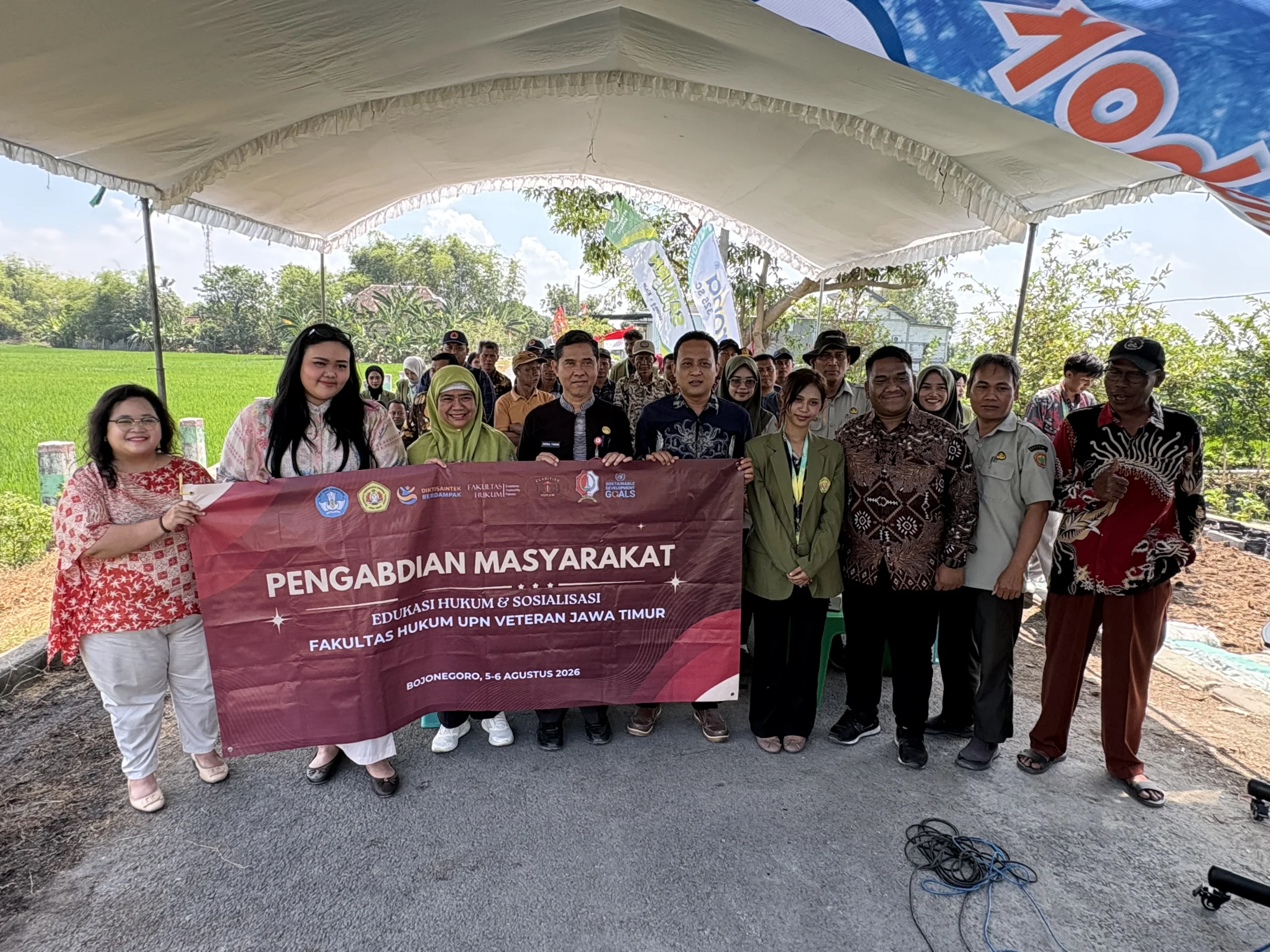
This understanding was the focus of a Community Service (PKM) activity by the Faculty of Law at the Universitas Pembangunan Nasional (UPN) “Veteran” East Java, held in Kedungdowo Village, Bojonegoro Regency, on Thursday, August 6, 2026.
The activity was structured as a socialization and mentoring session regarding the registration of Plant Variety Protection (PVP) and simple patents for technological innovations developed by the community.
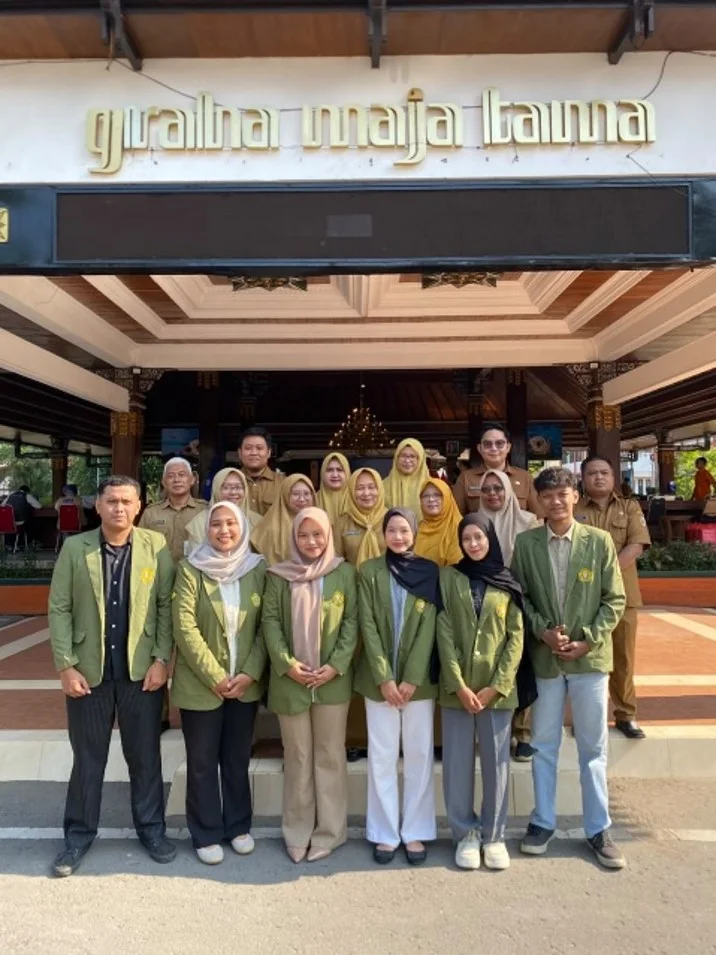
Three lecturers from the Faculty of Law at UPN “Veteran” East Java served as speakers: Dr. Asri Wijayanti, S.H., M.H., Veronica Cynthia Wibowo, S.H., M.H., and Dinda Bhawika Wimala Pastika, S.H., M.H.
The session was attended by Kedungdowo villagers, as well as the Head of the Bojonegoro Regency Food Security and Agriculture Office, Zaenal Fanani, S.Pi., M.P., and village government officials.
This activity brought together elements of academia, local government, village government, and the community to discuss how agricultural potential and locally developed innovations can be identified and protected according to legal provisions.
Recognizing Innovation Potential at the Village Level
Village communities possess knowledge and experience that grow through daily activities. In the agricultural sector, for example, farmers may discover or develop plant varieties with specific characteristics through long-term cultivation processes.
Similar occurrences can happen with simple technologies created to assist in agricultural activities, production processing, or other community needs.
However, an innovation does not automatically receive legal protection. Therefore, the community needs to first understand the forms of protection available and the requirements that must be met.
During the activity, residents were introduced to the concept of Plant Variety Protection (PVP). This instrument relates to the protection of plant varieties that meet the requirements stipulated in statutory regulations.
In addition to PVP, the community also received explanations regarding patents and simple patents as forms of protection for inventions in the field of technology.
Understanding these two protection schemes is considered important so that the community can distinguish the types of innovations they possess before determining the appropriate path for protection.
Legal Protection Is More Than Just Administration
Intellectual property protection is often considered to be solely related to registration processes and document management. In reality, legal protection can be a crucial stage in the development of an innovation.
When a variety or technology has been identified and meets protection requirements, the community has a clearer basis for developing and utilizing that innovation.
In the context of village economic development, this process can also be part of the downstreaming of local potential.
Downstreaming does not always start with large-scale technology. At the village level, the process can begin with identifying potential, testing, legal protection, product development, and wider utilization.
Therefore, the socialization activity in Kedungdowo was directed as an initial stage so that the community could view their creativity and experience from a broader perspective.
Plant varieties or simple technologies that were previously only used in limited environments may have the potential to be developed further if they possess uniqueness, utility, and meet applicable protection requirements.
Collaboration Between Universities and Local Government
The involvement of local and village governments is an important part of the process of developing this potential.
The local government has a role in fostering the agricultural sector and developing the community's economy. Meanwhile, the village government is closest to the various activities and innovations growing among the residents.
Universities can complement this process through mentoring based on their areas of expertise.
In the Kedungdowo activity, the Faculty of Law at UPN “Veteran” East Java provided an approach from a legal perspective, specifically regarding intellectual property protection.
This type of collaboration is needed because the innovation protection process generally does not end at the registration stage.
Identifying potential, examining requirements, preparing documents, providing technical assistance, and developing innovation results require the involvement of various parties with different competencies.
Encouraging Residents Not to Stop at the Creation Stage
One of the points of concern in the activity was the importance of the community recognizing the value of the innovations they produce.
So far, various simple technologies and developments in the agricultural sector have emerged due to practical needs. These innovations are then used for generations or only utilized within a limited scope.
However, if they have elements of novelty or specific characteristics and meet legal requirements, these innovation results may have the opportunity to obtain protection.
Therefore, the community is encouraged not to stop at the stage of creating or using an innovation.
Once potential is discovered, a process is needed to assess its characteristics, determine the appropriate form of protection, prepare requirements, and plan its utilization.
Legal mentoring then functions as a bridge between the community's knowledge of innovation and the available protection mechanisms.
Part of Community Service
The activity in Kedungdowo Village is part of the implementation of the Tridharma of Higher Education through a community service program.
Through this program, legal knowledge developed within the university environment is applied directly to address community needs.
The approach used does not only focus on delivering material about regulations but also helps the community see the connection between law, innovation, agriculture, and economic development.
For village communities, this understanding is important because local potential often grows through long experiences that are not always documented or identified as part of intellectual property.
Mentoring from the early stages is expected to help the community know the steps to take if they discover plant varieties or create technology that has the potential for protection.
Paving the Way for Local Potential Development
The socialization regarding PVP and simple patents in Kedungdowo Village serves as an initial step to introduce intellectual property protection more closely to the community.
The activity also demonstrates that developing village potential is not only related to increasing production yields but also includes protecting innovations born from the community.
With the support of the village government, local government, and universities, the agricultural and technological potential developing in Kedungdowo can be further identified to determine the possibilities for protection and development.
Continuous mentoring is important so that innovations do not stop as mere local knowledge, but can move toward a process of protection, development, and utilization that provides added value to the community.






Comments 0
Write a Comment Share your response