


Surveys across five traditional markets, ranging from Alam Sutera to Pondok Labu, reveal a shift in consumer shopping patterns. As premium rice prices continue to climb, some consumers have begun switching to Bulog rice and mixed-grain alternatives.
JAKARTA, JurnalPost.com — The availability of premium rice in several traditional markets across the Greater Jakarta area is relatively sufficient. However, this supply stability has not necessarily led to a decrease in retail prices. In fact, many residents are forced to pay more to secure premium-quality rice.
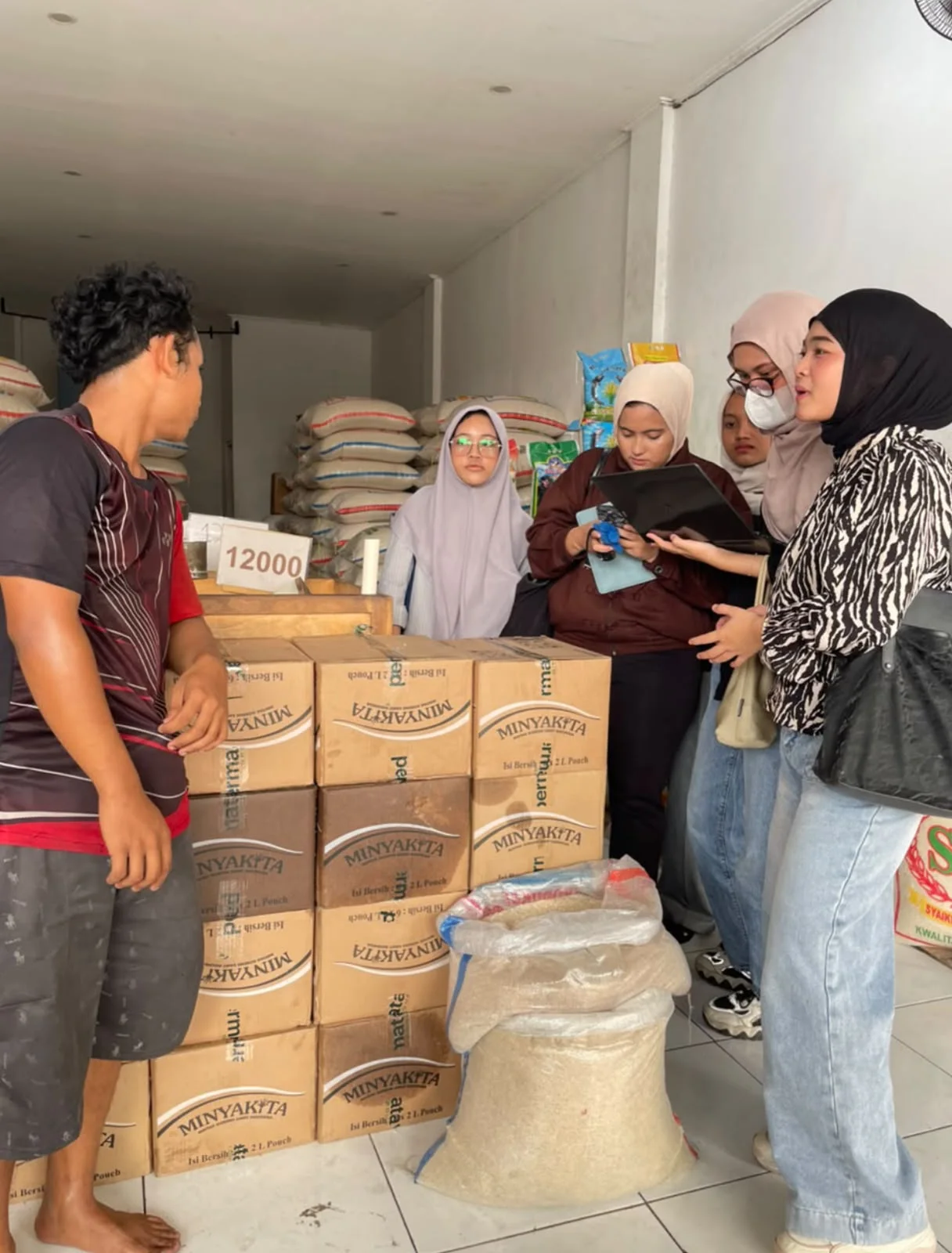
Based on 2026 field research by Group 4 from Pamulang University, the price of premium rice in five traditional markets ranges from Rp70,000 to Rp85,000 per 5-kilogram bag. When converted, this equates to Rp14,000–Rp17,000 per kilogram.
The research was conducted at Pasar 8 Alam Sutera, Pasar Parung, Pasar Jombang Tangerang, Pasar Tangerang Dua in Kelapa Dua, and Pasar Pondok Labu.
These findings are notable because the Maximum Retail Price (HET) for premium rice in Zone I, which includes the Greater Jakarta area, is set at Rp14,900 per kilogram.
This situation highlights a fundamental issue in the rice pricing mechanism. While inventory is physically present in the markets, the prices paid by consumers do not consistently align with the government-mandated limits.
Premium Rice Prices Remain Stubborn
Price discrepancies were identified across several of the markets surveyed.
At Pasar 8 Alam Sutera, Topi Koki brand rice is sold for Rp82,000 per 5-kilogram bag, or Rp16,400 per kilogram. This price is approximately 10 percent higher than the HET for premium rice.
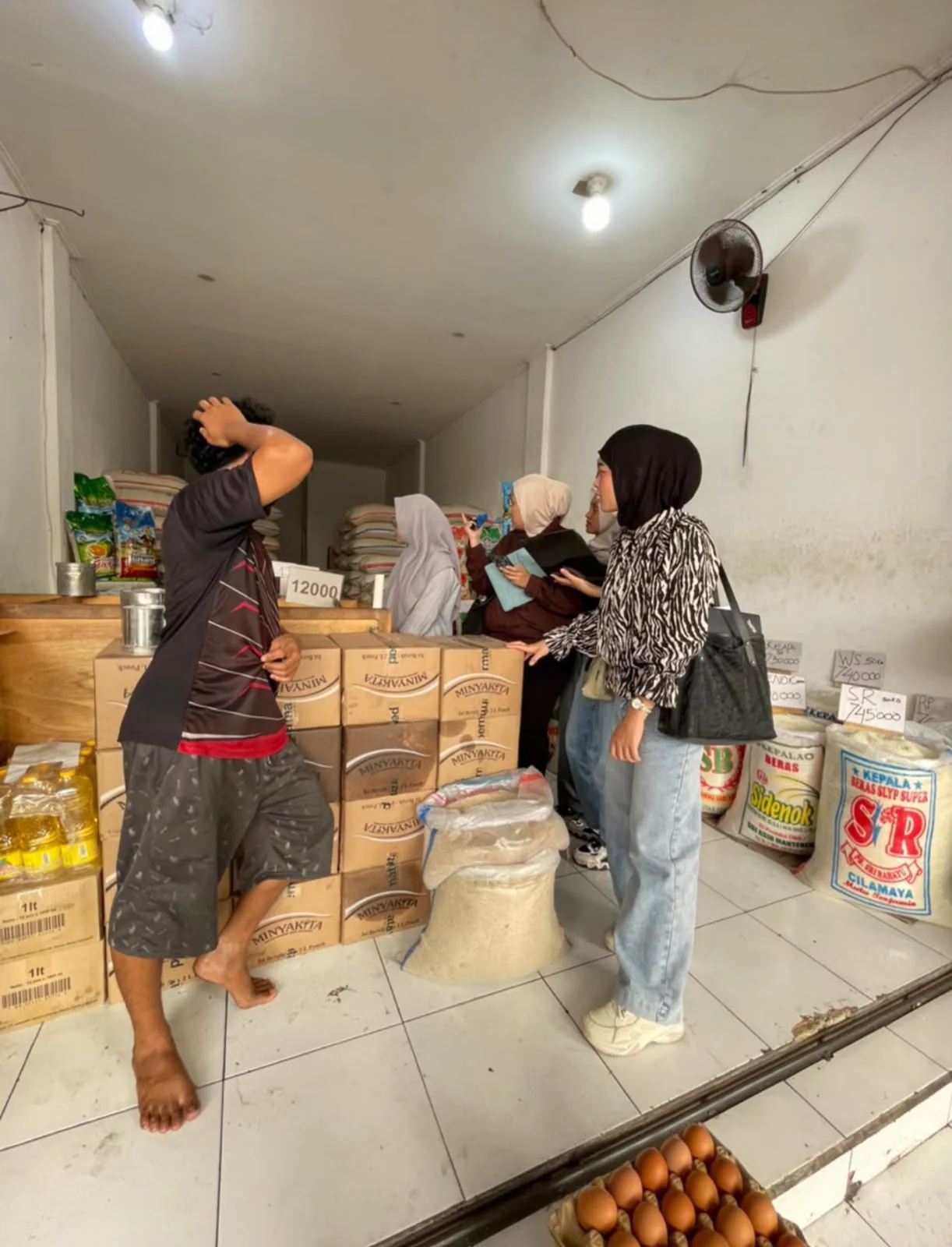
Meanwhile, Raja Ultima rice at Pasar Pondok Labu is sold for Rp74,500 per 5 kilograms, equivalent to Rp14,900 per kilogram, which is in line with the HET.
At Pasar Tangerang Dua, Rojo Lele brand rice was found priced between Rp70,000 and Rp75,000 per 5-kilogram bag.
Interviews conducted during the study indicate that merchants have limited room to lower prices. Some traders noted that purchase prices from suppliers are already high, forcing them to account for procurement costs and business margins.
Traders at Pasar Jombang, for instance, adjust their selling prices to ensure their capital outlays are covered.
This situation demonstrates that the pricing issue cannot be viewed solely from the perspective of retail merchants. Price fluctuations at the supplier, milling, and distributor levels significantly influence the final price paid by consumers.
Stocks Available, but Distribution Remains Uneven
The issue of premium rice becomes even more intriguing when compared to conditions in modern retail outlets.
While several traditional markets still hold inventory, some modern retail chains have experienced shortages of premium rice.
Agricultural observer from the Center of Reform on Economics (CORE) Indonesia, Eliza Mardian, believes the issue stems from a lack of synchronization in pricing policies between upstream and downstream levels.
The Maximum Retail Price limits the selling price to consumers, while production and procurement costs at the upstream level are still dictated by market mechanisms.
When raw material costs rise but selling prices are capped, the profit margins for producers and distributors become increasingly squeezed.
A different perspective was offered by the National Food Agency (Bapanas). Based on monitoring at the Cipinang Rice Wholesale Market on September 19, 2026, the price of premium rice at the wholesale level ranged from Rp12,860 to Rp14,200 per kilogram.
Bapanas considers these prices to be within a reasonable range as they do not exceed the HET for premium rice in Zone I.
The government also attributed the limited stock in some modern retail outlets to the recall of fortified rice products found to be non-compliant with regulations. A total of 11 business operators were ordered to withdraw the affected products from circulation.
However, it must be understood that wholesale prices differ from retail prices. The price paid by consumers often increases after accounting for distribution, storage, operational costs, and sales margins.
This discrepancy is one reason why premium rice prices at the consumer level do not always mirror the prices observed by the government at wholesale markets.
Consumers Begin Switching to Cheaper Alternatives
High premium rice prices are beginning to influence public purchasing decisions.
The findings from Group 4 show that some consumers at Pasar 8 Alam Sutera and Pasar Pondok Labu are opting for mixed-grain rice as a more affordable alternative.
Meanwhile, at Pasar Tangerang Dua, some buyers prefer Bulog rice or standard rice to meet their daily consumption needs.
In the study, the price of medium or Bulog rice was estimated to be in the range of Rp12,500–Rp13,500 per kilogram, depending on the type and location of sale.
Compared to premium rice, the price difference can reach Rp2,000 to Rp4,000 per kilogram.
For households purchasing 5-kilogram bags, this difference represents a saving of approximately Rp10,000 to Rp20,000 per purchase.
While this amount may seem small to some, for families with limited income, these savings can be reallocated to other essential needs such as cooking oil, eggs, vegetables, or transportation costs.
Despite this shift in preferences, premium rice still maintains a dedicated consumer base.
Some buyers remain loyal to their choices, prioritizing quality, cleanliness, aroma, color, texture, and the fluffiness of the cooked rice.
Brand loyalty also influences purchasing decisions. Consumers accustomed to specific brands tend not to immediately switch, even in the face of price hikes.
Research by Saumi, Sudjoni, and Khoiriyah (2025) on household rice demand in DKI Jakarta shows that rice prices and the prices of substitute commodities significantly impact demand levels.
These findings demonstrate that price changes remain a critical consideration in public consumption decisions, even though rice is a staple food.
Production Costs and Agricultural Technology Influence Prices
The issue of premium rice pricing extends beyond market transactions.
At the upstream level, agricultural production costs, weather conditions, labor availability, technology usage, and milling processes are all factors that influence pricing.
Group 4's research identified that rising procurement and production costs can narrow the room for merchants to set competitive selling prices.
Changes in planting and harvest seasons also have the potential to affect the availability of unhusked rice, which is the primary raw material for rice production.
Furthermore, agricultural methods that still rely on manual labor can lead to higher operational costs and the risk of harvest losses.
The adoption of agricultural technology, including the use of harvesting machinery and more efficient processing systems, is one approach to reducing production costs.
However, increased efficiency at the farmer level does not automatically lead to lower rice prices in the market. The benefits of such efficiency also depend on distribution structures, market competition, and margin formation across every link in the supply chain.
Consequently, price stabilization requires a comprehensive approach rather than just monitoring retail-level merchants.
Pricing Policy Faces Challenges
The government possesses several instruments to maintain price stability and rice availability.
These include the implementation of the Maximum Retail Price (HET), the Food Supply and Price Stabilization (SPHP) program, food assistance, and the management of Government Rice Reserves (CBP).
These policies aim to maintain food affordability while strengthening protections for low-income households.
However, implementation faces challenges when there is a gap between government-mandated prices and the procurement costs that businesses must bear.
Research by Rachman, Agustian, and Syaifudin (2019) indicates that HET policies have implications for price, rice quality, farm profitability, and rice absorption.
The study emphasizes the importance of considering quality standards in the application of pricing policies to ensure that the classification of medium and premium rice does not create new problems.
On the other hand, the transparency of cost structures is also a critical factor.
Eliza Mardian advocates for price transparency from production and distribution through to sales margins. According to her, information transparency is necessary so that price formation can be assessed more objectively.
This approach could help the government distinguish between price increases caused by rising production costs and those driven by distribution inefficiencies.
Traditional Markets Remain a Choice, but Purchasing Power Remains Strained
The premium rice phenomenon in Greater Jakarta shows that stock availability does not necessarily go hand-in-hand with price affordability.
Traditional markets remain an important distribution channel because they provide a diverse range of rice options for the public, from premium and medium grades to lower-priced alternatives.
The existence of these options provides consumers with the flexibility to adjust their purchases according to their individual economic capabilities.
However, the significant price differences also indicate that the issue of public purchasing power has not been fully resolved.
The government needs to ensure that price control policies are balanced with the realities of production and distribution costs. Quality oversight, supply chain transparency, and improvements in agricultural efficiency must be pursued sustainably.
Ultimately, the issue of premium rice is not merely about the quantity of stock available.
The core issue is how rice can reach consumers at a fair price without compromising the sustainability of farmers, millers, distributors, and merchants.
Until this balance is achieved, the public will continue to face the choice between maintaining the quality of the rice they are accustomed to or adjusting their spending to fit their family's financial capacity.
Bibliography
Anggraeni, R. (2025a, September 20). Special rice prices deemed unreasonable, Core pushes for cost structure evaluation. Bisnis.com.
Anggraeni, R. (2025b, August 26). Done! Medium rice HET officially raised, here are the details. Bisnis.com.
National Food Agency. (2022). National Food Agency Regulation Number 12 of 2022 concerning the Implementation of Government Rice Reserves.
National Food Agency. (2026, September 30). Premium rice remains available, stocks in traditional markets are sufficient.
Bata, F. D. (2026, September 30). Bapanas claims premium rice prices at PIBC are still reasonable. Republika.
Emeria, D. C. (2025, September 12). Done! Rice food assistance continues until December 2025, 10 kg per month. CNBC Indonesia.
Fajarihza, R. F. (2025, September 3). Rice prices in 214 regions soar past HET, here is the data. Bisnis.com.
Group 4. (2026). Microeconomic analysis of premium rice commodities: Greater Jakarta traditional markets. Unpublished field research report, Pamulang University.
Rachman, B., Agustian, A., & Syaifudin, A. (2019). Implications of the maximum retail price policy for rice on farm profitability, price, quality, and rice absorption. Agricultural Policy Analysis, 17(1), 59–77. https://doi.org/10.21082/akp.v17n1.2019.59-77
Saumi, A. S., Sudjoni, M. N., & Khoiriyah, N. (2025). Analysis of household rice demand in DKI Jakarta. Journal of Agricultural Socio-Economics and Agribusiness (SEAGRI), 13(1).



Comments 0
Write a Comment Share your response