


Observations of five commodities at a traditional market in South Tangerang show that prices among vendors are nearly uniform, while supply depends on weather, export markets, and policies far removed from the stalls.
SOUTH TANGERANG, JurnalPost.com — At Cimanggis Ciputat Market, shoppers asking for the price of a kilogram of chili or a single coconut rarely receive a complicated answer. The figure is stated immediately by the vendor. However, that price is actually formed by various factors far from the stall, ranging from rain in agricultural centers and exporter bids to the school calendar.
Student observations of five commodities—silken tofu, organic napa cabbage, large red chili, grated coconut, and broiler chicken—provide a picture of how supply mechanisms work in a traditional market.
Based on the observations of Group 2 (2026), supply at the market is influenced by five main factors: product price, technology, sales or production, number of sellers, and weather conditions.
This article discusses these five factors by combining field observation data and various reports from the 2025–2026 period, while identifying aspects that can and cannot yet be explained by the available data.
Prices Nearly Uniform, Except for Coconut
Group 2 observed two vendors for each commodity. The results show that price differences between vendors are relatively small, around 1–2 percent for silken tofu, napa cabbage, large red chili, and broiler chicken (Group 2, 2026).
Grated coconut is the exception. One vendor sells coconut for Rp20,000 per unit, while another sets the price at Rp15,000 per unit.
According to observation notes, the vendor offering the higher price lists the weight of each coconut and includes a certificate. Meanwhile, both vendors use electronic grating machines.
This difference in service may be one factor explaining the price variation. However, observing only two vendors is not enough to confirm this relationship.
Table 1. Prices, Stock, and Number of Sellers Based on Observations at Cimanggis Ciputat Market
| Commodity | Vendor 1 Price | Vendor 2 Price | Difference* | Daily Stock per Vendor | Number of Sellers |
|---|---|---|---|---|---|
| Premium silken tofu | Rp47,666/kg | Rp46,700/kg | ±2% | 100 kg | 3 |
| Organic napa cabbage | Rp25,000/kg | Rp24,765/kg | ±1% | 100 kg | 5 |
| Premium large red chili | Rp61,533/kg | Rp62,430/kg | ±1.5% | 1,000 kg | 4 |
| Premium grated coconut | Rp20,000/unit | Rp15,000/unit | ±33% | 200 units | 7 |
| Broiler chicken | Rp45,200/kg | Rp44,300/kg | ±2% | 700 birds | 6 |
Note: Percentage difference is calculated based on the lowest price. Source: Group 2 (2026), with difference calculations by the author.
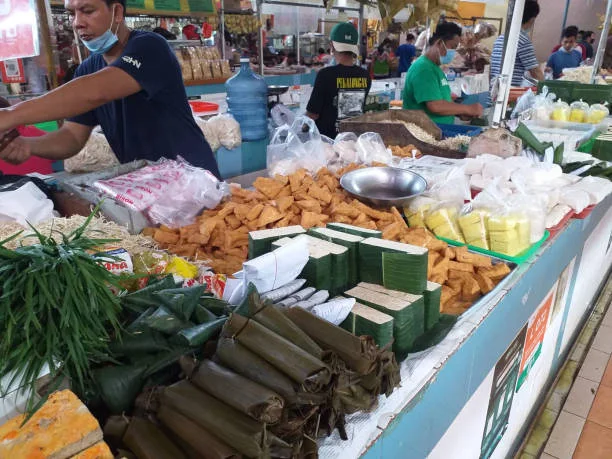
All observed vendors use packaging and scales in their trading activities. For certain commodities, the use of technology is also evident in the product processing.
Silken tofu is cut using an automatic tool, broiler chicken is processed with a feather-plucking machine, while chili vendors provide grinding machines to fulfill orders for ground chili.
The similarity in the use of technology and trading equipment is suspected to contribute to the closeness of prices between vendors.
Comparison with substitute products also shows the price position of each commodity. Silken tofu is sold for about 40 percent more than yellow tofu, which is priced at Rp33,400 per kilogram.
Organic napa cabbage is priced at more than double the cost of green mustard greens, which are sold for Rp11,400 per kilogram. Conversely, broiler chicken is sold for about half the price of free-range chicken, which reaches Rp87,857 per kilogram.
Large red chili is actually priced about 21–22 percent lower than curly red chili, which is sold for Rp79,200 per kilogram (Group 2, 2026).
In terms of trading scale, large red chili has the largest daily stock, at 1,000 kilograms per seller. Meanwhile, stocks of silken tofu and organic napa cabbage each reach 100 kilograms.
Broiler chicken has a stock of about 700 birds per day, while grated coconut reaches 200 units.
The number of recorded sellers also varies. Silken tofu has the fewest traders, with three people, while grated coconut has the most, with seven traders (Group 2, 2026).
In addition to price and stock, there are differences in the services provided by vendors. One organic napa cabbage vendor provides a return policy. Meanwhile, the chili vendor performs quality selection and manual stem removal before the product is packaged.
These differences are not always reflected in the price label, but they become part of the value of the product and service offered to consumers.
Rain and Supply That Cannot Be Accelerated
Weather conditions are an external factor that affects the supply of agricultural commodities. Both extreme drought and heavy rain can disrupt production, distribution, and the availability of goods in the market.
Group 2 noted that weather changes affect all five observed commodities.
The impact of weather on prices was seen in market developments in early 2026. On January 8, 2026, the price of green mustard greens at Ciputat Market increased from Rp8,000 to Rp12,000 per kilogram. A vendor mentioned that the increase was related to farmland experiencing flooding (Lestarini, 2026).
A similar condition occurred with chili. On March 6, 2026, a chili vendor at Ciputat Market stated that supply was disrupted due to continuous rain (detikFinance, 2026).
Rain not only affects supply but also consumer demand.
A vegetable vendor at Ciputat Market explained that sales turnover in the rainy season differs because some people are reluctant to come to the market. On the other hand, a housewife admitted to reducing her purchases of basic necessities when prices increased (Nordiansyah, 2026).
Thus, vendors may face two pressures simultaneously: limited supply and a decline in purchasing power or consumer purchase volume.
In microeconomic theory, the ability of producers or sellers to adjust the quantity of goods offered due to price changes is known as price elasticity of supply.
According to Sukirno (2016), price elasticity of supply shows how responsive the quantity of goods offered is to price changes.
Research by Fajar (2022), using monthly data from the Central Statistics Agency for the 2008–2018 period, shows that the supply response of large chili is classified as inelastic, both in the short and long term.
This means that price changes are not always followed by changes in the quantity of supply in the same proportion.
Group 2 also noted that napa cabbage requires about 40–60 days from planting to harvest. Meanwhile, silken tofu has very soft characteristics with high water content, so it cannot be stored for a long time when prices decline (Group 2, 2026).
This condition shows that price increases cannot be immediately responded to with an increase in the quantity of goods offered. Production processes, product characteristics, and time constraints are factors that determine the seller's ability to adjust supply.
Coconut: When Exports Are More Lucrative
The coconut commodity provides a picture of how international market demand can affect the availability and price of goods in the domestic market.
In April 2025, the price of whole coconuts in several markets in the Jakarta area and its surroundings reached Rp20,000–Rp25,000 per unit.
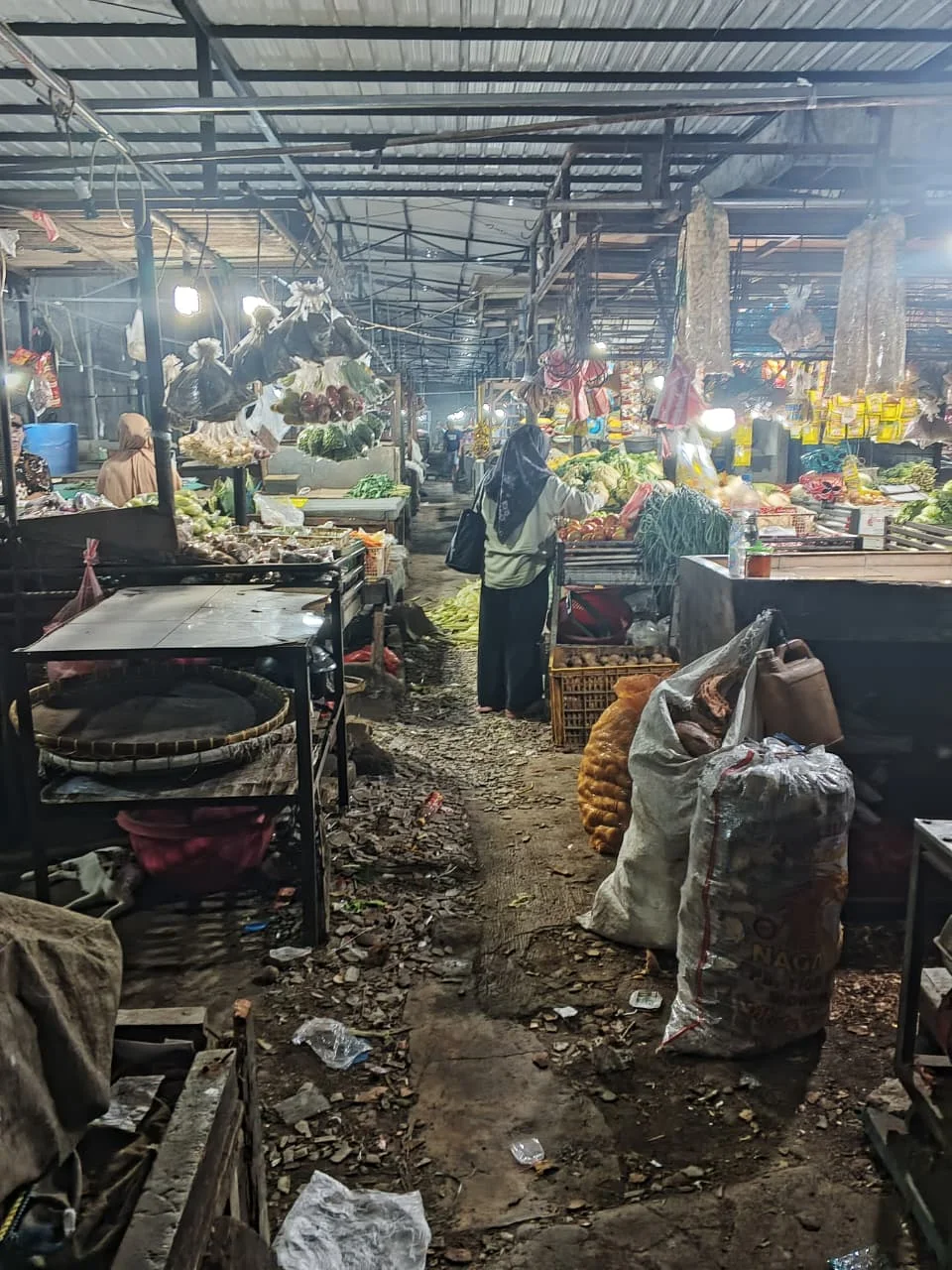
A number of vendors linked the increase to rising coconut exports to China. Minister of Trade Budi Santoso also acknowledged that the increase in exports was one of the causes of rising coconut prices domestically.
Data from the Central Statistics Agency shows that the value of exports of shelled coconuts during January–March 2025 reached US$45.6 million, with most of the export destination being China (Madjid, 2025).
Previously, in March 2025, the Minister of Trade stated that export demand and domestic industrial needs for coconut were both high (Damayanti, 2025).
In Group 2's observation in 2026, the price of grated coconut at Cimanggis Ciputat Market was in the range of Rp15,000–Rp20,000 per unit.
This price is lower than the price level that occurred in April 2025. However, the highest price found in the observation still exceeds the normal range of Rp10,000–Rp15,000 per unit as stated by vendors at Rawa Bebek Market, Jakarta (detikFinance, 2025).
These findings show that the commodity supply mechanism is not only influenced by local market conditions but is also related to changes in demand at the national and international levels.
MBG Kitchen and Quiet Markets During School Holidays
Another factor that is a concern in the development of the food market is the change in demand related to the implementation of the Nutritious Meal Program (MBG).
The MBG program was temporarily suspended from June 22 to July 13, 2026, during the school holiday period (Bisnis.com, 2026b).
During that period, a number of vendors in various regions reported a decline in food commodity prices.
At Legi Market, Solo, the price of napa cabbage fell from Rp8,000 to Rp5,000 per kilogram.
Vendors linked the price decline to several factors, including the closure of the Nutrition Fulfillment Service Unit (SPPG) kitchens, increased harvests, reduced celebratory events, and school holidays (RRI, 2026).
Monitoring of food commodity prices in traditional markets in West Java on July 7, 2026, also showed a downward trend in the prices of eggs, chicken meat, and chili. The temporary suspension of MBG activities is suspected to be one of the factors that contributed to this condition (GoodStats, 2026).
After MBG activities resumed, the national average price of chicken eggs was reported to have increased by 8.12 percent to Rp31,300 per kilogram on July 20, 2026 (Bisnis.com, 2026b).
However, the relationship between changes in MBG activities and commodity prices at Cimanggis Ciputat Market cannot be confirmed directly.
This is because there is no specific price data for Cimanggis Market that can separate the influence of MBG implementation from other factors, such as the harvest season, supply changes, or public demand conditions.
Therefore, the influence of MBG on price movements in the market that is the object of observation still needs to be studied further.
Chicken and Tofu: Demand Pressure and Production Costs
Changes in broiler chicken prices show how demand momentum can affect market conditions.
On March 6, 2026, ahead of Eid al-Fitr, vendors at Ciputat Market sold chicken for about Rp45,000 per kilogram, an increase from the usual price of Rp40,000 per kilogram (detikFinance, 2026).
About three weeks later, the National Food Agency recorded chicken prices in the range of Rp35,000 per kilogram, lower than the reference sales price of Rp40,000 per kilogram (Bisnis.com, 2026a).
Group 2 also noted a number of studies showing that the supply of broiler chicken has elastic characteristics, unlike some agricultural commodities such as chili and napa cabbage (Group 2, 2026).
Meanwhile, the tofu commodity faces pressure related to raw material costs.
In April 2026, tofu makers in South Jakarta complained about the rising price of soybeans. One strategy used to maintain the business was to reduce the size of the tofu without increasing the selling price (NU Online, 2026).
This strategy shows that changes in production costs are not always passed on directly through price increases to consumers.
For silken tofu in the premium price segment, there may be different adjustment strategies. However, this observation has not specifically measured the production cost structure of silken tofu.
Thus, the relationship between raw material prices, production costs, and the supply of silken tofu still requires further research.
Table 2. Drivers of Price and Supply Based on Reported Evidence
| Driving Factor | Commodity | Evidence Found | Data Coverage |
|---|---|---|---|
| Weather or rain | Mustard greens and chili | Price of green mustard greens increased from Rp8,000 to Rp12,000/kg in January 2026. Chili supply was disrupted due to rain in March 2026. | Ciputat Market |
| Export market | Coconut | Coconut price reached Rp20,000–Rp25,000/unit. Export value of shelled coconuts reached US$45.6 million in January–March 2025. | Jakarta and surrounding areas; national |
| MBG demand | Vegetables, eggs, chicken, and chili | Price of napa cabbage fell from Rp8,000 to Rp5,000/kg during the MBG holiday in July 2026. | Solo, West Java, and national |
| Holidays | Chicken | Chicken price increased from Rp40,000 to Rp45,000/kg ahead of Eid in March 2026. | Ciputat Market |
| Raw material costs | Tofu | Tofu size reduced without changing the selling price due to rising soybean prices in April 2026. | South Jakarta |
Source: Lestarini (2026), detikFinance (2026), Madjid (2025), RRI (2026), and NU Online (2026). Processed by the author.
Limitations of Observation and Economic Implications
Observations of the supply mechanism at Cimanggis Ciputat Market provide a picture of the relationship between price, technology, supply, number of traders, and external conditions that affect trading activities.
However, this research has a number of limitations that need to be considered.
First, observations were only conducted on two vendors for each commodity, so the results cannot describe the overall market condition.
Second, the observation was conducted in one observation period and does not cover periodic changes in price or stock.
Third, data regarding the total daily supply volume at Cimanggis Ciputat Market is not yet publicly available.
Due to these limitations, some of the analysis uses supporting information from Ciputat Market and several other regions.
Based on Group 2's notes, the suppliers of the traded commodities come from various production centers, including Kediri, Bandung, Karanganyar, Cianjur, Sukabumi, Garut, and Tasikmalaya.
Production conditions, distribution, and price changes in these regions have the potential to affect the availability and price of goods at Cimanggis Ciputat Market.
Economically, these findings indicate that traditional market vendors in many situations act more asprice takersrather than parties that fully determine market prices.
The price of goods is formed through the interaction between demand, supply, production costs, distribution conditions, and various external factors that are beyond the control of the vendors.
Therefore, the availability of more open price and supply data at the market level is important to support decision-making.
Such information can help vendors manage inventory, consumers determine purchasing choices, and researchers distinguish seasonal price changes from structural issues in the food trading system.
Bibliography
Bisnis.com. (2026, March 27). Bapanas claims food prices fell after spiking during Eid. https://ekonomi.bisnis.com/read/20260327/12/1962523/bapanas-klaim-harga-pangan-turun-usai-sempat-melonjak-saat-lebaran
Bisnis.com. (2026, July 20). Chicken egg prices rise after MBG Program rolls out again. https://ekonomi.bisnis.com/read/20260720/12/1989322/harga-telur-ayam-naik-usai-program-mbg-bergulir-lagi
Damayanti, A. (2025, March 21). Trade Minister admits coconut prices are rising, this is the culprit. detikFinance. https://finance.detik.com/berita-ekonomi-bisnis/d-7835092/mendag-akui-harga-kelapa-naik-ini-biang-keroknya
detikFinance. (2025). Coconut prices rise, turns out much is exported to China and Vietnam. https://finance.detik.com/berita-ekonomi-bisnis/d-7937190/harga-kelapa-naik-ternyata-banyak-diekspor-ke-china-hingga-vietnam
detikFinance. (2026, March 6). Results of Deputy Trade Minister's tour of Ciputat Market: Chili, chicken, egg prices rise. https://finance.detik.com/berita-ekonomi-bisnis/d-8387130/hasil-wamendag-keliling-pasar-ciputat-harga-cabai-ayam-telur-naik
Fajar, M. (2022). Modeling the supply response of large chili commodities. Euclid, 9(2), 75–81. https://doi.org/10.33603/e.v9i2.5178
GoodStats. (2026, July 7). Food commodity prices today July 7, 2026: Majority down, green bird's eye chili up 4.85%. https://goodstats.id/article/harga-komoditas-pangan-hari-ini-7-juli-2026-mayoritas-turun-cabai-rawit-hijau-naik-4-85-M3BkP
Group 2. (2026). Analysis of commodity supply at Cimanggis Ciputat Market [Presentation]. Syarif Hidayatullah State Islamic University Jakarta.
Lestarini, A. H. (2026, January 9). Candlenut and vegetable prices at Ciputat Market soar. Metrotvnews.com. https://www.metrotvnews.com/play/KRXCQnMR-harga-kemiri-dan-sayur-mayur-di-pasar-ciputat-melonjak
Madjid, Z. (2025, April 22). When prices rise domestically, RI coconut exports hit US$45.6 million. CNBC Indonesia. https://www.cnbcindonesia.com/news/20250422071134-4-627650/saat-harga-naik-di-dalam-negeri-ekspor-kelapa-ri-tembus-us-456-juta
Nordiansyah, E. (2026, January 9). Housewife tips for facing rising food prices. Metrotvnews.com. https://www.metrotvnews.com/read/N0BC1x3B-adu-kiat-ibu-rumah-tangga-hadapi-kenaikan-harga-pangan
NU Online. (2026, April 16). Tofu makers adjust strategy due to rising soybean prices. https://nu.or.id/nasional/pengrajin-tahu-atur-strategi-imbas-kenaikan-harga-kedelai-mALMv
RRI. (2026, July 6). SPPG kitchen closed, vegetable prices in Solo City experience significant decline. https://rri.co.id/surakarta/umkm/2549344/dapur-sppg-libur-harga-sayur-mayur-di-kota-solo-alami-penurunan-signifikan
Sukirno, S. (2016). Microeconomics: Introductory theory (3rd Edition). RajaGrafindo Persada.



Comments 0
Write a Comment Share your response