


South Tangerang, JurnalPost.com — Shifting food prices are making the public increasingly cautious about managing household expenses. This condition is evident in the buying and selling activities at Ciputat Market, South Tangerang, where shoppers must adjust their purchase quantities, compare prices, and seek more affordable alternative food items.
Although the prices of several commodities have changed, trading activities continue. Water spinach, catfish, chicken meat, shallots, and watermelon remain part of the community's daily needs.
Based on interviews with 10 vendors at Ciputat Market, it was found that price changes do not always cause consumers to stop buying. Some shoppers instead change their shopping strategies by bargaining, purchasing in specific quantities to obtain lower prices, or switching to other commodities.
These findings illustrate how the community adapts to price dynamics while providing insight into consumer behavior from a microeconomic perspective.
Ciputat Market Conditions and Changing Buyer Behavior
Ciputat Market is one of the traditional trade centers in South Tangerang City that has been operating since 1992. This market serves as a place for the community to fulfill various needs, especially fresh food ingredients.
However, trading activities in the area are not entirely concentrated within the market building.
A 2020 study by Pereira and colleagues noted that out of 1,137 available kiosks and stalls, 441 kiosks and 68 stalls were still being used for trading activities.
The study also showed a difference in cost burdens between vendors inside the building and street vendors. The annual cost for vendors inside the building is estimated at IDR 10.11 million, while street vendors pay around IDR 4.38 million.
This difference is one of the factors related to the choice of sales location.
A 2026 study by Salsabillah also found that a number of kiosks on the second and third floors of the market building remain empty or damaged, despite the area having been revitalized several times.
Amidst these conditions, trading activities continue and show different demand characteristics for each commodity.
Water Spinach at IDR 4,000 per Bunch, Buyers Start Calculating Expenses
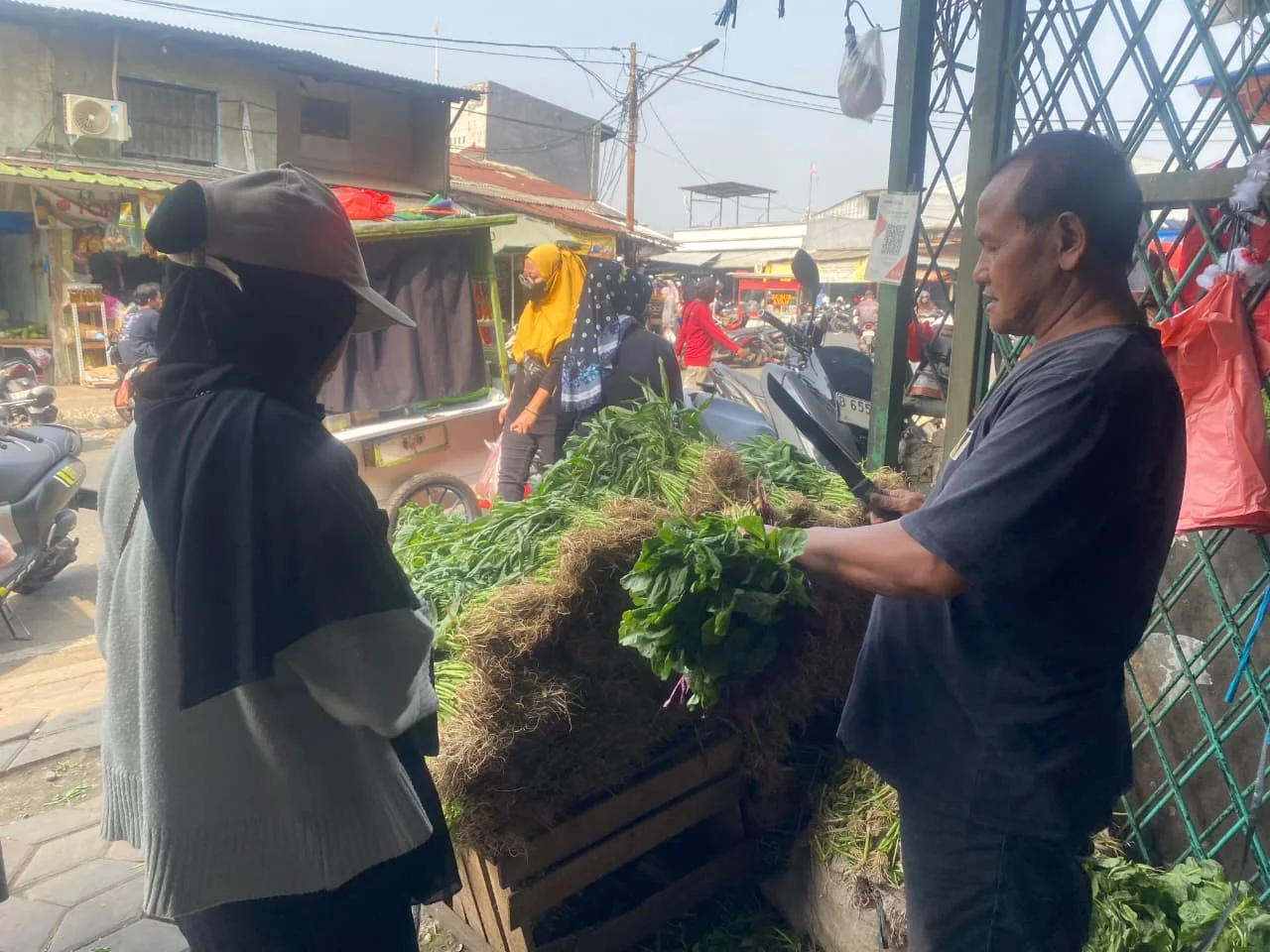
Water spinach is one of the vegetable commodities that is relatively accessible to the public. Based on interviews, two vendors at Ciputat Market sell water spinach for IDR 4,000 per bunch.
Although offering the same price, the two vendors have different experiences regarding the level of demand.
Mr. Tumadi revealed that water spinach sales are declining. According to him, some customers have to allocate their income for children's educational needs, such as school and college fees.
He has about 20–25 regular customers daily with a stock volume reaching 2,000 bunches.
Meanwhile, Mr. Adi Suparto stated that the demand for water spinach at his stall tends to be stable. He serves about 15 regular customers with a supply of around 1,000 bunches per day.
To attract buyers, vendors also offer prices based on the quantity purchased. Two bunches of water spinach are sold for IDR 7,000, while three bunches are priced at IDR 10,000.
With this scheme, the unit price becomes lower compared to purchasing a single bunch.
In addition to public purchasing power, weather conditions also affect water spinach trade. During the rainy season, especially around January to February, the risk of vegetables rotting increases, which can affect supply and prices.
In determining shopping choices, consumers can also switch to spinach, which is sold for around IDR 4,000 per bunch. Meanwhile, tempeh, priced at IDR 5,000–IDR 10,000, is a common side dish frequently purchased by the community.
Chicken Demand Shifts, Vendors Highlight the Influence of the MBG Program
Chicken meat is a commodity that is quite sensitive to price changes.
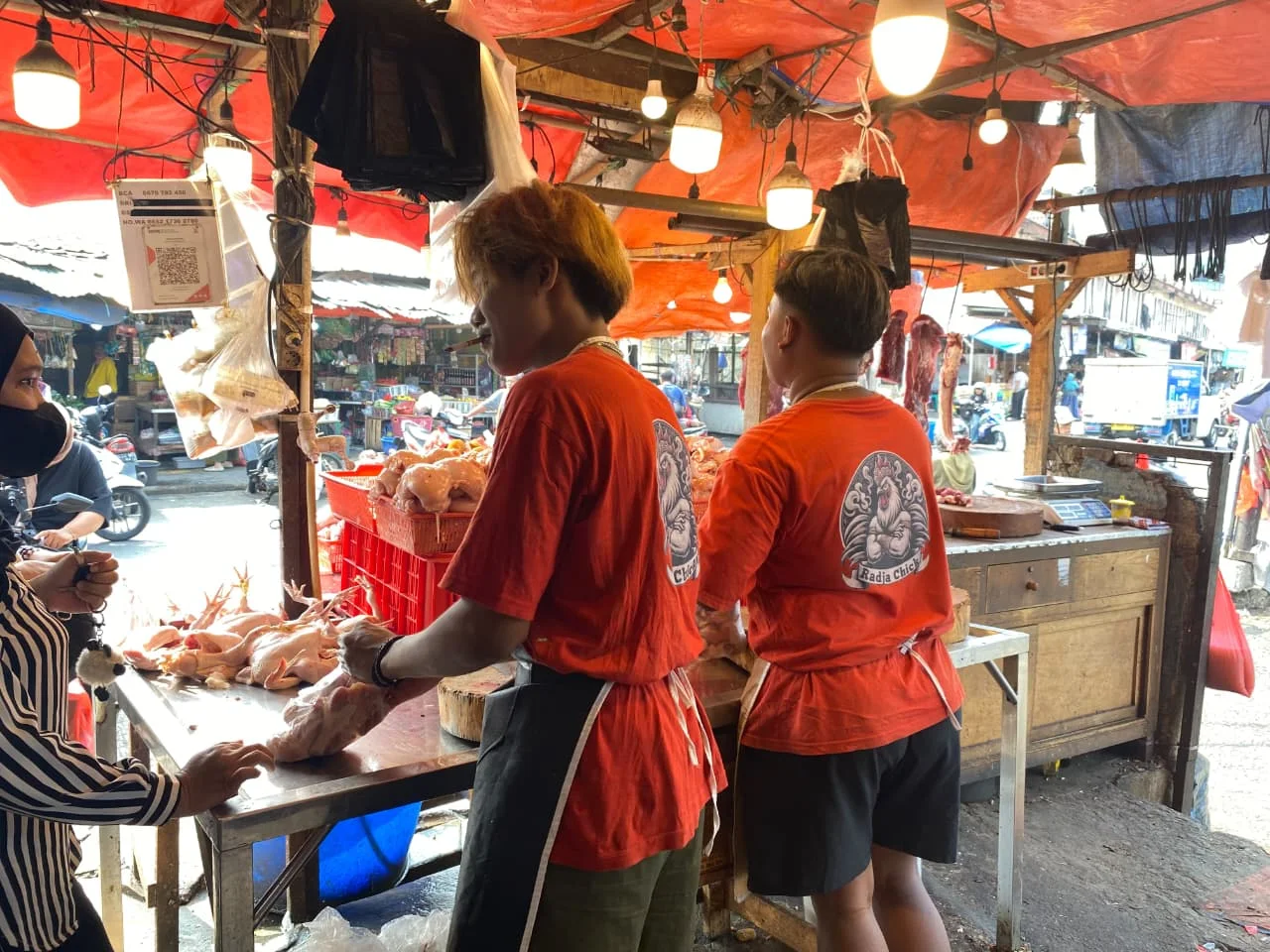
Two vendors interviewed, Mr. Kiki and Mr. Irfan, explained that the price of chicken at their stalls ranges from IDR 45,000 to IDR 60,000 per bird, depending on the size and condition of the goods.
Mr. Kiki mentioned chicken prices range from IDR 45,000–IDR 60,000 per bird, while Mr. Irfan offers prices around IDR 45,000–IDR 50,000 per bird.
When chicken prices rise, some consumers consider eggs as a substitute food ingredient, priced at around IDR 27,000 per kilogram.
Both vendors also linked the shift in demand to the implementation of the Free Nutritious Meal (MBG) Program.
According to their observations, the demand for chicken tends to decrease when MBG activities are on break. This condition is considered to influence prices at the vendor level.
As an illustration, on March 6, 2026, the price of broiler chicken at Ciputat Market was reported to reach IDR 45,000 per kilogram, an increase from the range of IDR 40,000 per kilogram leading up to Eid.
At the end of March, data from the National Food Agency showed the price of chicken at the market was around IDR 35,000 per kilogram, lower than the reference sales price of IDR 40,000.
The changes in chicken prices and demand show that market conditions are not only influenced by consumer ability but also by changing needs from various buyer groups.
However, the relationship between the implementation of the MBG and chicken price movements still requires further study to determine the extent of its influence compared to supply and distribution factors.
Shallots, Bargaining Becomes a Way to Get Lower Prices
Unlike other commodities, the shallot trade at Ciputat Market shows the strong role of bargaining in determining transaction prices.
Mrs. Santi stated that the price of shallots at her stall is currently decreasing to around IDR 26,000 per kilogram from the normal price of IDR 30,000–IDR 35,000.
Meanwhile, Mr. Firdaus mentioned the normal price of shallots is around IDR 35,000 per kilogram and can increase to IDR 40,000–IDR 50,000 under certain conditions.
Both vendors obtain supplies through middlemen or distributors from the central market. Their inventory ranges from 15–30 kilograms and generally runs out in about three days.
Interestingly, the initial price offered is not necessarily the final transaction price.
At one vendor, the initial price of IDR 26,000 per kilogram could eventually be negotiated to IDR 50,000 for two kilograms, or IDR 25,000 per kilogram. A purchase of five kilograms was even offered at IDR 120,000, or IDR 24,000 per kilogram.
Meanwhile, at another vendor, a purchase of two kilograms was agreed upon at IDR 65,000 and four kilograms at IDR 120,000.
This pattern shows that buyers who purchase in larger quantities have the opportunity to get a lower unit price.
From a microeconomic perspective, this condition illustrates the influence of purchase quantity and the negotiation process on the formation of transaction prices.
Catfish Remains in Demand, Price Competition Becomes a Consideration
The catfish commodity also shows price competition between sellers.
Mr. Haryadi sells catfish for around IDR 26,000 per kilogram, while Mr. Putra offers a price of IDR 28,000 per kilogram.
In addition to serving consumers directly, Mr. Haryadi also acts as a fish supplier for other vendors. Therefore, his inventory quantity adjusts to the needs of customers and trading partners.
According to Mr. Haryadi's estimate, some of his consumers have an income of around IDR 2 million per month with a daily shopping budget of approximately IDR 100,000.
Budget limitations force buyers to consider the price and quantity of food ingredients before deciding on a purchase.
Vendors also provide offers in the form of packages. Three kilograms of catfish can be purchased for IDR 70,000, while five kilograms are offered at IDR 130,000.
On the other hand, consumers have alternative fish options, such as tilapia at IDR 25,000–IDR 26,000 per kilogram and tuna at around IDR 24,000 per kilogram.
Mr. Putra considers price and quality competition as important factors in retaining customers.
This shows that the decision to buy fish is not solely determined by consumption needs, but is also influenced by comparisons of price, quality, and shopping ability.
Watermelon Prices Rise, Buyers Switch to Other Fruits
Changing seasons and producer prices are factors that influence the watermelon trade.
One vendor stated that the price of watermelon increased from IDR 10,000 to IDR 14,000 per kilogram because it has not yet entered the optimal harvest period.
Another vendor mentioned the price of watermelon rose from IDR 13,000 to IDR 15,000 per kilogram, following price changes from suppliers.
Both vendors obtain fruit from the Kramat Jati Central Market. The first vendor procures about 100 fruits per week, while the second vendor provides about 10 fruits per day.
When watermelon prices increase, buyers tend to consider other fruits, such as papaya at IDR 12,000 and melon at around IDR 18,000.
However, consumer response to price increases is not always the same.
The first vendor assessed that customers relatively continue to buy watermelon even though the price has increased. Conversely, the second vendor observed that consumers have become more selective regarding the price and quality of the fruit.
This difference shows that consumer response can be influenced by shopping habits, needs, income, and preferences for product quality.
Watermelon purchases also tend to increase at the beginning of the month when some consumers have just received their salaries.
Based on the vendors' accounts, customer spending on watermelon is estimated to range from IDR 120,000 to IDR 240,000 per month, depending on the frequency and quantity of purchases.
Understanding Consumer Demand through a Microeconomic Perspective
The results of interviews with vendors at Ciputat Market show that price changes have different impacts on each commodity.
Water spinach and shallots, for example, are ingredients frequently used for daily cooking needs. Therefore, buyers still need both commodities even if they have to adjust the purchase quantity.
Meanwhile, consumers of chicken, catfish, and watermelon have alternative product options that can be considered when price increases occur.
This phenomenon is related to the concepts of demand, substitute goods, and price elasticity in microeconomics.
Substitute goods are products that can be used as replacements for other goods to fulfill relatively similar needs. Meanwhile, price elasticity of demand describes the level of change in the quantity of goods demanded when prices change.
From the interview results, it is seen that some buyers respond to price changes by reducing purchase quantities, looking for alternative products, or negotiating with sellers.
However, the assessment regarding elasticity in this study is still based on the experience and observations of vendors, not the result of statistical calculations.
Because the interviews only involved 10 vendors, these findings cannot be generalized to describe all consumers or vendors at Ciputat Market.
Nevertheless, this field observation provides an overview of how microeconomic theory can be found in daily trading activities.
Shopping Strategy Becomes Key Amidst Price Changes
Trading conditions at Ciputat Market show that the community continues to adjust consumption behavior to face changes in food prices.
Buyers do not always stop shopping when prices rise. Instead, they look for ways to ensure household needs are met without having to spend too much.
Bargaining, comparing prices between sellers, buying in specific quantities, and switching to substitute goods are some of the strategies found in market activities.
For vendors, understanding this behavior is important for determining prices, maintaining product quality, and retaining customers.
On the other hand, the stability of supply from producers and distributors is also a factor that influences the continuity of trade.
These observations show that the traditional market is not just a place where sellers and buyers meet, but also a space to understand the relationship between price, income, demand, and public economic decisions.
Ultimately, the rise and fall of food prices do not always stop shopping activities. However, these changes encourage consumers to be more careful in making choices.
When prices change, the community adjusts how they shop. Amidst budget limitations, every rupiah becomes an important consideration to keep family needs met.
Bibliography
Argarini, M., Wastra, A. R., & Sari, R. A. P. (2016). Value chain analysis of superior freshwater fish commodities in Tangerang City. Agribusiness Journal, 10(1), 1–12.
Dewi, F. S. (2026). National Food Agency claims food prices dropped after spiking during Eid.
Group 2. (2026). Analysis of demand market in Ciputat Market. Group assignment presentation, unpublished.
Nabila, M. (2026). Chili prices skyrocket 103%, El Niño effects starting to be felt.
Pereira, N. D. S., Herlambang, S., Rahardjo, P., & Santoso, S. (2020). Study of traditional market transformation, case study of Ciputat Market, South Tangerang City. Jurnal STUPA, 2(2), 2719–2730.
Purnomo, H. (2026). Results of Deputy Minister of Trade's tour of Ciputat Market: Chili, chicken, egg prices up.
Salsabillah, J. (2026). Analysis of the effectiveness of Ciputat Market design, South Tangerang. Undergraduate thesis, Universitas Pembangunan Jaya.
Yudha, T. (2026). Chicken and egg prices up, Minister of Agriculture mentions MBG effect.



Comments 0
Write a Comment Share your response