


SURABAYA, JurnalPost.com — Understanding the law requires more than just studying theory and memorizing statutes in a classroom. Students must also understand how legal provisions are applied in practice, from the examination of cases to the final rulings delivered by a panel of judges.
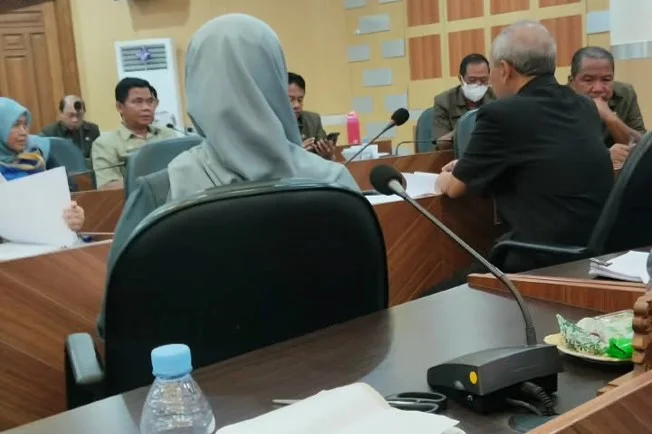
To deepen this understanding, students from the Faculty of Law at the University of 17 Agustus 1945 (Untag) Surabaya conducted court observations at the Class IA Surabaya Religious Court.
This activity provided students with an opportunity to learn firsthand about the mechanisms for resolving cases within the religious court system, particularly divorce cases related to the application of Islamic marriage law in Indonesia.
Through these observations, students gained insights into the duties of the panel of judges, the standing of the parties involved, the stages of examination, and the critical importance of evidence in court proceedings.
Beyond providing practical experience, this activity helped students grasp the connection between the civil procedural law theories studied in class and their actual application in court.
Understanding the Differences Between 'Cerai Talak' and 'Cerai Gugat'
In the Indonesian Islamic marriage law system, divorce cases heard in Religious Courts are generally divided into two types: 'cerai talak' (divorce initiated by the husband) and 'cerai gugat' (divorce initiated by the wife).
Regulations regarding divorce are found in Law Number 1 of 1974 concerning Marriage, as amended by Law Number 16 of 2019, Law Number 7 of 1989 concerning Religious Courts and its amendments, and the Compilation of Islamic Law (KHI).
'Cerai talak' refers to a divorce petition filed by the husband as the petitioner against his wife as the respondent. In this case, the husband requests permission from the Religious Court to pronounce the 'talak' (divorce vow) before the court.
Meanwhile, 'cerai gugat' is a divorce lawsuit filed by the wife as the plaintiff against her husband as the defendant. Such lawsuits are filed based on grounds stipulated in applicable legal provisions.

The difference between the two lies not only in the party filing the case but also in the resolution procedures and the legal consequences following the conclusion of the trial.
Understanding the Stages of Divorce Proceedings
During their observations, students also studied the various stages of procedural law that form the basis for resolving divorce cases in Religious Courts.
The case resolution process generally begins with the official and proper summoning of the parties to attend the hearing.
Summons are issued in accordance with procedural law to ensure that all parties have the opportunity to attend the hearing and present their legal interests.
When both parties are present and the case meets the requirements for mediation, the panel of judges directs them to undergo a mediation process based on Supreme Court Regulation (PERMA) Number 1 of 2016 concerning Mediation Procedures in Court.
Mediation aims to provide the disputing parties with an opportunity to seek an amicable resolution with the assistance of a mediator.
If reconciliation efforts fail to reach an agreement to preserve the marriage, the examination of the case proceeds according to established procedures.
The subsequent stages include the reading of the petition or lawsuit, followed by the exchange of pleadings between the parties.
During this process, the respondent or defendant has the opportunity to respond to the claims presented. The opposing party may also submit responses through replications and duplications if these stages are required.
In certain cases, the opposing party may also file a counterclaim or reconvention regarding rights resulting from the divorce.
Evidence as a Crucial Part of the Trial
One of the most important stages in the examination of a divorce case is the presentation of evidence.
Through this stage, the panel of judges assesses whether the grounds for divorce are supported by sufficient evidence in accordance with legal provisions.
Grounds for divorce are regulated, among others, in Article 19 of Government Regulation Number 9 of 1975 and Article 116 of the Compilation of Islamic Law.
Evidence that may be presented in court includes documents or written evidence, witness testimony, and other forms of evidence recognized under civil procedural law.
Written evidence may consist of marriage documents and other records relevant to the subject matter of the case.
Meanwhile, witness testimony is required to help the judge gain a picture of the parties' household situation, particularly if the case involves persistent disputes and quarrels.
In divorce cases based on such grounds, testimony from family members or those close to the couple plays a significant role as stipulated by applicable law.
Judges must also evaluate the consistency between witness testimony and other evidence before reaching a decision.
The evidentiary process demonstrates that a divorce case cannot be decided solely based on the wishes of one party, but must be based on legal grounds and facts revealed during the examination.
The Decision-Making Process by the Panel of Judges
After the examination and evidentiary stages are complete, the parties may submit their conclusions according to the trial schedule.
These conclusions contain a summary of the claims, trial facts, and evidence that have been presented.
Subsequently, the panel of judges deliberates to determine the ruling based on the results of the examination, legal facts, and statutory provisions.
The judges' deliberations are conducted in private, while the ruling must be pronounced in a hearing open to the public.
In 'cerai gugat' cases, a divorce ruling that has obtained permanent legal force serves as the basis for the dissolution of the marriage according to applicable law.
Meanwhile, in 'cerai talak' cases, after the decree granting permission for the 'talak' pronouncement has obtained permanent legal force, the Religious Court schedules a hearing for the pronouncement of the 'talak'.
The divorce in a 'cerai talak' case occurs after the husband pronounces the 'talak' before the Religious Court in accordance with the prescribed procedure.
This distinction is a key point for students to understand so they can differentiate between the procedures and legal consequences of each type of divorce case.
Religious Courts Also Protect the Rights of Women and Children
Beyond understanding trial stages, students gained insights into the role of the Religious Court in providing legal protection to the parties involved.
The Religious Court does not only handle the dissolution of marriage but can also examine various claims related to the consequences of divorce.
These issues include child custody or hadhanah, child support, iddah maintenance, mut'ah (consolation gift), past maintenance or madhiyah, and other rights according to the provisions and circumstances of each case.
Protecting the rights of women and children is a vital aspect that must be considered in the resolution of family disputes.
Through an examination process that adheres to procedural law, the court is expected to produce rulings that provide legal certainty while considering justice for the interested parties.
Bridging Legal Theory with Judicial Practice
The court observation activity at the Surabaya Religious Court provided a unique learning experience for the Untag Surabaya law students.
While students study various legal concepts and provisions theoretically in class, this activity gave them a clear picture of their application in the judicial process.
Students were able to understand the importance of a judge's diligence in examining cases, the position of evidence in the evidentiary process, and the procedures that must be followed to guarantee the rights of the parties.
This experience also serves as preparation for students who intend to pursue legal careers, whether as advocates, judges, or other legal professionals.
Through this observation, students are expected to better understand that law enforcement requires not only mastery of legislation but also the ability to analyze issues, uphold professional ethics, and prioritize the principles of justice.
Direct observation in the judicial environment is a crucial step in shaping future legal practitioners who not only understand theory but also possess the insight, diligence, and integrity required to carry out their profession.








Comments 0
Write a Comment Share your response