


Jakarta, JurnalPost.com — The price of commercial chicken eggs in various markets and agencies across the Greater Jakarta area is currently ranging from Rp25,000 to Rp27,000 per kilogram. For consumers, this price may still be considered reasonable. However, behind this relative price stability lies a significant issue facing farmers due to a decline in selling prices at the production level.
This condition highlights a disparity between the market situation at the farm level and the prices paid by consumers. While farm-gate egg prices have at times dropped below production costs, a corresponding decrease is not always reflected in prices at traditional markets.
So, why is the price drop at the farm level not always followed by a proportional change in consumer prices?
This question became the focus of field observations conducted by students from the Management Study Program at Pamulang University across five locations: Depok, Ciputat, Pamulang, Ciledug, and Rawabelong.
The study involved nine informants, including traders, agents, and consumers of commercial chicken eggs. The results show that prices are relatively similar, despite differences in buyer characteristics and transaction volumes.
Egg Prices Across Five Observation Locations
Based on information obtained from respondents, the lowest price was found at Depok Market, ranging from Rp25,000 to Rp25,500 per kilogram. Meanwhile, the highest price was recorded at an agency in Pamulang at Rp27,000 per kilogram.
In Ciputat and Ciledug, consumers reported egg prices at Rp26,000 per kilogram. Agents in Rawabelong reported a range of Rp26,000–Rp27,000 per kilogram.
The following are the results of the commercial chicken egg price observations in these five locations.
| Location | Informant | Price per Kg |
|---|---|---|
| Depok Market | Trader | Rp25,000–Rp25,500 |
| Ciputat | 5 consumers | Rp26,000 |
| Ciledug | Consumer | Rp26,000 |
| Rawabelong | Agent | Rp26,000–Rp27,000 |
| Pamulang | Agent | Rp27,000 |
Source: Author's field observations of nine informants.
If the midpoint of each price range is used in the calculation and each informant is given equal weight, the average is approximately Rp26,100 per kilogram.
This figure represents the respondents observed, not the average price for the entire Greater Jakarta market.
For comparison, data from the National Strategic Food Price Information Center (PIHPS) shows that the price of commercial chicken eggs in traditional markets in DKI Jakarta was Rp26,350 per kilogram on 11 September 2026.
The proximity of these two figures indicates that the prices in the field observations are comparable to the DKI Jakarta market data for that period. However, the survey timing should be aligned before drawing further conclusions.
Abundant Supply, but Limited Demand
One interesting finding from this observation relates to the availability of eggs in the market.
Seven out of nine informants stated that egg supplies are currently abundant.
A trader in Depok claimed to be able to distribute about eight tons of eggs in three days. Meanwhile, an agent in Rawabelong mentioned having a stock of about 150 bundles, equivalent to 2,250 eggs.
This information provides an overview of trading activity and stock availability at the trader and agent levels, although the volumes mentioned have not been verified through transaction records.
From the consumer side, egg prices are considered acceptable as long as they remain below Rp30,000 per kilogram.
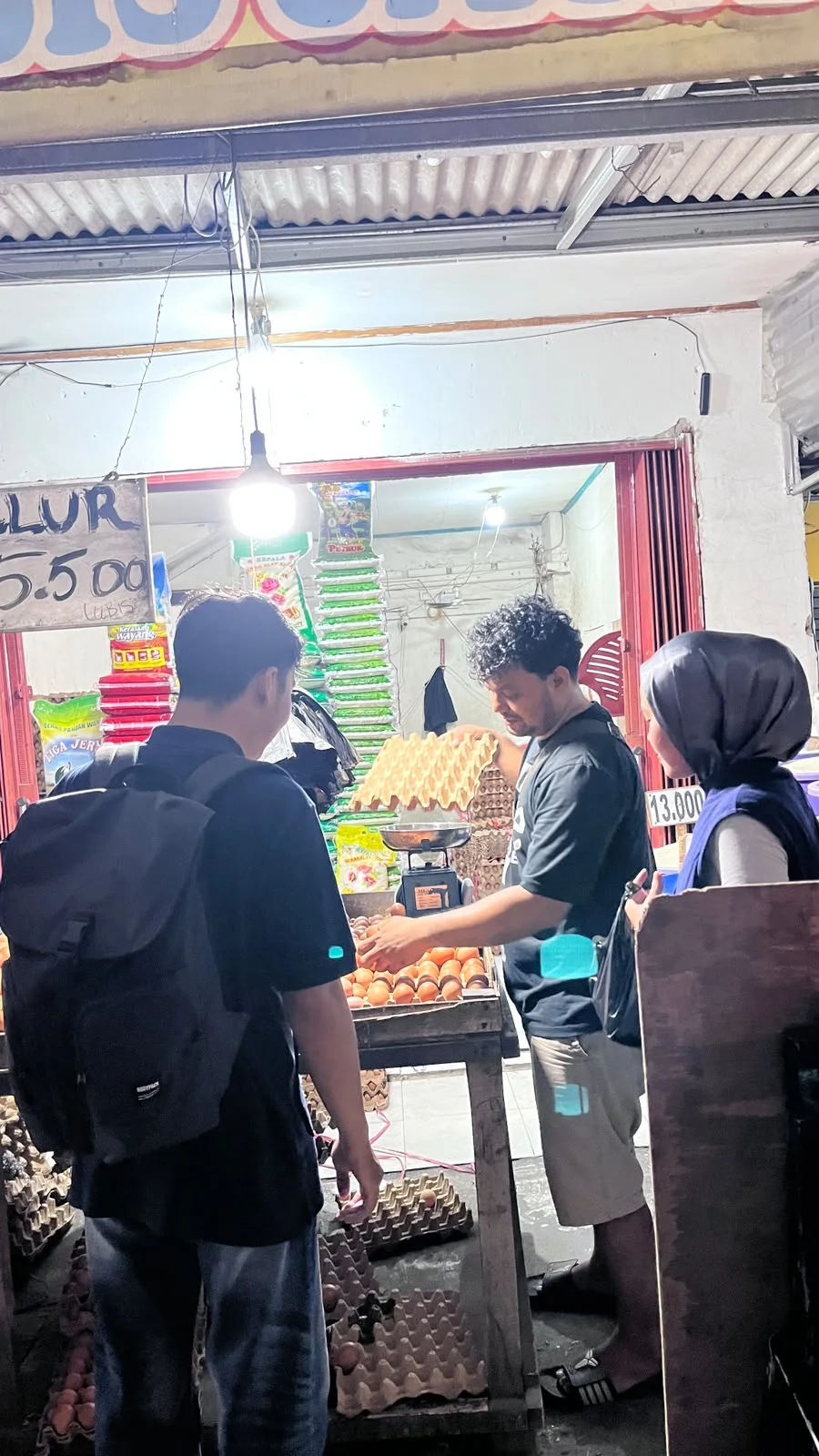
When prices approach that threshold, some consumers begin to consider alternative food ingredients.
Seven informants mentioned tofu and tempeh as substitutes when eggs become too expensive. These two food items are considered more affordable for some households.
However, the needs of each consumer are not the same.
A bakery owner in Ciputat, for example, admitted to needing up to one kilogram of eggs every day. For them, eggs are an essential ingredient that is not easily replaced due to their specific function in the food production process.
A similar condition was found with a reseller in Rawabelong who can purchase up to 18 kilograms of eggs in a single transaction.
These findings show that purchasing decisions are not only determined by price but also by the intended use of the product.
Households may reduce egg consumption or replace them with other protein sources. Conversely, food business operators and traders require more consistent supplies.
Farm-Gate Prices Fell Below Production Costs
Unlike the price conditions at the consumer level, layer chicken farmers faced significant pressure throughout several months in 2026.
In May 2026, egg prices at the farm level were reported to have dropped to around Rp21,000 per kilogram.
This decline occurred when egg production was abundant, while the market's ability to absorb the supply did not increase proportionally.
The situation became more difficult because farmers still had to cover costs for feed, chicken maintenance, labor, and other operational needs.
The National Food Agency in June 2026 even acknowledged the price pressure at the farm level, with several regions experiencing selling prices of around Rp18,000–Rp20,000 per kilogram.
On 7 July 2026, farmers in Solo Raya held a protest known as the 'egg bath' action. They raised concerns about farm-gate egg prices plummeting to the range of Rp17,000–Rp18,000 per kilogram.
This value is below the estimated production costs provided by several livestock business operators.
The issue of low prices became even more severe as feed costs increased.
For small-scale farmers, this condition has the potential to reduce their ability to maintain production. If it continues, this pressure could affect the sustainability of the poultry business.
However, the price difference between farmers in Central Java in July and consumers in Greater Jakarta during the observation period cannot be immediately assumed to be profit enjoyed by traders.
Both prices originate from different locations, times, and stages of trade.
Why Are Low Farm-Gate Prices Not Immediately Felt in the Market?
In trading activities, the price of a product is not only determined by its production costs.
There is a distribution process that involves collecting goods, transportation, storage, sorting, and selling to the final consumer.
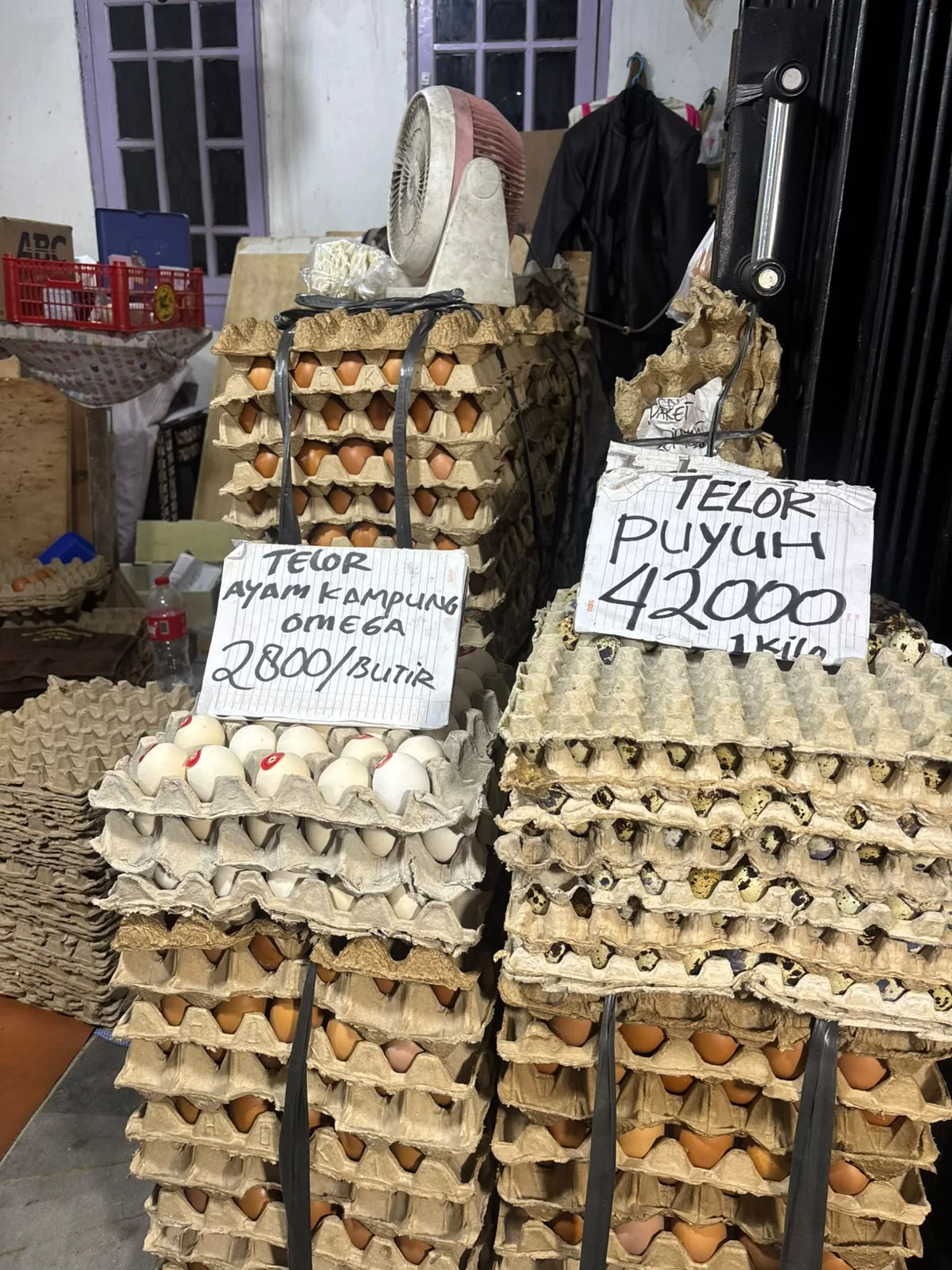
Chicken eggs are also food products that require careful handling to prevent breakage or quality degradation during distribution.
Each stage can incur additional costs.
As a result, a decline in prices at the farm level is not always immediately reflected in the prices paid by consumers.
In addition to distribution costs, market structure and the bargaining power of business actors also influence price formation.
The Center of Reform on Economics (CORE) Indonesia previously highlighted the long distribution chain and the disparity in bargaining power between small-scale farmers and large-scale business operators.
Small-scale farmers tend to have limited access to large-volume buyers. This condition can make them more vulnerable to accepting prices determined by the market.
Conversely, business operators with better distribution facilities, marketing networks, and storage capabilities may have stronger bargaining power.
During field observations in Rawabelong, an agent also mentioned a deduction known as an 'agent tax' of 10 percent of sales.
If calculated from the price of Rp26,000 per kilogram, this percentage is equivalent to Rp2,600 per kilogram.
However, this information is still based on the statement of one informant. There is no available documentation explaining the basis for the levy, the calculation mechanism, or whether this deduction is indeed an official tax obligation.
Therefore, further research is needed regarding costs and profits at each stage of the trade chain before it can be concluded which party earns the largest margin.
Government Efforts to Maintain Farm-Gate Prices
Facing pressure on egg prices, the government has taken several steps to protect the sustainability of farmers' businesses.
In June 2026, the Minister of Agriculture and Head of the National Food Agency, Andi Amran Sulaiman, emphasized the need for supervision of the Reference Purchase Price (HAP) for commercial chicken eggs at the farm level at Rp26,500 per kilogram.
In an official statement from the National Food Agency on 10 June 2026, Amran stated:
“We have taken several policies to protect egg farmers so they do not suffer losses. First, the HAP. We ask all collectors and buyers of eggs, the HAP is Rp26,500 per kilo,” said Andi Amran Sulaiman.
The government is also encouraging increased egg absorption through the Free Nutritious Meal (MBG) program.
The program is expected to expand demand, especially if procurement is carried out by involving local farmers.
In addition, the government is running a Food Supply and Price Stabilization (SPHP) program for corn to help reduce animal feed costs.
The National Food Agency is preparing an allocation for the distribution of 242,000 tons of feed corn on 2026.
This step is aimed at maintaining a balance between production costs, farmers' selling prices, and consumer needs.
However, the effectiveness of these various policies still needs to be assessed based on price developments in the field and the program's ability to reach small-scale farmers.
National Production Surplus, Distribution Remains a Challenge
In terms of availability, national egg production is actually considered capable of meeting public demand.
Based on the Ministry of Agriculture's forecast published in July 2026, commercial chicken egg production is estimated to reach approximately 6.99 million tons.
Meanwhile, national demand is estimated at 6.47 million tons, resulting in a potential supply surplus of about 517 thousand tons.
This figure shows the relatively large national egg production capacity.
However, high production does not necessarily provide benefits for all farmers.
When production exceeds the market's absorption capacity, prices at the producer level have the potential to experience pressure.
This condition also shows that food issues are not only related to the ability to produce goods, but also how that production is distributed and absorbed efficiently.
Market development, strengthening farmer cooperatives, and expanding direct sales access can be part of efforts to improve the trading system.
With a more efficient distribution chain, it is hoped that the prices received by farmers will be more decent without excessively burdening consumers.
What Can Be Learned from Consumer Behavior?
In economic theory, demand for a good is influenced by several factors, such as the price of the good, consumer income, tastes, the number of household members, needs, and the price of substitute goods.
The results of observations in five locations show some of these factors in egg purchasing behavior.
Price-sensitive household consumers tend to consider substitute food ingredients when egg prices rise.
Conversely, consumers who use eggs as a business raw material have different needs and are therefore not always able to easily reduce their purchase volume.
These differences show that consumer responses to price changes are not uniform.
However, data from nine informants is not sufficient to calculate demand elasticity representatively.
Measuring elasticity requires measurable data on price changes and the quantity demanded, including control over other factors that may influence purchases.
Therefore, further research with a wider sample and sales data based on specific time periods is needed to determine the extent to which price changes influence egg demand in Greater Jakarta.
Maintaining Price Balance for Farmers and Consumers
The results of this observation show that the price of commercial chicken eggs in the five locations is within a range that is not much different, namely Rp25,000–Rp27,000 per kilogram.
For some consumers, this price is still considered affordable. However, conditions at the farm level show that consumer price stability does not automatically reflect the welfare of producers.
The problems facing the livestock sector cannot be solved simply by pushing prices up or down.
A balance is needed between decent production costs, an efficient distribution system, public purchasing power, and certainty in the absorption of livestock products.
The government needs to strengthen price supervision throughout the trade chain. On the other hand, market access for small-scale farmers also needs to be expanded so they are not entirely dependent on intermediaries.
The results of this observation are indeed still limited to nine informants in five locations. However, these findings provide an initial overview of the importance of understanding the differences in conditions between the consumer market and the production level.
Affordable egg prices for buyers should be able to go hand-in-hand with decent selling prices for farmers.
Ultimately, the success of food trade is not only seen from stable prices in the market, but also from the trading system's ability to provide more balanced benefits for producers, distributors, and consumers.
Data Sources and References
Author's primary data. Observation of prices and purchasing behavior of commercial chicken eggs from nine informants in Depok, Ciputat, Pamulang, Ciledug, and Rawabelong. The date and year of the survey implementation need to be completed.
National Food Agency. (2026, 10 June). Protecting Farmers, Government Strictly Oversees HAP for Commercial Chicken Eggs.
National Food Agency. (2026, 16 June). Poultry Farm-Gate Prices Start to Move Positively, Government Strengthens Downstream Absorption.
Ministry of Agriculture of the Republic of Indonesia. (2026, July). Ministry of Agriculture Supports Strengthening Animal Protein Consumption and Sustainability of Farmers' Businesses.
National Strategic Food Price Information Center (PIHPS). (2026, 11 September). Data on commercial chicken egg prices in traditional markets of DKI Jakarta Province.
CORE Indonesia. (2026, 25 June). Analysis regarding the decline in egg prices, expectations for MBG program absorption, and the structure of the poultry industry.
Association of Small-Scale Farmers of Solo Raya. (2026, 7 July). Statements during the farmers' protest regarding the decline in egg prices at the producer level.



Comments 0
Write a Comment Share your response