

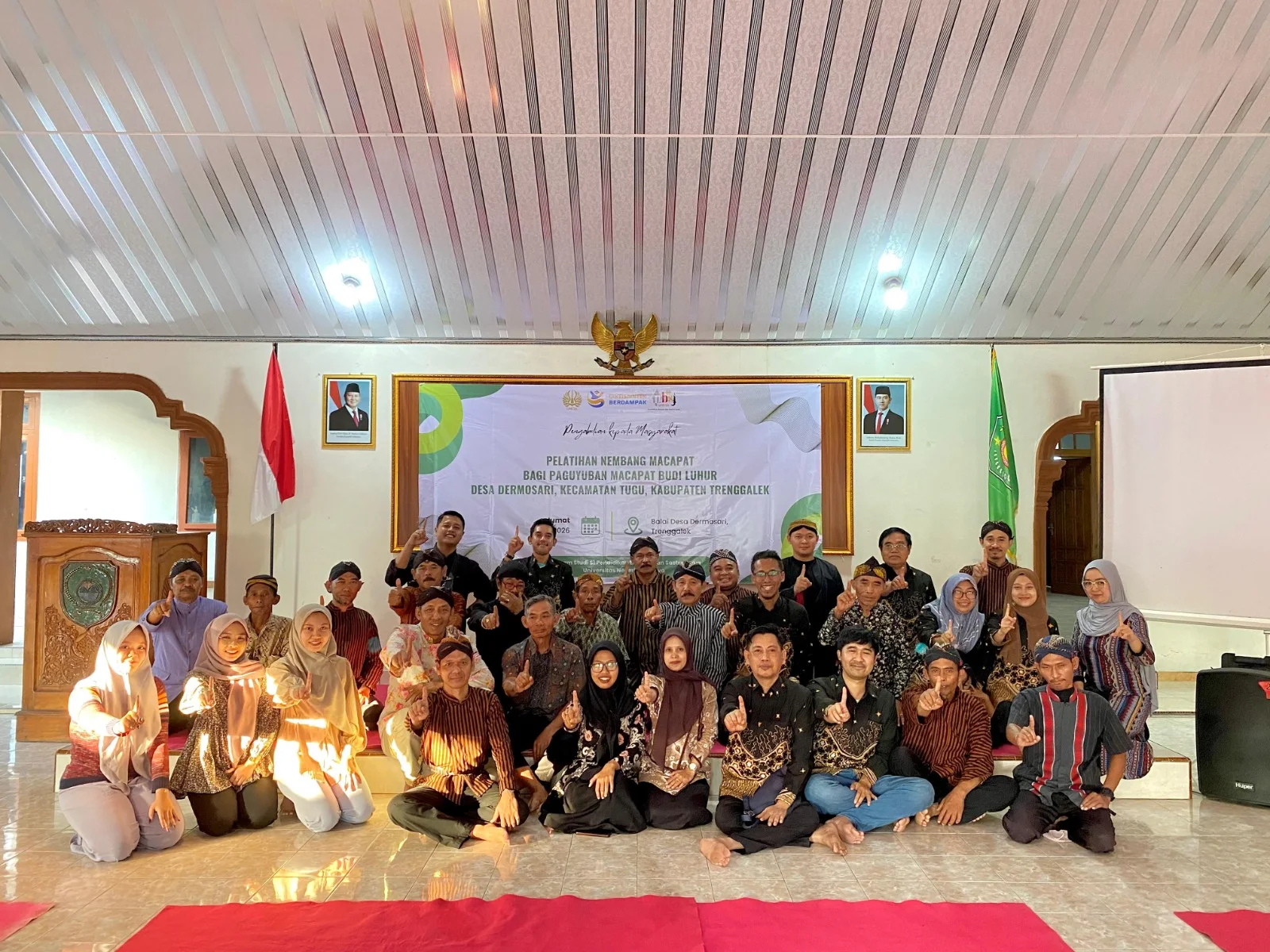
TRENGGALEK, JurnalPost.com – Efforts to preserve Javanese culture continue through the Bachelor of 1 Javanese Language and Literature Education (PBSJ) program at the Faculty of Languages and Arts (FBS), Universitas Negeri Surabaya (Unesa). Through a Community Service (PkM) program, a team of PBSJ lecturers held a Macapat singing workshop for the Budi Luhur Association in Dermosari Village, Tugu District, Trenggalek Regency, on Friday (10/7/2026).
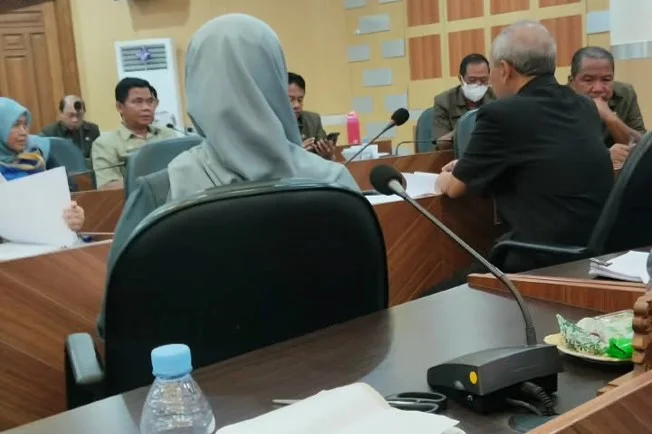
The activity, held at the Dermosari Village Hall, was attended by approximately 25 participants who are members of the association. This training serves as a platform to strengthen the community's understanding of Macapat, covering both theory and practice, ensuring this Javanese oral tradition can be passed down to future generations.
On this occasion, the keynote speaker, Drs. Sugeng Adipitoyo, M.Si., presented material on the development and richness of the Macapat tradition across various regions of Java. He explained that while Macapat follows a standard framework, each region possesses unique musical characteristics and performance styles.
"Macapat is a living cultural heritage. Its performance style evolves according to the social environment of the community. We recognize the coastal styles of Gresik and Tuban, as well as the Surakarta and Yogyakarta styles, each with its own distinct vocal techniques, melodic nuances, and emotional expression," he explained to the participants.
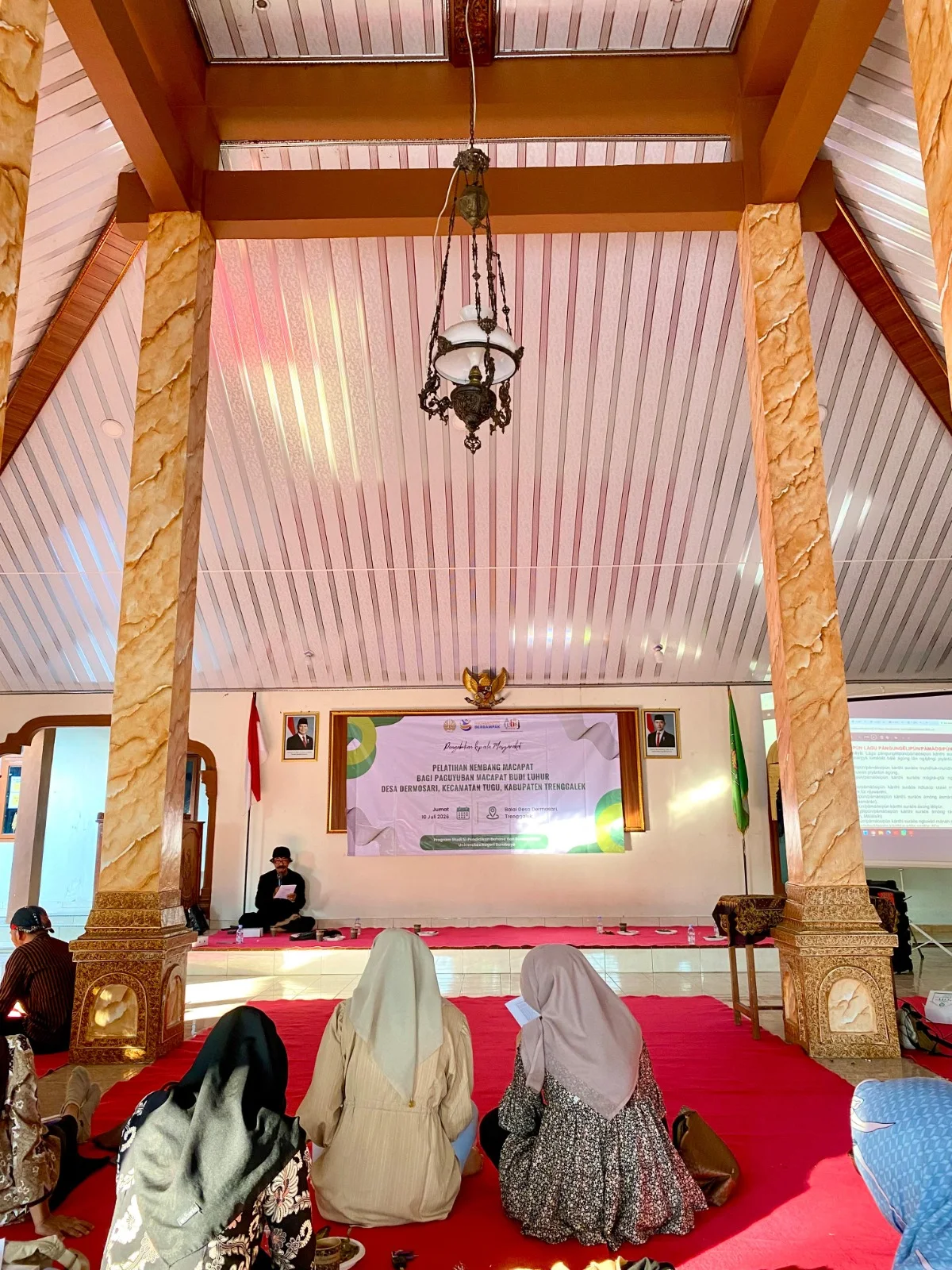
Beyond theoretical instruction, the training included a practical Macapat singing session. Participants were given the opportunity to perform several types of songs in turns, receiving direct feedback on vocal techniques, pronunciation, mastery of musical notation (titilaras), and the interpretation of the song's meaning.
The atmosphere of the training was warm and interactive, reflecting the participants' enthusiasm for learning traditional Javanese arts.
Dermosari Village Head, Suminto, expressed his appreciation for the event. According to him, training involving academics provides a new perspective for the community, which has previously learned Macapat independently.
"Until now, the association members have learned autodidactically based on experience. The presence of lecturers from Unesa provides a stronger theoretical foundation, helping us better understand the philosophy, structure, and techniques involved in performing Macapat," he said.
Meanwhile, the Coordinator of the Bachelor of 1 Javanese Language and Literature Education program at FBS Unesa, Latif Nur Hasan, stated that this community service activity is part of the university's commitment to supporting the community in maintaining the sustainability of regional cultural heritage.
He also expressed his admiration for the quality of human resources in Dermosari Village. According to him, the community's enthusiasm for learning and their concern for local culture are vital assets in maintaining the existence of Macapat amidst the rapid currents of modernization.
"We see immense cultural potential in Dermosari Village. The participants' enthusiasm shows that Javanese traditions still have a strong space to thrive if supported by a community that cares and is willing to keep learning," he said.
Through this Community Service activity, PBSJ FBS Unesa hopes that the synergy between the university and the community can continue to be strengthened in efforts toward cultural preservation.
Macapat is not only viewed as a literary oral heritage but also as a medium for character education, containing the moral values, ethics, and life philosophy of the Javanese people.
This training also demonstrates that cultural preservation is not sufficiently achieved through documentation alone; it must be realized through a continuous, participatory learning process that involves the community as the primary actors.







Comments 0
Write a Comment Share your response