


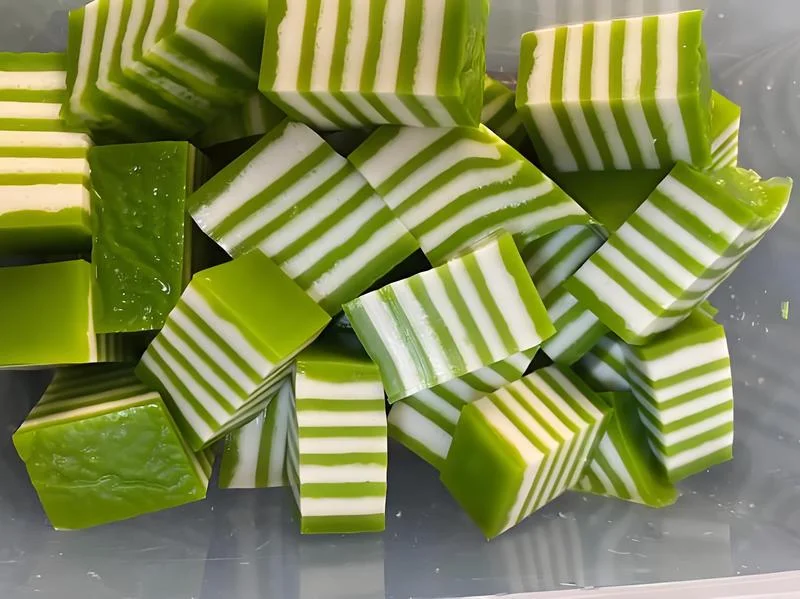
HAIKOU, JurnalPost.com — The aroma of pandan is very familiar to the people of Indonesia. The long green leaves are present in a variety of dishes, ranging from layer cakes, sticky rice, and beverages, to various desserts. With just a few leaves, pandan is able to leave a distinctive, warm, and easily recognizable aroma.
However, the journey of pandan does not stop in the kitchens of the archipelago. The plant, which originated from the Maluku Islands, now grows abundantly thousands of kilometers from Indonesia, specifically in Hainan Province, southern China.
There, pandan is more than just a tropical plant. It carries traces of history, memories of a hometown, and has paved the way for a new, continuously growing industry.
The Aroma of Home Brought from Indonesia
The trail of pandan in Hainan cannot be separated from the overseas Chinese who returned from Indonesia and various parts of Southeast Asia starting in the 1950s.
Some of them settled in Xinglong, an area in Wanning City. With their return, they brought the habits, recipes, and culinary traditions that had become ingrained during their lives in Indonesia.
Liang Jinhua is one of the overseas Chinese whose family has maintained these traditions.
“When we were little, we always planted a few pandan trees in the yard. Every time we made Nyonya cakes or cooked curry, we just had to pick a few leaves. That aroma is the aroma of home,” recalled Liang.
Her family later opened the Isana Indonesian Restaurant in Xinglong. In February 2023, the restaurant received the “Indonesian Culinary Taste Preservation Restaurant” certification from the Consulate General of the Republic of Indonesia in Guangzhou.
For Liang, pandan has a meaning far greater than just an ingredient. Its aroma serves as a bridge between the lives of overseas Chinese in their ancestral land and the memories of Indonesia, which was once their second home.
Photo caption:
From Backyard Plant to Commodity
Although pandan has been planted in Hainan for decades, its cultivation remained limited for about four to five decades.
Pandan plants were mostly found in home gardens and had not yet developed into a large-scale agricultural commodity.
The situation began to change when scientific research on pandan was conducted more intensively.
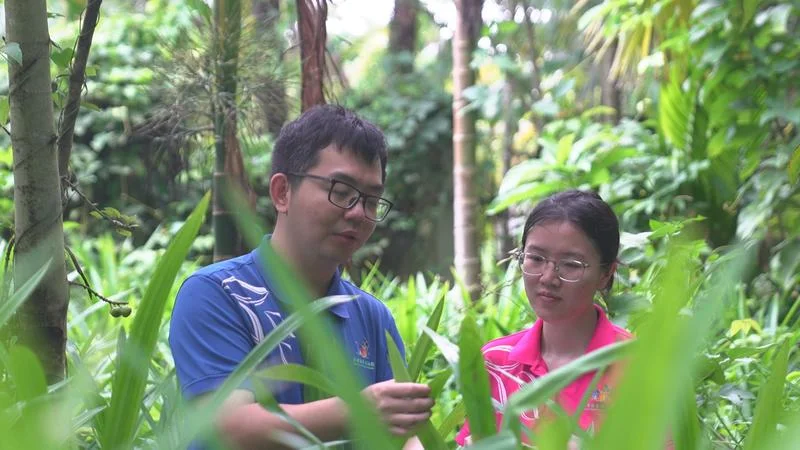
Since the 1980s, the Spice and Beverage Research Institute under the Chinese Academy of Tropical Agricultural Sciences (CATAS) began collecting and preserving various pandan germplasm resources.
This long-term research eventually produced a superior variety called “Zongxiang Banlan,” which is known for its strong aroma.
However, developing large-scale pandan plantations is not a simple task.
CATAS researcher Ji Xunzhi explained that pandan does not produce flowers or fruit. The plant can only be propagated through root suckers.
This condition made the availability of seedlings one of the main obstacles, especially because the survival rate of seedlings was previously relatively low.
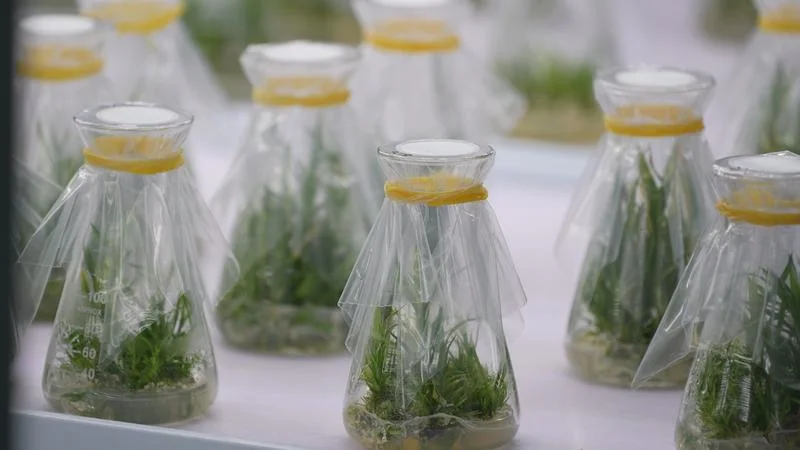
To overcome this, researchers developed rapid propagation technology using tissue culture. This method allows for the production of healthier and more uniform seedlings in large quantities.
Scientists also developed special organic fertilizers to help enhance the strength of the pandan leaf aroma.
Not stopping at the cultivation aspect, toxicological research was also conducted to provide a scientific basis regarding the safety of pandan as a food ingredient.
Photo caption:
Policies Pave the Way for the Pandan Industry
Advances in cultivation technology were then met with regulatory support.
Previously, pandan was not listed in the national catalog of approved food ingredients in China. This condition caused problems for the industry because pandan-processed products were once withdrawn from the market due to the lack of standards governing their use.
A turning point occurred in 2023.
Hainan officially implemented regional food safety standards for pandan. This policy made Hainan the only province in China that currently allows for the legal production and processing of pandan-based foods.
The Head of the Wanning Municipal Bureau of Agriculture and Rural Affairs, Cai Duhao, said that the local government has even drafted a special industrial development plan centered on “a single pandan leaf.”
Various incentives are provided, including subsidies for pandan development through intercropping patterns under forest stands.
The ambition is quite large: to make Wanning the “Pandan Village of China.”
Wanning also wants to become a gateway for the development of the pandan industry to various regions in China while opening connections with the international market.
Pandan Expands to Thousands of Hectares
This transformation is now beginning to be seen.
The area of pandan cultivation in Hainan has reached approximately 2,000 hectares.
The Nanqiao area in Wanning City has about 300 hectares of pandan plantations and has become one of the largest concentrated pandan cultivation bases on the island.
From agricultural land, pandan has then expanded into the processing industry.
In recent years, pandan lemon tea and pandan coffee have become increasingly popular. Other products have also begun to emerge, ranging from pandan noodles, various cakes, aromatherapy, and detergents, to ornamental plants.
This development has even given rise to a saying among industry players that “everything can be combined with pandan.”
A Single Leaf That Brings Indonesia and Hainan Closer
Behind the growing pandan industry, agricultural relations between Hainan and Indonesia are also becoming more intensive.
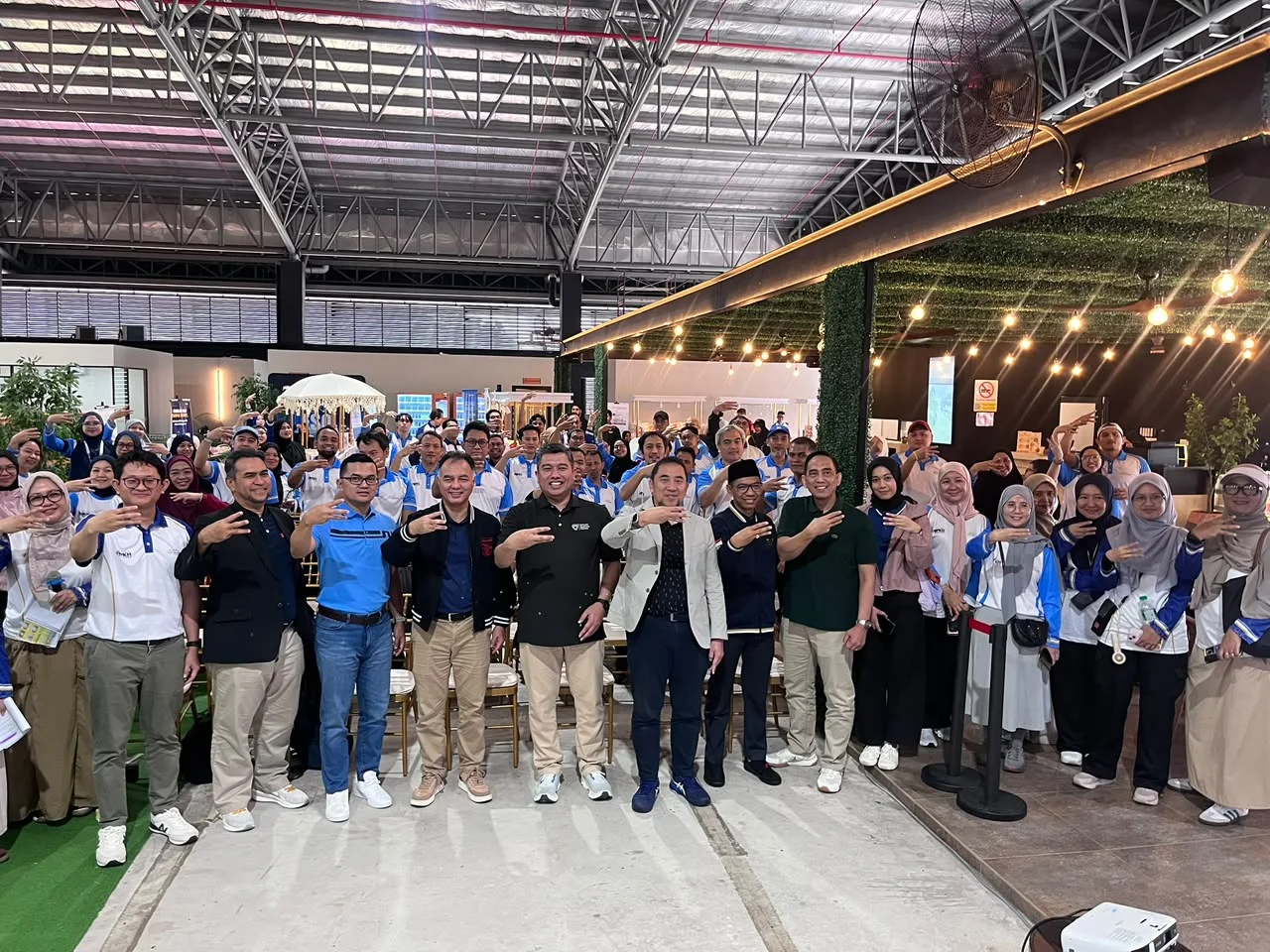
In April 2026, a delegation from Hainan University visited Indonesia to promote cooperation through the Tropical Region University Alliance.
The relationship continued in July, when a Hainan economic and trade delegation came to Jakarta for the China (Hainan)-Indonesia Economic and Trade Cooperation Symposium.
Agriculture was one of the main sectors discussed.
In the field of research, CATAS has also established cooperation with Brawijaya University to conduct joint research on pest and disease control in tropical plants.
Pandan, which has long been used by the Indonesian people as a food ingredient and for various traditional needs, has finally become a simple illustration of how agricultural knowledge can move across national borders.
The journey of the plant from the Maluku Islands to growing into an industry in Hainan also holds stories about migration, culture, technology, and human memory.
For the overseas Chinese who once lived in Indonesia, the aroma of pandan continues to bring them back to old memories.
Meanwhile, for Hainan, the simple green leaf is slowly turning into a source of innovation and economic opportunity.
From a plant in a backyard to thousands of hectares of plantations, pandan has now become one of the small bridges connecting Indonesia and China through taste, culture, and tropical agricultural cooperation.
Source: Xinhua








Comments 0
Write a Comment Share your response