


Prafi, JurnalPost.com — A total of 13 micro, small, and medium enterprise (MSME) owners in the food and beverage sector in Prafi District, West Papua, participated in a training session on local food-based product development organized by the Universitas Airlangga (UNAIR) Patriot Expedition Team (TEP) 19 on Monday (10/12/2026).
The event, held in SP4, Udapi Hilir Village, introduced various food processing innovations while equipping participants with knowledge regarding marketing and business management.
This training serves as an effort to utilize the food commodities available in Prafi to increase their economic value. So far, local food ingredients such as bananas, cassava, taro, pumpkin, and fishery products have significant potential to be developed into a more diverse range of food products.
During the event, TEP 19 UNAIR presented Dr. Heni Adhianata, an academic in the field of food science and nutrition who teaches at the OTTIMMO International MasterGourmet Academy.
Diverse Innovations from Local Ingredients
Participants were introduced to several alternative food products utilizing local raw materials, ranging from 'abus' cakes with added snakehead fish, catfish sticks, banana sponge cake, taro and pumpkin donuts, to tuna floss combined with banana blossoms or oyster mushrooms.
Other innovations included taro chips, cassava 'gethuk', corn tortillas with added catfish, and various processed dishes using yellowtail fish.
The product development focused not only on food variety but also considered combinations of carbohydrate and protein-rich food sources.
Before being introduced to the participants, the team conducted formulation trials and organoleptic testing to evaluate product characteristics based on taste, aroma, color, and texture.
The Head of TEP 19 UNAIR, Emyr Reisha Isaura, stated that this training was inspired by the potential of local food ingredients that business owners can leverage to create new products.
“This training was attended by 13 food and beverage MSMEs in Prafi. We want to encourage them to see the potential of local food ingredients as an opportunity to create more diverse products with added value. The hope is that this innovation will not only produce new items but also support business development and increase the economic value of local resources,” she said.
According to her, product development is a viable option for MSMEs to expand their market while increasing the utilization of raw materials available in their immediate surroundings.
MSME Owners Interested in Trying New Products
Several participants showed interest in the food innovations introduced during the training.
Sri Hartini and Tutik Ernawati, for instance, expressed interest in developing taro chips with added catfish. They found the combination intriguing as an alternative food product based on taro.
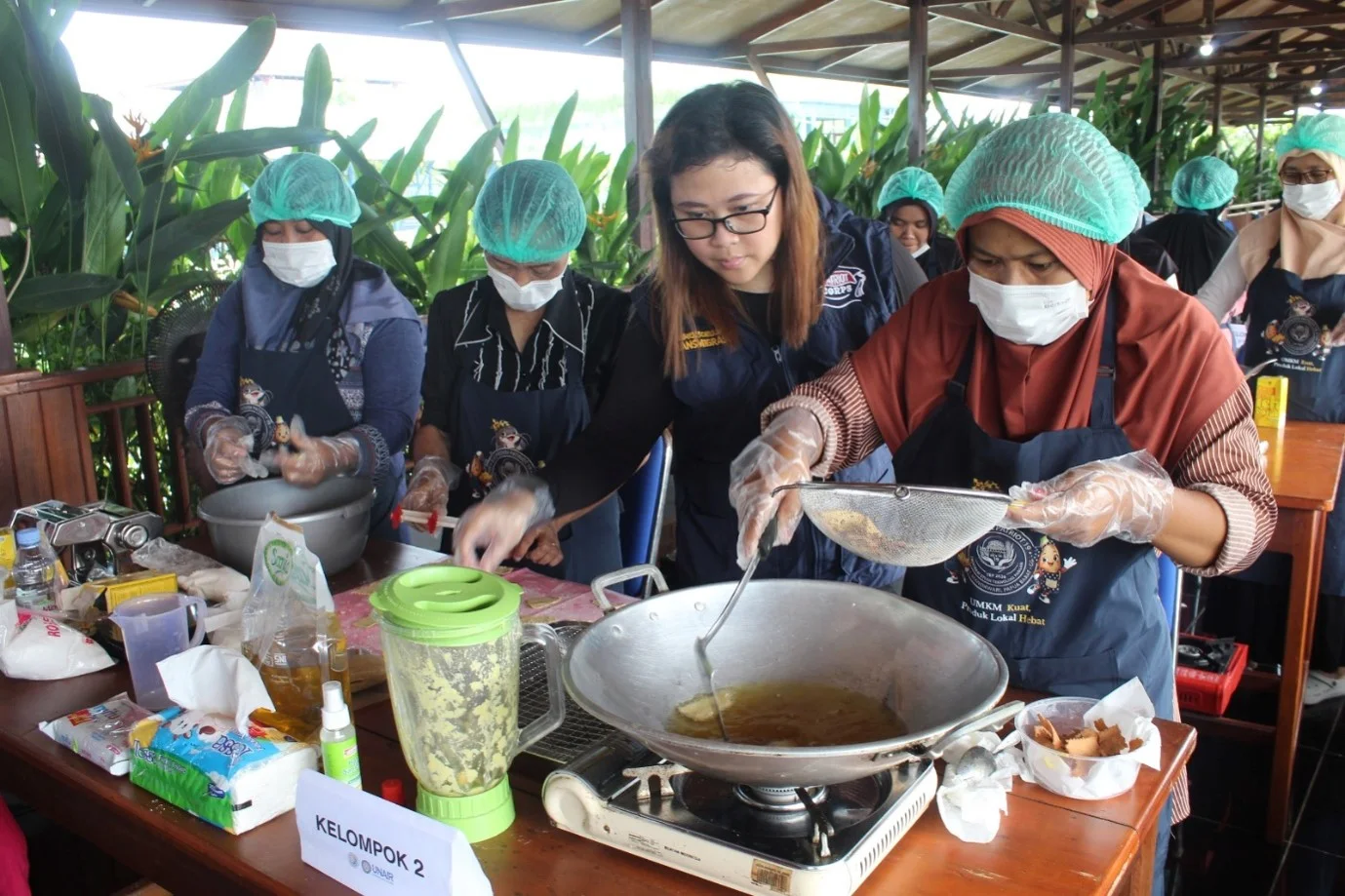
Meanwhile, Satinem, an MSME owner who has been running a banana snack business, viewed the training as an opportunity to gain inspiration for developing product variations.
“So far, we have mostly developed products that we are already used to making. Through this training, we received inspiration to try new product variations from local food ingredients. Hopefully, innovations like this can increase the range of products we sell and attract more buyers,” said Satinem.
The participants' interest serves as an initial indication that local food-based product development has the potential to be applied in small-scale food businesses.
However, implementing these innovations still requires adjustments, particularly regarding the availability of raw materials, production costs, consumer acceptance, and the capabilities of each business owner.
Product Development Must Be Accompanied by Marketing Strategy
In addition to introducing food formulations, the training also covered aspects of marketing and business management.
The material included production cost planning, setting selling prices, promotional strategies, and business management to ensure that the developed products do not stop at the trial stage.
For MSMEs, food innovation needs to be balanced with accurate business calculations. New products with appealing taste and appearance may not necessarily succeed if production costs are too high or if they do not meet market needs.
Therefore, participants were also encouraged to consider consumer characteristics when choosing the product formulations to be developed.
This approach is expected to help business owners produce items that not only utilize local food ingredients but also have the potential to be marketed sustainably.
TEP 19 UNAIR Prepares Follow-up Monitoring
The training attended by the 13 MSMEs is the initial stage of the local food product development mentoring process in Prafi.
TEP 19 UNAIR plans to monitor the follow-up of product trials by each participant. This step is taken to see to what extent the introduced formulations can be applied and adapted to business conditions.
Through this monitoring, the team will also evaluate the progress of product trials and identify obstacles faced by the MSME owners.
The success of the program will ultimately depend not only on the number of innovations introduced but also on the participants' ability to develop products that are viable for production, accepted by consumers, and profitable.
By utilizing commodities available in the Prafi region, local food diversification has the potential to open up new business options while increasing the added value of the local community's agricultural and fishery products.





Comments 0
Write a Comment Share your response