

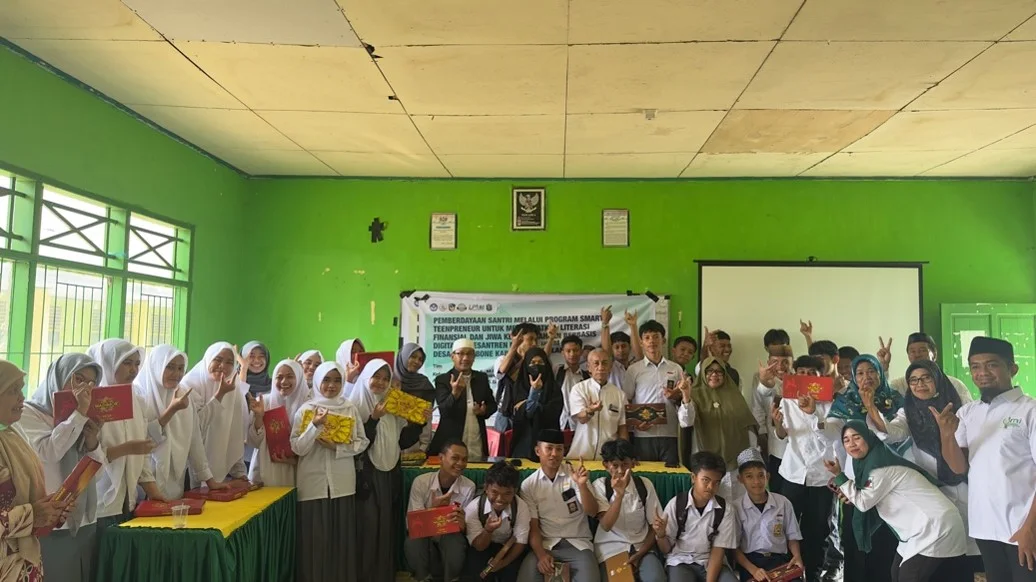
TAKALAR, JurnalPost.com — A total of 30 tahfidz students from the Mizanul Ulum Pesantren under the Universitas Muslim Indonesia (YW UMI) Waqf Foundation in Sanrobone Village, Takalar Regency, participated in a digital economy and Islamic family law literacy training on Tuesday (13/10/2026).
The training was part of a Community Service (PkM) program conducted by a team of lecturers from the Universitas Muslim Indonesia (UMI), themed Transforming the Role of Students as Islamic Family Economic Actors through Digital Learning and Ahwal Al Syakhsiyah Literacy.
This activity aimed to equip students with knowledge regarding family responsibilities according to Islamic teachings, while introducing economic opportunities that can be developed through the use of digital technology.
The service team was led by Dr. H. Andi Sumardin, S.Ag., M.A. from the UMI Faculty of Islamic Religion, alongside Munawir Nasir, S.E., M.M. from the UMI Faculty of Economics and Business.
In its implementation, the program combined two fields of study: Islamic family law, or Ahwal Al Syakhsiyah , and digital economy literacy.
The Islamic family law material covered the roles and responsibilities of family members, including the obligation of financial support and asset management based on Sharia principles. Meanwhile, the digital economy training focused on introducing entrepreneurship, financial management, and the use of technology for productive and halal economic activities.
Pesantren Encourages Students to Face Economic Challenges
The Head of Mizanul Ulum Pesantren, Baso Udin, S.Ag., welcomed the implementation of the activity. According to him, providing economic skills and an understanding of family law is a crucial part of preparing students for life in society.
"On behalf of the extended family of Mizanul Ulum Pesantren, we thank the UMI lecturer team for coming to share their knowledge with our children. The material presented is highly relevant. Students are not only being prepared to be Quran memorizers, but also as future heads of households and homemakers who will one day support their family's economy. With an understanding of Islamic family law and digital skills, God willing, they will be better prepared to face life in society," he expressed.
Baso Udin hopes that the collaboration between the pesantren and UMI will not end with this activity but will continue through various coaching programs beneficial to the students.
Digital Economy Opportunities for Students
The Head of the PkM team, Dr. H. Andi Sumardin, S.Ag., M.A., explained that students have the potential to become drivers of the family economy while remaining grounded in Islamic values.
According to him, understanding the obligations of financial support, asset management, and halal economic principles needs to be introduced early so that students are prepared when they enter family life.
"Students must understand that earning a halal living and managing assets well is part of worship and family responsibility, as regulated in Ahwal Al Syakhsiyah jurisprudence. On the other hand, times have changed. Digital technology opens up many economic opportunities that students can utilize without having to leave the pesantren or their memorization. We want students to be a generation that is strong in faith, understands Sharia, and is economically independent," he explained.
Through this approach, students are not only introduced to the concept of the family economy theoretically but are also invited to understand how technology can be used to open business opportunities.
The development of digital services allows various economic activities to be carried out through devices that are close to daily life, including product marketing, online trading, and simple financial record-keeping.
Students Learn to Utilize Technology for Business
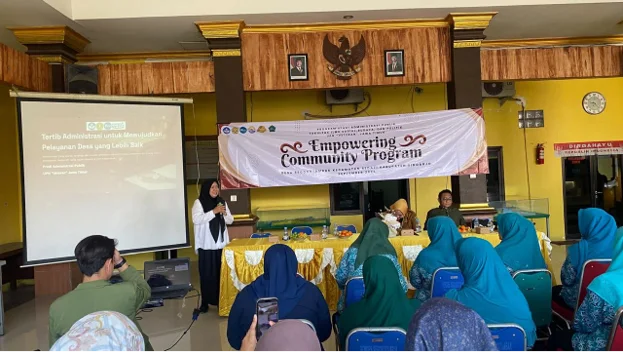
During the training, participants engaged in material presentations, interactive discussions, and simple practice sessions on using digital devices to map business opportunities and record finances.
Munawir Nasir, S.E., M.M. presented material on the basics of economics and digital entrepreneurship using examples relevant to the students' lives.
The learning was directed so that participants would understand that technology does not only function as a means of communication and entertainment but can also be utilized for productive economic activities.
During the discussion session, the students asked several questions related to the material presented.
One of the participants, Ahmad Rizky, admitted to gaining new knowledge regarding the relationship between family responsibilities in Islam and the use of technology for economic activities.
"I just understood that in Islam, there are clear rules about the responsibility of financial support and how to manage assets in a family. We were also taught that mobile phones can be used for productive things, for example, selling online. This activity is very useful. I hope UMI lecturers can come to our pesantren again," he said.
This experience serves as an illustration of how digital economy learning can be introduced to students through an approach that suits the needs and environment of pesantren education.
Integrating Religious Education and Economic Independence
This service program is an effort to integrate religious education with economic skills relevant to technological developments.
Through Islamic family law material, students gain an understanding of rights, obligations, and responsibilities in family life. Meanwhile, digital economy learning introduces skills that can support economic independence in the future.
At the end of the activity, the service team expressed their appreciation to the UMI Waqf Foundation for the support and facilities provided during the program's implementation.
Appreciation was also extended to the pesantren leadership, the ustaz, and all Mizanul Ulum students who participated in the series of activities.
Through this program, the UMI lecturer team hopes that students will not only have the ability to memorize the Quran but also understand family economic responsibilities, possess entrepreneurial knowledge, and be able to adapt to technological developments without abandoning Islamic values.
The activity also served as part of the implementation of the UMI Tridarma of Higher Education through community service, particularly in supporting the improvement of Islamic family law and digital economy literacy within the pesantren environment.




Comments 0
Write a Comment Share your response