

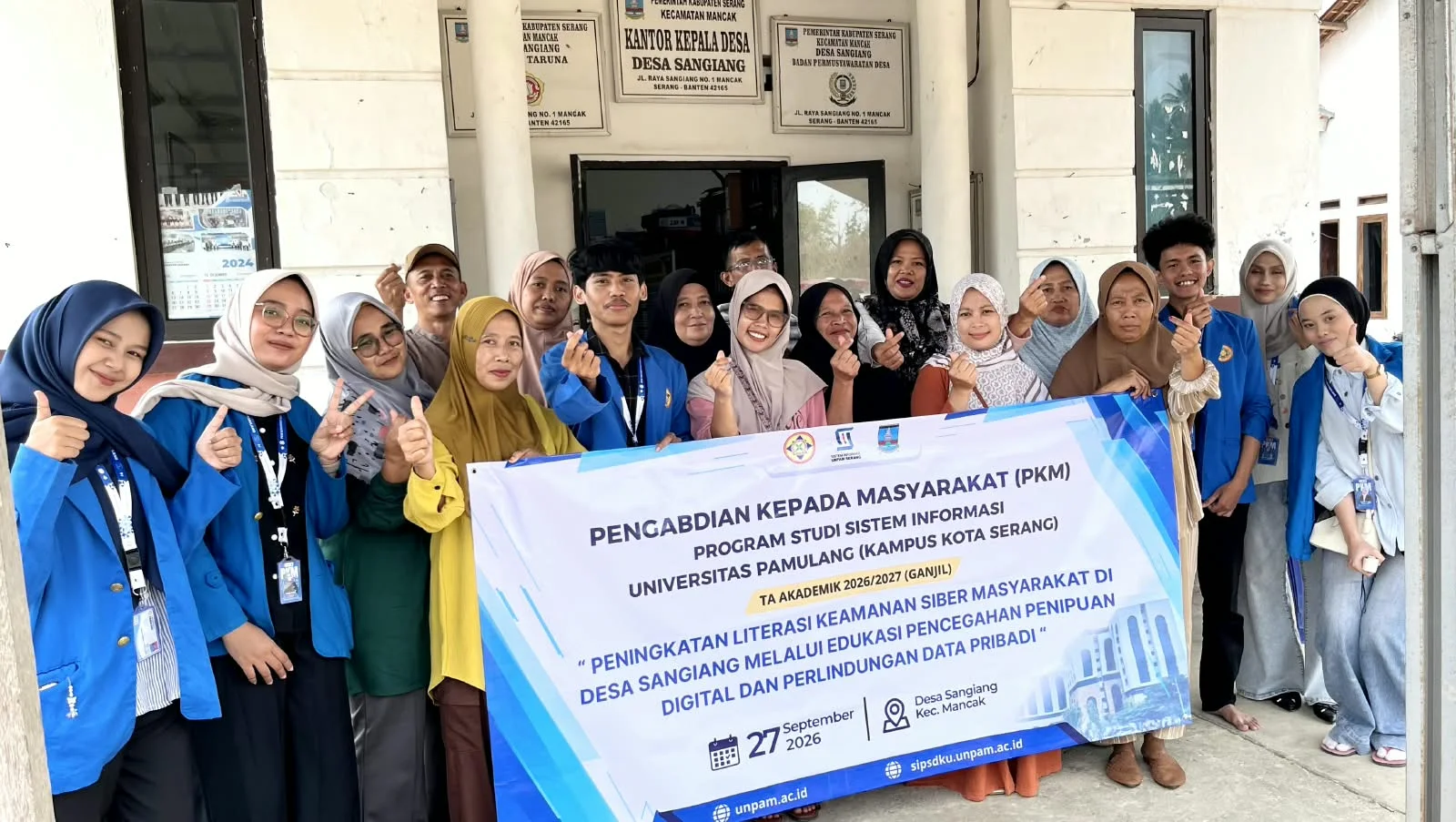
SERANG, JURNALPOST – The increasing use of the internet in daily life has made the public more vulnerable to various digital security threats, ranging from scams via text messages and malicious links to personal data theft. This situation prompted students from the Universitas Pamulang Serang campus to hold a Community Service (PkM) activity in Sangiang Village to improve residents' understanding of cybersecurity.
The activity was themed “Improving Community Cybersecurity Literacy in Sangiang Village through Education on Digital Fraud Prevention and Personal Data Protection”.
Through this activity, the students aimed to equip the community with practical knowledge to be more vigilant against the growing number of digital crime methods.
The ease of accessing information, communicating, and conducting transactions via the internet certainly provides many benefits. However, behind this convenience lies the risk of technology misuse that can harm users if not accompanied by an understanding of digital security.
Introducing Various Digital Fraud Modus Operandi
During the educational session, students provided the community with an understanding of the various forms of fraud frequently encountered in the digital space.
Some of the methods discussed included suspicious messages via messaging applications, social media scams, fake links mimicking official websites, and requests for personal information by unknown parties.
Residents were encouraged to be more cautious when receiving messages offering prizes, requesting money transfers, or directing users to open specific links.
In addition to recognizing the signs of fraud, participants were also given an explanation of the importance of verifying information before trusting or sharing it.
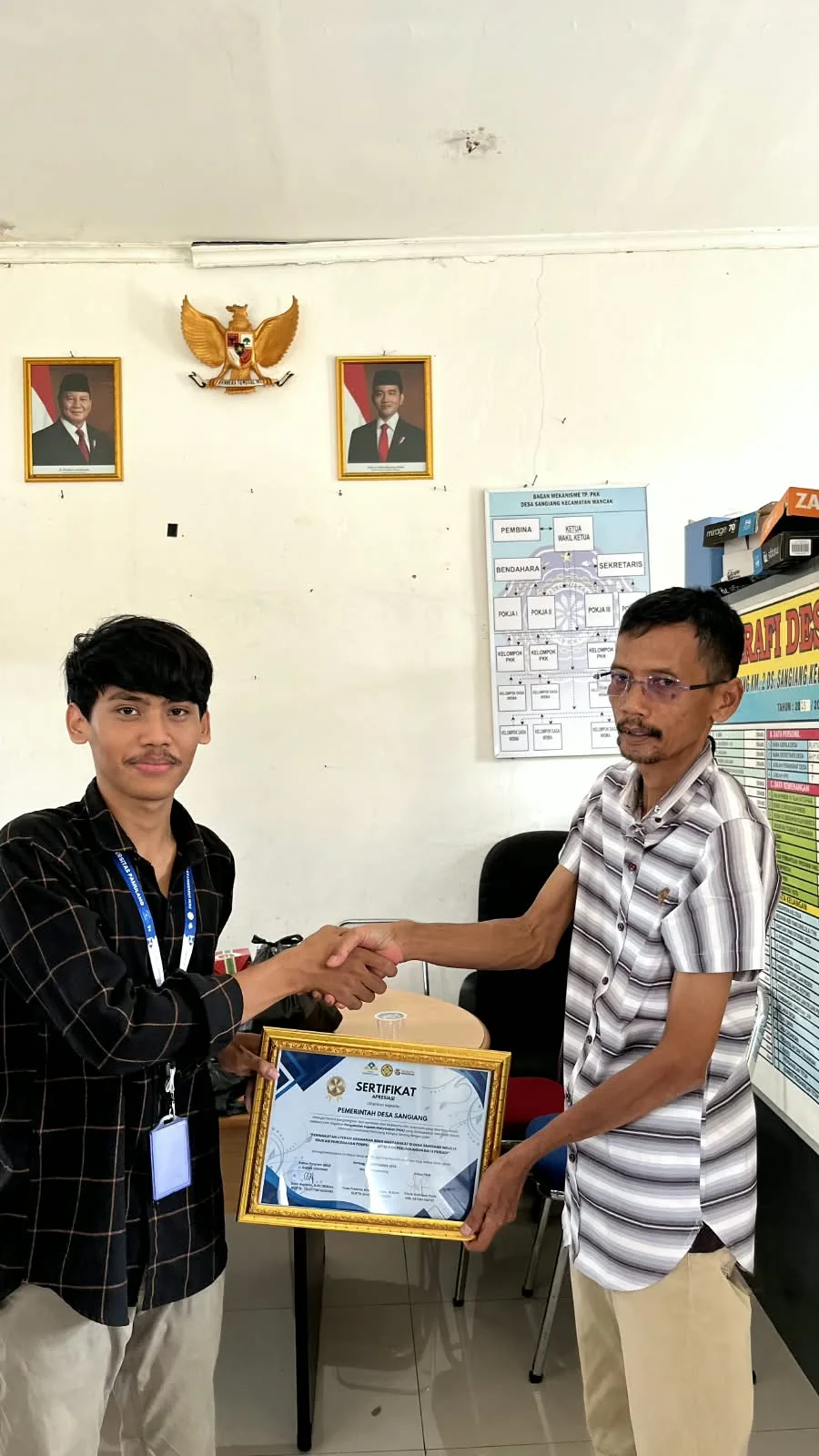
This step is considered crucial because digital fraudsters often exploit user negligence and a lack of knowledge about how cybercrime works.
Education on Personal Data Protection and Account Security
Beyond discussing digital fraud, the PkM team also provided education on how to maintain account security and protect personal data.
The material presented included the use of strong passwords, maintaining the confidentiality of personal identification numbers or PINs, and not sharing One-Time Password (OTP) codes with anyone.
Participants were also introduced to the use of two-step verification as a measure to increase digital account protection.
Through these simple steps, it is hoped that the community can reduce the risk of account takeovers and the misuse of personal information.
The student team also reminded residents of the importance of being critical when receiving information via the internet, especially if the message requests sensitive data or pressures the user to act in a hurry.
Involving Information Systems Students
This Community Service activity was carried out by students from the Information Systems Study Program at the Universitas Pamulang Serang campus.
The PkM team was led by Trisna Andriana Putra, with members Muhammad Fahmi Hamdani, Putri Amelia, Holisoh Fadhillah, Rahma Fadilah, and Regita Intan Pratiwi.
The implementation of the activity was also supervised by Yuda Pratama Wibawa, S.Kom., as the supervising lecturer.
During the activity, the student team delivered educational material directly to the people of Sangiang Village, focusing on the application of digital security measures in daily activities.
This educational approach is expected to help the community understand that personal data protection is not only the responsibility of technology service providers but also requires vigilance from every internet user.
Encouraging the Community to Use the Internet Wisely
Through this activity, students from the Universitas Pamulang Serang campus hope that the knowledge gained by the community will not stop at the time of the education but can be applied sustainably.
The awareness to check links before opening them, maintain the confidentiality of personal information, and ensure account security are the first steps in facing various threats in the digital space.
This PkM activity also serves as a form of student contribution in applying the knowledge gained during their studies to address community needs.
With increased cybersecurity literacy, the people of Sangiang Village are expected to be more capable of utilizing technological developments safely, wisely, and responsibly.
The service program also highlights the role of higher education institutions in supporting the improvement of public digital literacy, particularly in efforts to prevent online fraud and protect personal data.






Comments 0
Write a Comment Share your response