

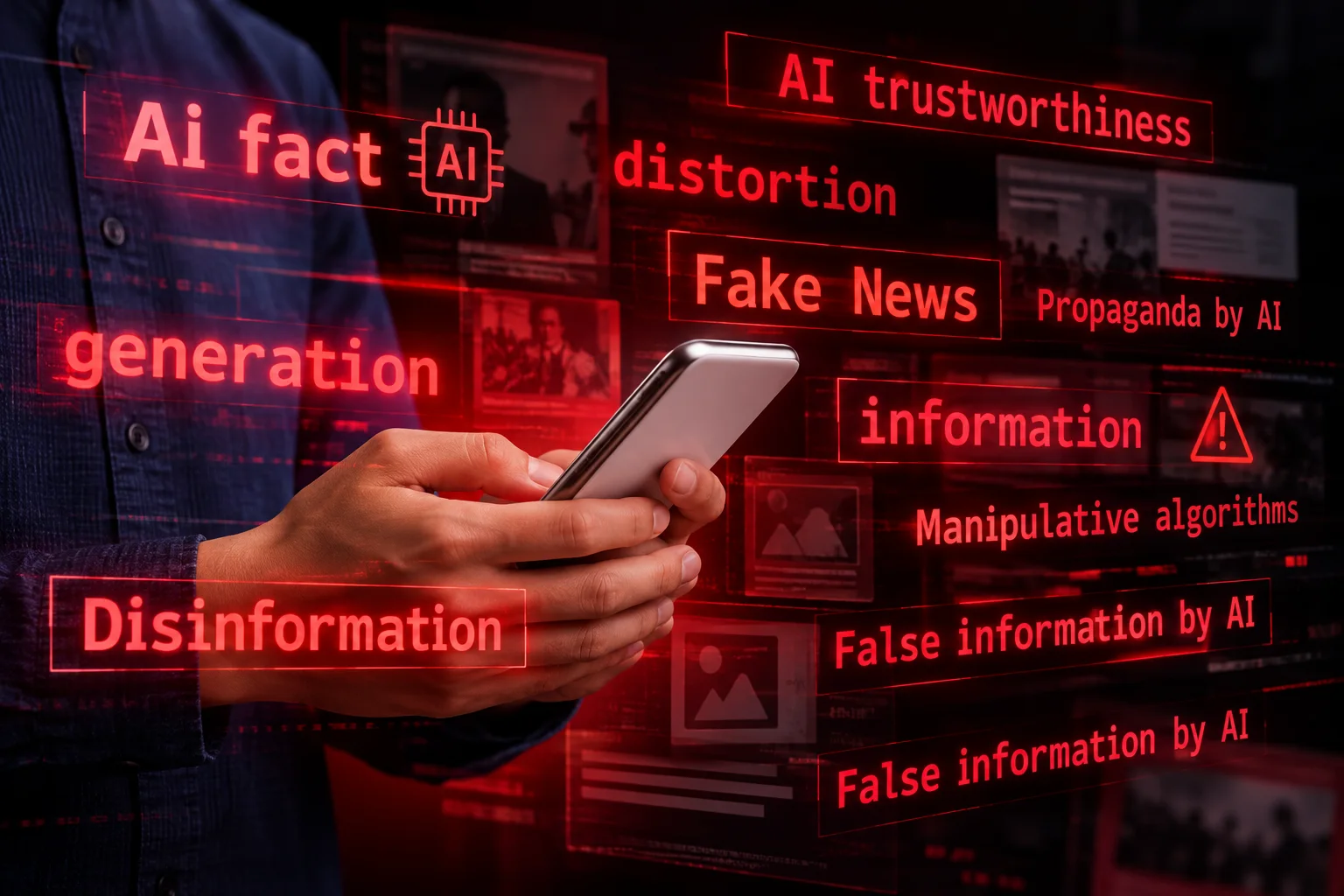
JurnalPost.com - In this all-digital era, the internet makes it easy for people to obtain and share information quickly. Various news items can be received in a short time via social media. This convenience assists with learning, working, and communication activities. However, the information circulating is not necessarily true or entirely trustworthy.
A message that looks convincing may actually contain false information. Therefore, readers need to verify the accuracy of information before accepting or sharing it with others.
For Generation Z, who grew up alongside technological advancements, this skill is an essential asset in daily life. Digital literacy education needs more attention so that the younger generation can utilize technology wisely, critically, and responsibly.
Generation Z is known for being familiar with the internet and digital devices. They use technology to find study materials, enjoy entertainment, and communicate with friends. However, this proximity to technology must be accompanied by the ability to understand and evaluate the information received.
The skill to operate applications does not necessarily guarantee that someone can recognize fake news or hoaxes. Digital literacy helps users assess the credibility of information while considering the impact of their actions on the internet. This ability also includes protecting personal data and respecting other users.
As a Communication Science student at the University of 17 Agustus 1945 (Untag) Surabaya, I view digital literacy education as a highly important necessity. Schools and universities need to provide education to the younger generation to train their ability to filter information through learning and socialization activities.
The Importance of Digital Literacy in Facing Hoaxes
The spread of hoaxes is one of the main reasons for the importance of digital literacy education. False information can be crafted to resemble official news by using attractive photos and headlines. It is not uncommon for the names of well-known institutions or figures to be included to increase reader trust.
Therefore, the appearance of a post needs to be checked alongside its source of information. For example, scholarship announcements circulating in chat groups should be compared with information on the official website of the organizer.
Readers also need to pay attention to dates, requirements, and the listed website addresses. Such verification helps ensure that the information truly comes from an authorized party. This simple habit can be taught through examples that are relevant to the needs of students.
The urge to immediately share information often arises when a news item touches on emotions. News that triggers anger, fear, or sadness can prompt someone to react impulsively.
In such situations, users should take the time to read and understand the content of the news thoroughly before drawing conclusions.
Information received from friends or family also requires verification. People we know may have received incorrect information without realizing it.
Instead of immediately blaming them, we can invite them to look for clear sources and compare the available information. This attitude helps build a habit of reminding each other without shaming those who have believed false information.
The development of artificial intelligence or Artificial Intelligence (AI) also makes digital literacy education increasingly necessary. AI technology can help explain study materials, find ideas, and even draft writing.
Nevertheless, the answers generated by AI still need to be checked because they have the potential to contain inaccurate information. Text that is neatly arranged and sounds convincing is no guarantee that all the information within it is true.
Therefore, users must get into the habit of checking information sources before using them as a basis for making decisions or expressing opinions.
The Role of Schools, Campuses, and Families in Digital Literacy Education
Digital literacy learning can be applied through various subjects. In language classes, for example, students can practice distinguishing between facts and opinions. Meanwhile, in social studies, students can compare news coverage of the same event from several sources.
Teachers or lecturers can also ask students to explain the origin of the information used in completing assignments. Assessment should not only focus on the final answer but also consider the accuracy of the sources and the reasoning supporting the answer.
With this approach, students have the opportunity to improve how they search for information while understanding learning materials more deeply.
Implementing digital literacy learning requires adequate support for educators. Teachers and lecturers need to receive training and easy-to-use teaching materials. They also need opportunities to discuss various digital problems and issues that can be used as examples in the learning process.
Such support helps educators adapt learning methods to the needs of students.
In addition, differences in learning facilities must be considered. Some students may still be using shared devices or have limited internet access.
Therefore, digital literacy education should provide equal learning opportunities by considering the conditions and facilities available.
Outside of formal education, families play an important role in forming habits of using the internet responsibly.
Parents can invite children to discuss news or information found on social media. When there is questionable information, the process of searching for and verifying the truth can be done together.
Children need to be given the opportunity to ask questions without fear of being laughed at. Conversely, parents can also be open if they do not yet understand certain information or technological developments.
This openness helps build comfortable communication within the family environment.
Through consistent guidance, verifying information can become a shared habit. Family members can also help each other when they find suspicious messages or experience difficulties in using digital media.
Student Contributions in Increasing Digital Literacy Awareness
Communication Science students can take an active role through simple education and socialization activities. These activities can take the form of creating educational content about fact-checking, discussions with students, or training on how to recognize fake information on social media.
Educational materials should use language that is easy to understand and be accompanied by examples that are close to everyday life.
Participants also need to be given the opportunity to practice how to verify information directly. Thus, socialization activities do not just convey knowledge but also help form skills that can be applied independently.
The success of the activity can be assessed through the participants' ability to check information sources and explain why certain information is trustworthy after attending the training series.
Besides discussing hoaxes, digital literacy education needs to emphasize the importance of respecting the privacy of others.
Uploading photos of friends or spreading private conversations should be done with the consent of the parties involved. Users need to consider the feelings, safety, and potential harm that someone might experience as a result of such posts.
The habit of respecting the privacy and rights of others will help create a digital environment that is safer and more comfortable for communicating and exchanging knowledge.
As active users of technology, Generation Z needs to take responsibility for their own digital media habits.
Simple steps can begin with reading information thoroughly, checking sources, and comparing statements from various parties. If still in doubt, users should delay sharing information until they obtain an accurate explanation.
If one has already spread incorrect information, a correction should be conveyed to the people who previously received that information. This action is important to help stop the spread of misinformation.
The courage to admit mistakes is also part of a responsible attitude in using digital media.
Schools, campuses, and families can support the formation of these habits through continuous education.
In my opinion, the success of digital literacy is not only seen from someone's ability to use technology, but also from their carefulness in making decisions when facing various information.
Ultimately, every time we are about to press the share button, we have the opportunity to re-verify the truth of the information received. This simple habit needs to be continuously built so that Generation Z does not just become active technology users, but also a critical, wise, and responsible digital society.










Comments 0
Write a Comment Share your response