


Malang, JurnalPost.com — The Faculty of Social and Political Sciences at Universitas Brawijaya (FISIP UB) is fostering environmental awareness from an early age through educational outreach at the Beta Islamic Eco School in Pakiskembar, Pakis District, Malang Regency.
This program is part of the FISIP Bakti Desa (FBD) 2026 initiative, conducted in collaboration with the FISIP UB Faculty Community Service Team.
The activities took place from July 13–25, 2026, involving students from FBD Group 01. The team provided rotating support to 21 students across the school's playgroup and kindergarten levels.
Using an interactive approach, the students introduced the importance of environmental conservation through teaching methods tailored to the age and character of the children.
Field Supervisor Lia Nihlah Najwah stated that environmental education must be introduced early so that children develop a natural habit of caring for the environment in their daily lives.
According to her, the process of habituation is most effective when delivered through activities that are relatable, fun, and easy for children to understand.
“In every year of our environmental education program, we teach children the importance of not littering, not dumping waste into rivers, not burning trash, and ultimately, the need to return to nature,” said Lia.
During the outreach, FBD Group 01 students assisted teachers with classroom instruction, interacted directly with the children, and integrated environmental lessons into various school activities.
The team utilized simple, creative learning materials to make the content more engaging, incorporating recycled items, leaves, and other materials easily found around the school grounds.
The use of these materials is intended to help children grasp environmental concepts more concretely through hands-on learning experiences.
Waste Sorting Education through Treasure Hunt
The program culminated on National Children's Day, July 23, 2026, with the students organizing a coloring session and an educational workshop on sorting organic and inorganic waste.
The waste sorting lesson was presented through a Treasure Hunt game, ensuring that children were not just passive listeners but active participants in the learning process.
This game-based concept was chosen to create a fun learning atmosphere while helping students recognize different types of waste and how to manage them from a young age.
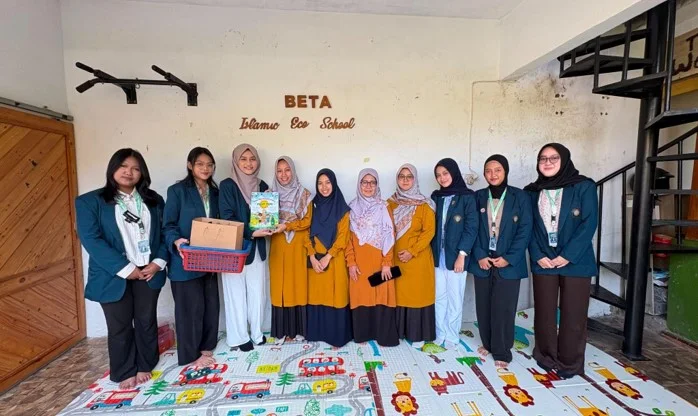
The Beta Islamic Eco School expressed appreciation for the support provided by the FISIP Bakti Desa 2026 team.
According to the school, the university students successfully supported various activities, adapted well to the needs and personalities of each child, and created a more comfortable and enjoyable learning environment.
The program extended beyond the students; the FISIP UB Community Service Team also assisted teachers by providing learning modules and teaching aids to help them deliver environmental curriculum effectively.
Lia hopes that environmental education introduced at an early age will help shape a generation that is conscious of and responsible for environmental sustainability.
By fostering simple habits—such as not littering, protecting rivers, avoiding waste burning, and understanding the importance of nature—the children are encouraged to grow up with more eco-friendly lifestyles.



Comments 0
Write a Comment Share your response