

BOJONEGORO, JurnalPost.com - Recording customer payments one by one is a time-consuming task for many business owners, especially as the number of customers grows and transactions occur daily. Managers must ensure every payment is recorded accurately while simultaneously tracking which bills have been settled and which remain outstanding.
Manual recording is still widely used because it is perceived as simple. However, this method has limitations, particularly as payment data accumulates and requires verification for financial administration purposes.
Technological advancements now offer alternatives for business managers. One such option is the Stroberi Tagihan service, developed by PT Bank Rakyat Indonesia (Persero) Tbk, or BRI, to assist with digital billing management and payment monitoring.
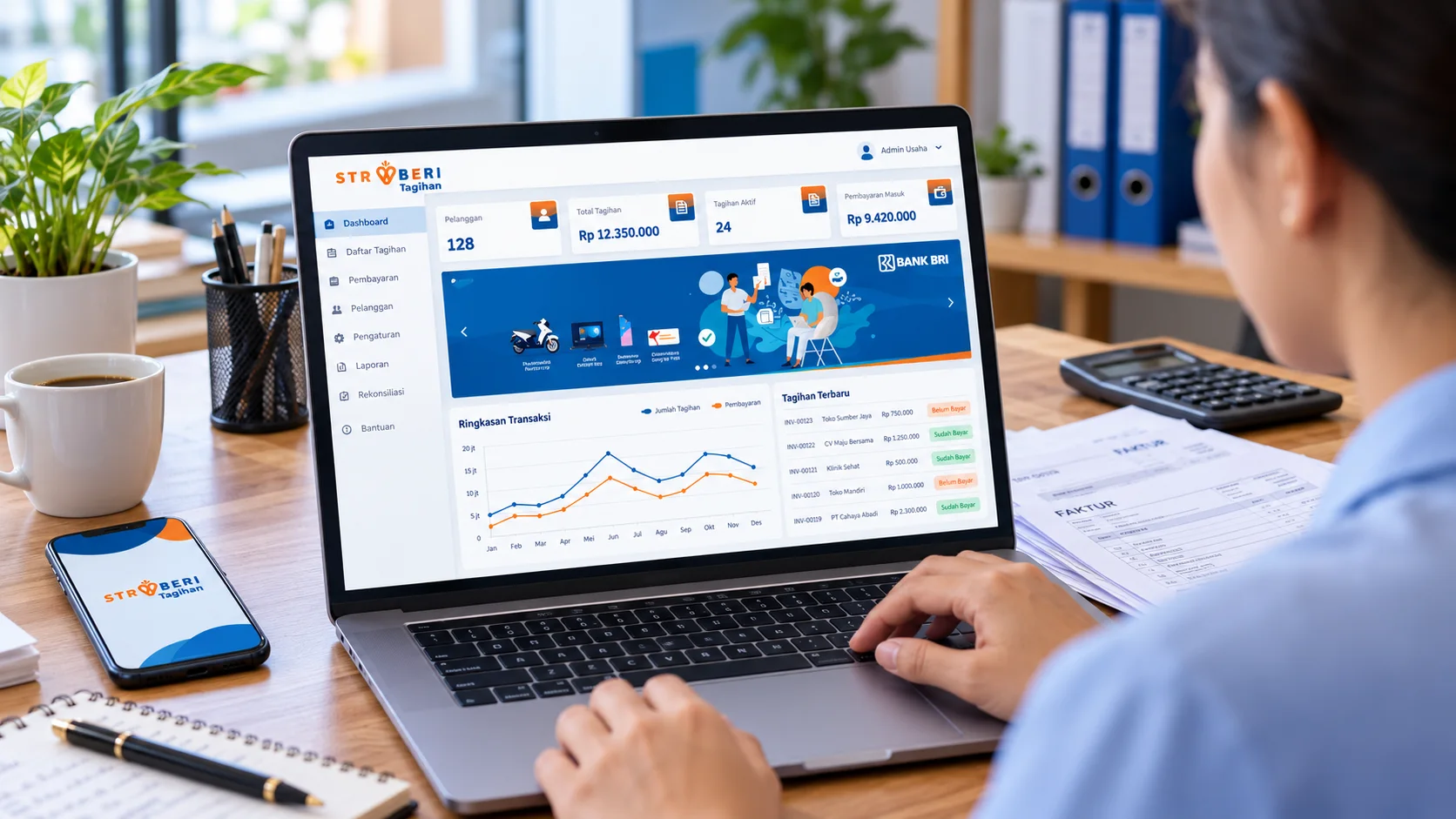
This service allows managers to create billing lists, organize payment information, and monitor transaction statuses through a more structured system.
Andri, a BRI customer who uses the Stroberi ID service, believes that digital recording systems can assist business managers who previously relied on manual payment recaps.
"Through the Stroberi Tagihan service, managers can create and manage bills digitally. The monitoring feature via the dashboard also helps users track payment progress without having to rely entirely on manual recaps," said Andri.
According to him, the ease of monitoring bills is essential when a business has many customers with varying payment schedules.
With digital recording, payment information can be checked through a single system, eliminating the need for managers to constantly open physical ledgers or manually recalculate transactions.
Monitoring Customer Payments and Bills
One of the features available in Stroberi Tagihan is the payment monitoring dashboard. Through this feature, managers can view transaction progress and identify bills that require follow-up.
The service also provides a billing notification feature that helps deliver payment information to customers.
Additionally, Stroberi Tagihan supports payment methods via BRI Virtual Account (BRIVA). This facility allows payments to be made using a virtual account number in accordance with applicable service mechanisms.
Information regarding these features is also listed in the Stroberi Tagihan application description published by BRI on the Google Play Store.
For business managers handling routine payments, such a system can be an alternative to simplify administrative tasks.
Examples include managing rent payments, membership dues, or periodic services involving many customers. Every transaction requires recording to avoid errors in determining payment status.
Andri noted that storing information digitally can assist managers when conducting audits or reconciling transaction data.
"Payment information organized digitally can assist the verification process and reduce reliance on separate records," he said.
Better Organized Administration, Data Security Remains Crucial
The use of digital services does not automatically eliminate the manager's responsibility to ensure the accuracy of financial data.
Every billing detail, from customer identity and payment amounts to deadlines, must still be entered meticulously.
Errors in initial recording can affect the information displayed in the system. Therefore, verification and reconciliation of transactions remain necessary even when administrative processes use digital technology.
On the other hand, the security of customer information is also a significant concern. Payment data and account access must be protected to prevent misuse by unauthorized parties.
"The use of digital services must also be accompanied by attention to customer data security. Managers must ensure that account access is used responsibly and maintain the confidentiality of transaction information," said Andri.
Business managers also need to limit system access to authorized personnel and ensure that payment information is checked periodically.
These steps are necessary to maintain administrative order while reducing the risk of errors in transaction management.
Digitalization as an Option for Business Owners
Changes in public transaction patterns are encouraging business owners to adjust how they manage financial administration.
While payments were previously recorded mostly in books or separate spreadsheets, various digital services are now available to assist in recording and monitoring transactions.
However, the needs of every business differ. Managers handling only a few transactions might still use simple recording methods, whereas businesses with many customers require a more structured system.
In this context, BRI's Stroberi Tagihan is an alternative that can be considered to support payment administration management.
The choice of service should still consider operational needs, the number of customers, billing patterns, and the compatibility of features with existing financial systems.
Andri hopes that the use of technology will help business managers work more efficiently without compromising accuracy in transaction recording.
"By utilizing technology appropriately, business owners have the opportunity to manage administration more systematically. Meanwhile, periodic evaluation remains necessary to ensure that billing and payment records proceed according to procedure," he concluded.
Ultimately, administrative digitalization is not just about replacing record books with an application. This change also demands discipline in managing data so that every transaction can be monitored, verified, and accounted for properly.






Comments 0
Write a Comment Share your response