

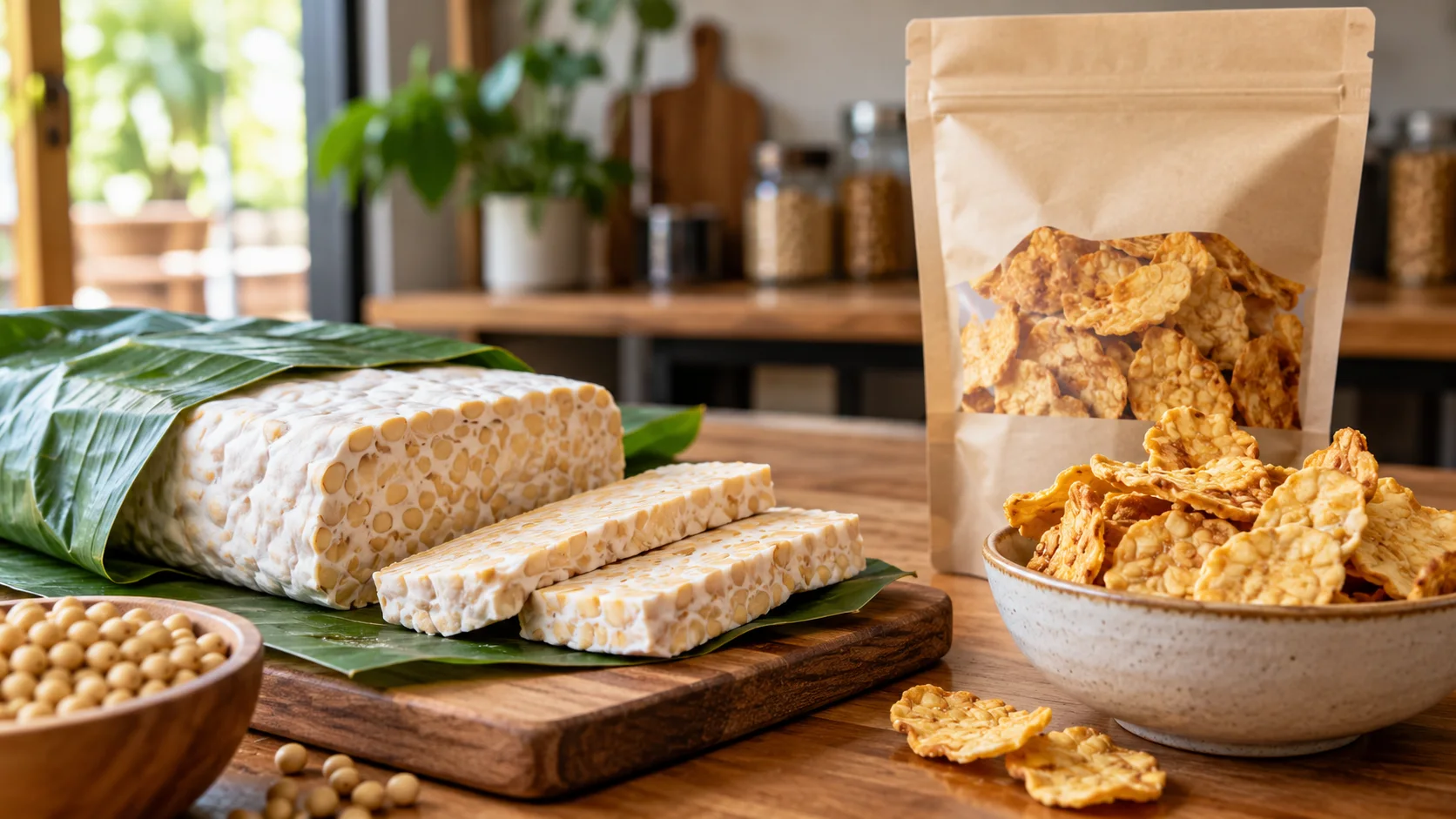
JurnalPost.com - Tempeh is a traditional Indonesian food deeply ingrained in the daily lives of the community. Beyond its well-known nutritional benefits, it is easily accessible and relatively affordable. However, despite its popularity, tempeh faces challenges in increasing its market value and competitiveness in the modern era.
Tempeh is produced through a fermentation process, which involves the breakdown of organic compounds with the help of microorganisms such as bacteria, yeast, and mold. In tempeh production, soybean fermentation involves the mold Rhizopus , which plays a role in altering the characteristics of the soybeans to produce a food with a distinct flavor and texture.
Based on data from the Central Statistics Agency (BPS) cited in this discussion, tempeh consumption reaches approximately 0.136 kilograms per capita per week, or equivalent to roughly 7 kilograms per capita per year. These figures demonstrate that tempeh holds a unique place in the consumption patterns of the Indonesian people.
Unfortunately, this high level of consumption is not necessarily followed by an increase in the product's economic value. In many traditional markets, a single block of tempeh can be sold for around Rp4,000 to Rp6,000, depending on the size and location of the sale.
Challenges for Tempeh as a Traditional Product
In terms of nutrition, soybean fermentation with the help of the mold Rhizopus helps break down proteins into simpler compounds, including peptides and amino acids, thereby supporting the digestive process.
Despite its various advantages, fresh tempeh has a relatively short shelf life. Its high water content makes its quality prone to rapid decline if not stored properly. This condition poses a challenge for producers, as the product must be marketed quickly before its quality degrades.
Beyond storage issues, the image of tempeh as a simple food also influences how the public perceives its value. Tempeh is more often consumed as a daily side dish, while its development into a snack is still largely dominated by processed items like fried tempeh chips.
In fact, with the right innovation, tempeh has the potential to be developed into a modern food product with higher economic value.
Freeze-Dried Healthy Snack Innovation as a Solution
One innovation that can be applied is processing tempeh into a Freeze-Dried Healthy Snack, which is a tempeh-based snack processed using freeze-drying technology or freeze-drying.
This technology combines traditional fermentation with modern processing methods. Fresh tempeh is first cut into thin slices, then frozen at a very low temperature, for example, around minus 40 degrees Celsius, depending on the process requirements and equipment characteristics.
Next, the water content in the tempeh is reduced through a sublimation process under vacuum conditions. Through this method, ice turns directly into vapor without passing through the liquid phase.
The expected result is a crispy tempeh snack with low water content, without the need for frying. The reduction in water content also has the potential to extend shelf life compared to fresh tempeh, although its durability still needs to be verified through product testing.
To increase its appeal, this snack can be developed with various flavor options, such as seaweed, truffle, or barbecue. Such variety is expected to reach consumers who enjoy practical snacks with modern flavor profiles.
Packaging and Marketing Strategies to Increase Market Value
Product innovation should not focus solely on the processing stage. Packaging design and marketing strategies are also crucial factors in building market value.
The Freeze-Dried Healthy Snack product can be packaged using an aluminum foil pouch with a simple, modern, and attractive design. This packaging can be designed to help protect the product from moisture while providing a premium feel.
Information regarding protein content, ingredients, and product benefits can also be displayed on the packaging based on test results and applicable food labeling regulations.
In terms of marketing, this product does not have to rely on traditional markets. Modern tempeh snacks have the potential to be marketed through supermarkets, cafes, health food stores, and various e-commerce platforms.
Furthermore, if quality, food safety, and distribution requirements are met, the product has the potential to be introduced to the international market.
Through processing and packaging innovation, tempeh, which is usually sold at a relatively low price, has the potential to be developed into a premium snack with a target price range of around Rp35,000 to Rp75,000 per pack, depending on size, production costs, and market segmentation.
This range is an estimate of potential selling price that still needs to be tested through cost analysis and consumer response.
Modernizing Tempeh Without Losing Local Identity
In my view, innovation is a crucial step to ensure tempeh becomes more recognized and sought after, especially by the younger generation who have many modern snack options.
If tempeh is only marketed in the same form over time, the opportunity to increase its appeal and economic value may become more limited.
Through the use of technology and attractive packaging design, tempeh can appear as a modern snack without losing its identity as a traditional Indonesian food.
Modernization does not mean abandoning the fermentation process that has become part of the community's culinary heritage. Instead, technology can be used to develop these fermented products into items that are more practical and competitive.
The concept of "From Fermentation and Innovation to Modernization" shows that one of the weaknesses of fresh tempeh, namely its relatively short shelf life, can be an opportunity for product development through freeze-drying technology.
I believe that innovation is not just an option, but a necessity in facing changing consumer tastes and food industry competition.
If developed with careful planning, this innovation can open new business opportunities, increase the added value of fermented soybeans, and provide economic benefits for local tempeh artisans.
Ultimately, tempeh does not have to lose its simplicity and traditional identity to become a high-value product. With a blend of fermentation, technological innovation, and the right marketing strategy, this iconic Indonesian food has the potential to become a modern snack capable of competing in both national and international markets.









Comments 0
Write a Comment Share your response