

JurnalPost.com - Food safety (food safety) is a crucial aspect of maintaining public health. Safe food is not only determined by the cleanliness of ingredients or the absence of harmful microorganisms, but also by the packaging used during storage, processing, and serving to consumers.
Food packaging plays a vital role in protecting food from contamination. However, using inappropriate packaging materials can actually pose health risks, especially if food comes into direct contact with materials not intended for food use.
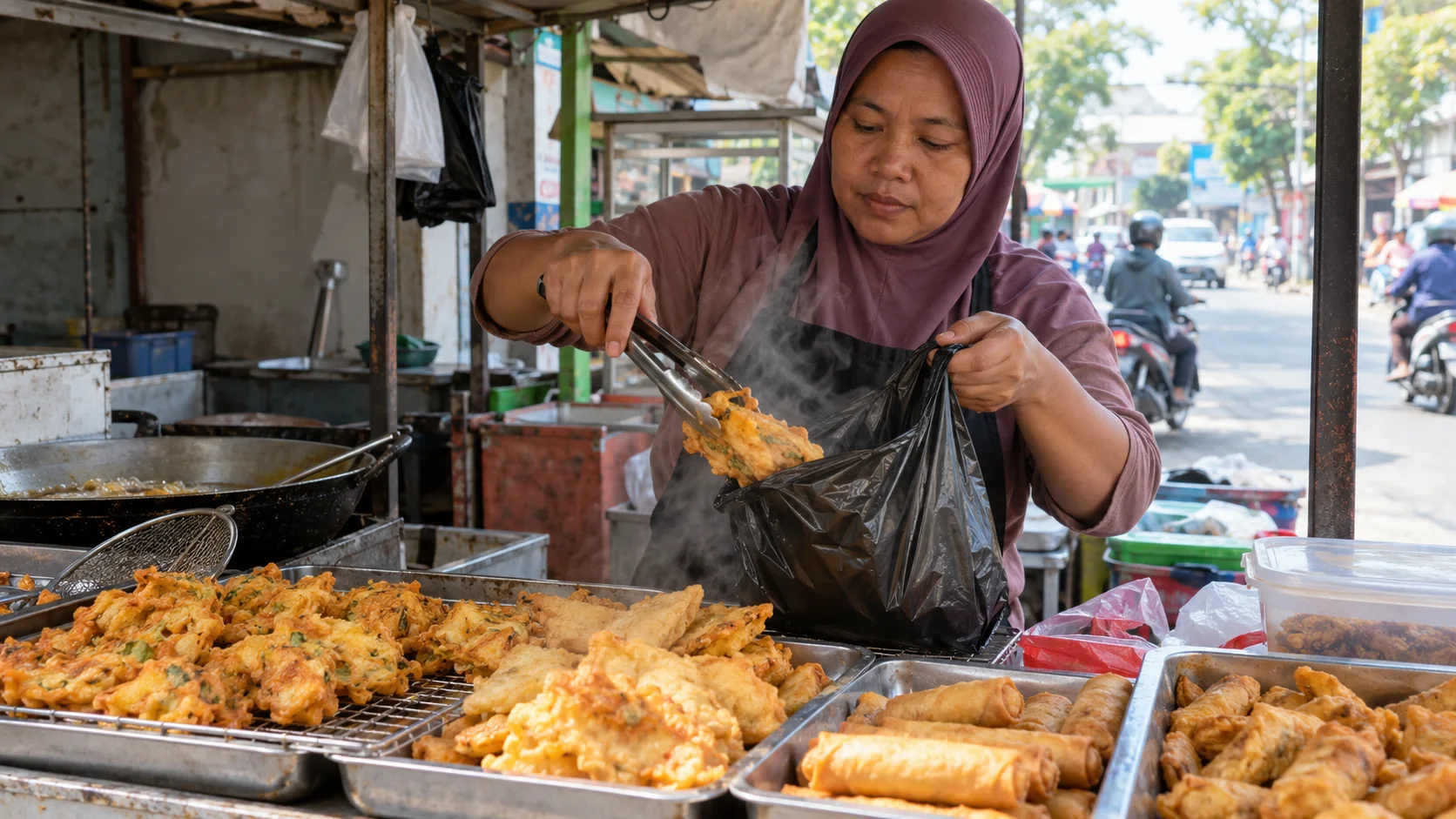
One practice still commonly encountered in daily life is the use of black plastic bags to wrap food. In several regions, including Bali, this type of plastic bag is still used by some traditional market vendors, street food sellers, and small culinary business owners.
Foods such as freshly fried snacks, hot meatball soup, and various street foods are sometimes placed directly into plastic bags without any protective layer. Yet, the use of recycled plastic bags as wrappers for ready-to-eat food has become a focus of food safety oversight.
The Dangers of Using Black Plastic Bags for Food Safety
The Indonesian Food and Drug Authority (BPOM RI) has issued Public Warning Number KH.00.02.1.55.2890 regarding the use of plastic bags.
In the warning, BPOM explains that most plastic bags, especially black ones, are recycled products with a history of raw material usage that is not always traceable.
These recycled materials potentially originate from various types of waste, including used chemical containers, pesticides, and other sources that are unsuitable for direct contact with food.
This condition raises concerns about the potential presence of unwanted chemical substances in the packaging material. Therefore, BPOM urges the public not to use recycled plastic bags to hold ready-to-eat food directly.
From a food technology perspective, one risk of using inappropriate packaging is the migration of chemical substances from the packaging material into the food.
Migration is the process of transferring certain components from the packaging to the food in contact with it. The extent of this transfer is influenced by the type of packaging material, food temperature, fat content, and the duration of contact.
Hot or oily foods require special attention because these conditions can affect the transfer of substances from the packaging material. Nevertheless, the level of health risk still depends on the type of substance, the amount of exposure, and the characteristics of the packaging used.
This issue demonstrates that the selection of packaging should not only consider price and convenience but must also account for its suitability for the type of food.
Economic Factors and Lack of Vendor Awareness
The use of black plastic bags among local culinary vendors cannot be separated from economic considerations.
For some micro-entrepreneurs, packaging costs are an expense component that needs to be minimized to keep food prices affordable. Plastic bags are considered practical, easy to obtain, and relatively cheap.
Furthermore, limited information regarding food packaging safety may leave some vendors unaware of the risks of using plastic that is unsuitable for food.
Long-standing habits also present a challenge. The use of plastic bags is often considered normal because it has become part of daily buying and selling activities.
Therefore, efforts to reduce the use of black plastic bags cannot be achieved through bans or warnings alone. An educational approach that considers the economic capabilities and business conditions of small vendors is required.
Safer and More Affordable Packaging Alternatives
One preventive step that can be implemented is replacing black plastic bags with packaging specifically intended for food.
Vendors can choose packaging made of High-Density Polyethylene (HDPE), Low-Density Polyethylene (LDPE), or Polypropylene (PP) that meets food safety requirements and is suitable for the temperature and characteristics of the food being packaged.
Packaging selection should also consider usage instructions and the food-grade symbol, which is a glass and fork icon indicating that a material is intended for food contact.
In addition to appropriate plastic packaging, the use of oil-resistant food-grade paper (greaseproof paper) can be an alternative for certain types of food.
Vendors can also implement layered packaging methods by using materials safe for direct food contact before placing them into carrying bags.
For example, fried snacks can be wrapped first using food-grade paper or cleaned banana leaves. By doing so, the food does not come into direct contact with the plastic bag used as the outer wrapper.
However, packaging materials must still be adjusted to the temperature and type of food. Not all packaging is safe for hot food, even if it has a similar shape or appearance.
The use of alternative packaging can also be implemented gradually so as not to suddenly increase costs for small vendors.
The Importance of Education and Government Oversight
Addressing the risks of using black plastic bags requires cooperation between the government, business owners, and the public.
Local governments, together with relevant agencies, can improve education regarding food packaging safety through direct outreach to traditional market vendors, micro-entrepreneurs, and street food sellers.
Educational materials should be delivered using simple language and accompanied by examples of safe packaging that is easily found on the market.
In addition to education, oversight of the use and distribution of food packaging needs to be strengthened. This step is important to ensure that materials used as food wrappers meet applicable safety regulations.
Government support can also be realized through business mentoring, providing information on suppliers of compliant packaging, and introducing affordable alternative packaging.
On the other hand, consumers play a role in driving behavioral change. The public can start paying attention to the packaging of the food they buy and avoid using recycled plastic bags as containers that come into direct contact with food.
Building Food Safety Awareness
The use of black plastic bags as food wrappers is an issue that requires attention because it relates to food safety and consumer health protection.
Efforts to address this do not rely solely on changing packaging types, but also require changes in habits, increased knowledge, and continuous oversight.
In my opinion, the most appropriate approach is to provide vendors with an understanding of the risks of using inappropriate packaging, while simultaneously providing safe, practical, and affordable alternatives.
With cooperation between the government, business owners, and consumers, the use of safer food packaging is expected to become a new habit in local culinary trade activities.
Ultimately, food safety is not just the responsibility of food producers, but a shared responsibility. Choosing the right packaging is a simple but important step in maintaining food quality and protecting public health.






Comments 0
Write a Comment Share your response