


Jakarta, JurnalPost.com – The Ministry of Health (Kemenkes) is evaluating and reforming the Indonesian Doctor Internship Program (PIDI) following the deaths of six intern doctors between February and July 2026.
The evaluation has also led to the temporary suspension of thousands of interns to undergo physical and mental health examinations.
The internship program serves as a stage for skill mastery and independence for newly graduated doctors, while aligning educational competencies with real-world clinical practice. The program has been running in Indonesia since 2015.
Maximum Workweek of 40 Hours
In its evaluation, the Ministry of Health emphasized the importance of creating a safe educational and work environment for doctors. The government also highlighted issues regarding bullying, coercion, extortion, and workloads that do not comply with regulations within medical education environments.
One of the primary changes is limiting the working hours of intern doctors to a maximum of 40 hours per week. These hours cannot be condensed or accumulated and must be distributed proportionally throughout the week.
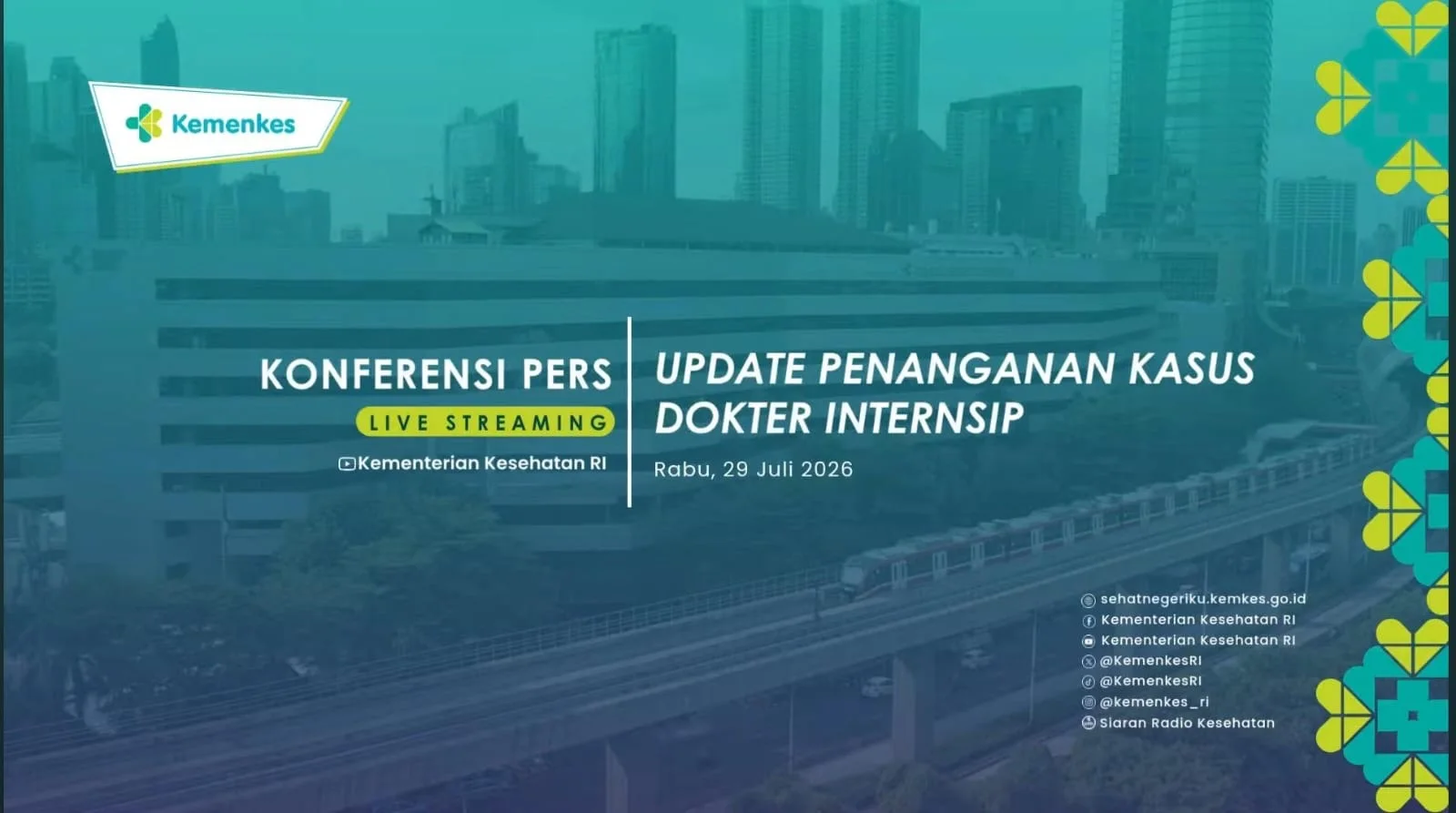
The Ministry of Health also stressed that intern doctors are not replacements for permanent staff at healthcare facilities. Throughout the program, they remain under the supervision of a mentor doctor.
Regarding welfare, intern remuneration consists of a living allowance from the Ministry of Health ranging from IDR 3 million to IDR 6 million per month, supplemented by special allowances from local governments and service fees from the hospitals where participants are assigned.
Leave entitlements for participants have also changed. While previously leave was limited to four days, the new policy grants up to 10 days of leave without the requirement to make up for the missed days. However, participants are still required to meet the competencies necessary to complete the program.
Investigation Results of Six Death Cases
The Ministry of Health conducted medical audits and investigations into the six deaths of intern doctors that occurred between February and July 2026.
The government stated it would improve program governance and strengthen protection mechanisms for intern doctors, including against the risk of infectious diseases.
Based on the investigation results, conditions identified in the six cases included dengue hemorrhagic fever (DHF), measles, exhaustion, lung infections, comorbidities, and mental health issues.
In one case, there was also a suspected violation of working hour regulations or overtime.
The Ministry of Health noted that five of the six deaths were related to illnesses, while one case is suspected to be linked to governance issues involving working hours exceeding the limit.
“Once again, it was due to illness—the medical conditions suffered by almost all of the six. Indeed, there is one related to governance processes. There is one where overtime was found, meaning more than 40 hours,” said the Director General of Health Human Resources at the Ministry of Health, Yuli Farianti.
The Ministry of Health emphasized that the implementation of the internship program continues to adhere to applicable laws and regulations.
10,564 Intern Doctors Undergo Health Screening
As part of the evaluation, 10,564 intern doctors have been temporarily relieved of their duties to undergo a series of health examinations.
Mental health screenings were scheduled for August 3–4, 2026, followed by comprehensive health examinations from August 5–7, 2026, which include physical exams, complete laboratory tests, and chest X-rays.
The results are scheduled to be released on August 12, 2026, and will be used as a consideration by the Internship Committee.
These examinations aim to ensure that participants are in adequate health to carry out their duties and responsibilities during the internship period optimally, safely, and professionally.
Stricter Program Governance
In addition to limiting working hours, the Ministry of Health is implementing several improvements to the governance of the Indonesian Doctor Internship Program.
These changes include regulating shift schedules, leave provisions, improving welfare, strengthening the roles of mentors and the Internship Committee, establishing complaint channels, defining dispensation criteria, enforcing sanctions for non-compliance, and restructuring the placement quota proportions.
The new policy is aimed at strengthening protections for intern doctors while ensuring that the education and healthcare service processes are conducted more safely and professionally.
These governance improvements are part of the Ministry of Health's efforts to refine the implementation of the Indonesian Doctor Internship Program following a series of cases that have drawn public attention.
Author: Naomi Cindy Novelina
Faculty of Medicine, Universitas Airlangga







Comments 0
Write a Comment Share your response