

SIDOARJO, JurnalPost.com – The evolution of digital technology has brought significant changes to the dissemination of disaster-related information. While social media allows the public to access information rapidly, it also presents challenges regarding accuracy, message clarity, and the potential spread of misinformation.
In disaster situations, inaccurate information can lead to misunderstandings and negatively impact public response. Conversely, accurate and easily understood information helps the public recognize risks, increase vigilance, and take necessary safety measures.
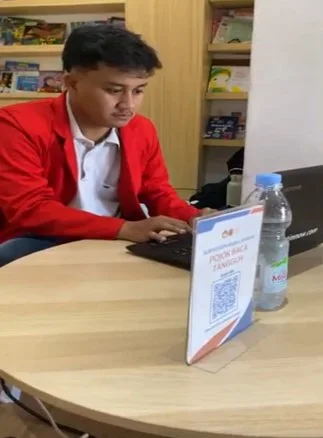
Understanding the importance of disaster communication was a valuable experience for Yohanes Putra Valentino, a Communication Science student at the University of 17 Agustus 1945 (Untag) Surabaya, during his internship with the Public Relations Division of the East Java Regional Disaster Management Agency (BPBD).
Through this internship, Yohanes had the opportunity to be directly involved in documentation, content management, and the publication of information related to public services and disaster management.
Learning from Disaster Relief Documentation
One particularly impactful experience was Yohanes's involvement in documenting the deployment of logistical aid for earthquake victims in East Nusa Tenggara (NTT) on August 20, 2026.
During this activity, he gained an understanding that documentation serves a broader purpose than simply taking photos or recording videos.
Documentation is a vital component in conveying information to the public, particularly regarding the steps taken by government agencies to respond to disaster situations.
Through well-crafted photos, videos, and publications, the public can stay informed about the aid deployment process, disaster response efforts, and the support provided to affected communities.
This experience also demonstrated that public relations work requires a keen sense of identifying information that holds significant value for the public.
The Importance of Disaster Education for the Younger Generation
In addition to documenting aid distribution, Yohanes also had the opportunity to document a disaster prevention seminar held at BPBD East Java on August 27, 2026.
He was also involved in documenting student visits aimed at introducing disaster awareness to the younger generation.
From these various activities, Yohanes realized that disaster education should be conducted continuously and reach all age groups, including children and students.
Conveying information using simple language, engaging illustrations, and approaches tailored to the audience's characteristics can help the public understand the importance of disaster preparedness.
For the younger generation, such education can serve as a first step toward building awareness of potential disasters in their surrounding environment.
Social Media as a Tool for Disaster Communication
During his internship, Yohanes not only participated in field documentation but also gained experience in editing social media designs and creating recap videos of BPBD East Java staff activities.
These activities gave him insight into the digital content production process, from selecting visual materials to crafting messages for the public.
He realized that effective publication is not determined solely by attractive visuals. The information conveyed must also have a clear purpose, be relevant to public needs, and avoid causing misinterpretation.
In his view, social media has great potential as a tool for disaster education. Various content formats, such as infographics, short educational videos, and safety guides, can be used to deliver information more effectively.
Content regarding steps to take during an earthquake, flood risk reduction efforts, and emergency preparedness are examples of information that can be developed through digital platforms.
However, the use of social media must be accompanied by a verification process before publication.
The speed of message delivery should not compromise data accuracy, especially when the information concerns public safety.
Information Accuracy as a Public Relations Responsibility
The internship at BPBD East Java also provided Yohanes with new insights into the responsibilities of a public relations practitioner.
In disaster communication, public relations is not only tasked with documenting and publishing agency activities but also plays a role in ensuring the public receives trustworthy information.
Every piece of information to be released must undergo a verification process and coordination with relevant parties to ensure it aligns with the actual situation.
This becomes increasingly critical during a disaster, as the public requires information that is both rapid and reliable enough to serve as a basis for decision-making.
Misinformation in an emergency can lead to confusion. Therefore, precision in drafting public communication messages is a crucial aspect that must be prioritized.
Internship Experience as Preparation for the Professional World
For Yohanes, the internship at the BPBD East Java Public Relations Division was not just an opportunity to experience a professional work environment, but also a means to apply the communication theories learned during his studies.
The various tasks he undertook provided experience in the importance of precision, creativity, the ability to convey messages, and the responsibility of managing public information.
He also gained a perspective on how communication theory can be applied in real-world activities that provide direct benefits to the community.
This experience further strengthened his view that communication plays a strategic role in supporting disaster risk reduction efforts.
Amidst technological advancements and the increasing use of social media, agencies involved in disaster management are required to provide public communication that is informative, accessible, and accountable.
Ultimately, the success of disaster communication is not measured by the volume of content published or the reach of social media, but by the extent to which that information is understood and utilized by the public.
Through his internship at BPBD East Java, Yohanes realized that every piece of documentation and publication carries the responsibility to provide accurate, meaningful, and useful information in building a more aware and disaster-resilient society.






Comments 0
Write a Comment Share your response