


SUKABUMI, JurnalPost.com — The Indonesian Red Cross (PMI) is strengthening the capacity of volunteers and stakeholders to anticipate hydrometeorological disasters by improving their understanding of climate data and early warning systems.
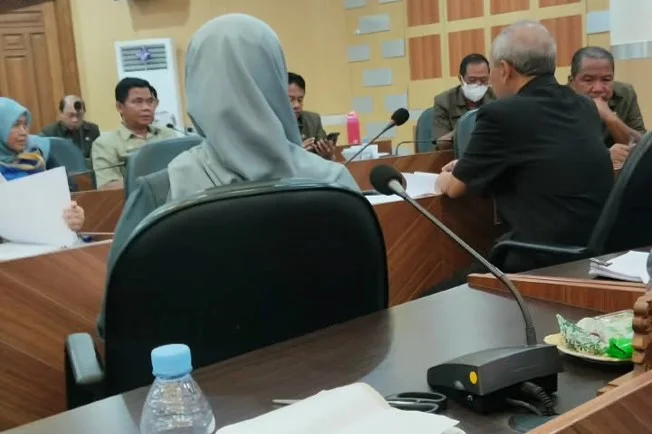
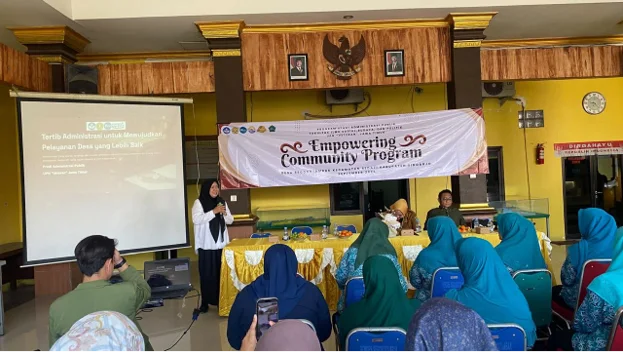
This effort was carried out through a two-day training session on Climate Data Analysis and Early Warning System (EWS), organized by the PMI Sukabumi City chapter as part of the Open River Cam Pilot Research, with support from the American Red Cross (AmCross).
The training focused on enhancing participants' ability to interpret climate information, identify potential disaster risks, and translate monitoring data into preparedness measures and early actions.
Participants included representatives from various levels of the PMI network, ranging from the Sukabumi City chapter, the West Java Provincial chapter, and the National Headquarters, to the American Red Cross.
The activity also involved representatives from the Regional Disaster Management Agency (BPBD), the Water Resources Management office, the Water Resources Division of the Public Works and Spatial Planning Agency (DPUTR), and teachers from schools equipped with rainfall monitoring devices.
The involvement of these diverse parties highlights the importance of collaboration between humanitarian organizations, government agencies, water resource managers, educational institutions, and the community in building an effective early warning system.
Understanding Hydrometeorological Disaster Risks
The training featured two experts from IPB University: Prof. Dr. Muh. Taufik, S.Si., M.Si., a Professor of Hydrology at the Department of Geophysics and Meteorology, Faculty of Mathematics and Natural Sciences, and Dr. I Putu Santikayasa, a researcher at the Department of Geophysics and Meteorology and Director of the Center for Climate Risk and Opportunity Management in Southeast Asia and Pacific (CCROM-SEAP).
During the training, participants studied the characteristics of various hydrometeorological disasters, such as floods, flash floods, landslides, droughts, forest and land fires, and extreme weather.
Prof. Muh. Taufik explained that each type of disaster has distinct characteristics and triggering factors. Understanding these differences is considered essential so that preparedness measures can be tailored to the specific risks faced by the community.

High cumulative rainfall over a certain period, for example, can increase flood risk, while high-intensity rain over a short period can increase surface runoff and trigger flash floods.
Prolonged rainfall can also increase soil saturation levels, thereby increasing the potential for landslides.
“Understanding the characteristics of disasters is important so that we do not just respond when a disaster occurs, but are also able to recognize potential threats early on,” said Prof. Muh. Taufik.
He also introduced the concept of bankfull flow, which is the condition when the water level approaches the maximum capacity of a river channel.
When river discharge exceeds this capacity, water can overflow into the surrounding floodplain.
According to him, rainfall monitoring cannot be separated from river conditions and the characteristics of the surrounding watershed.

“We don't just need to look at the rainfall, but also how that rain affects the condition of the river and the surrounding area,” he said.
Participants also studied the characteristics of droughts, which can emerge due to long-term rainfall deficits and subsequently impact water availability for the community.
A similar approach is needed to assess the risks of forest and land fires as well as extreme weather. Atmospheric conditions, temperature, humidity, rainfall, and the availability of flammable materials can interact to increase disaster potential.
Turning Climate Data into Early Warnings
Dr. I Putu Santikayasa provided material on the application of early warning systems based on rainfall information.
He emphasized that collecting climate data alone is not enough. The data must be processed and translated into information that can be used to support decision-making.
“Climate data needs to be translated into information that can support decision-making. This is an important part of an effective early warning system,” said Santikayasa.
According to him, an early warning system does not just depend on the existence of monitoring equipment. The system encompasses a series of interconnected processes, ranging from monitoring and data analysis to warning dissemination, risk communication, and early action.
The rainfall monitoring equipment installed in several schools in Sukabumi is expected to become part of a local observation network to provide additional information on rainfall and weather conditions.
The involvement of teachers in the activity is also expected to increase understanding regarding the importance of maintaining and utilizing monitoring devices.
Data generated from this equipment can later serve as additional information for relevant agencies and parties in assessing the likelihood of floods, landslides, or other hydrometeorological disasters.
Connecting Scientific Data with the Community
The program also emphasized the importance of connecting scientific information with real-world conditions in the field.

PMI volunteers play a role in helping to translate technical information regarding climate and disaster risks into messages that are easier for the community to understand and act upon.
On the other hand, the government, water resource managers, schools, and other stakeholders can contribute through monitoring, analysis, coordination, and decision-making activities.
The collaboration between PMI, the American Red Cross, IPB University, government agencies, and educational institutions is expected to encourage a more data-driven approach to disaster preparedness.
Rainfall information from various monitoring points can be analyzed and shared with relevant parties as additional material to improve preparedness when the risk of floods, landslides, droughts, or other disasters begins to rise.
Hydrometeorological disasters remain a significant threat faced by many regions, making the ability to understand and utilize climate information increasingly vital.
Through this training, PMI is striving to increase the capacity of volunteers and partners in using climate information for risk monitoring, the development of preparedness plans, the dissemination of early warnings, and decision-making at the community level.
Ultimately, an early warning system should not stop at the data collection process.
Rainfall data must be processed into information, information must be translated into warnings, and those warnings must be able to drive early action before a potential hazard develops into a disaster.






Comments 0
Write a Comment Share your response