


Sleman, JurnalPost.com — Students from the Independent Community Service Program (KKN) 29921 at Yogyakarta State University (UNY), in collaboration with residents of Caturharjo Hamlet, planted 50 productive tree seedlings on the Women Farmers Group (KWT) land on Sunday, August 9, 2026.
The activity took place in Caturharjo Hamlet, Tamanmartani Village, Kalasan District, Sleman Regency, Special Region of Yogyakarta. The program was designed to optimize the use of KWT land while supporting long-term land productivity and food security.
The 50 seedlings planted consisted of 25 soursop trees and 25 jackfruit trees. The seedlings were obtained through a collaboration between the UNY KKN students, the Yogyakarta Environment and Forestry Agency (DLHK), and the Yogyakarta Forest Seed Center.
Before the planting process, the KKN students were involved in several preparatory stages, ranging from handling administrative tasks and correspondence to communicating with relevant agencies and securing seedling assistance for the KWT land.
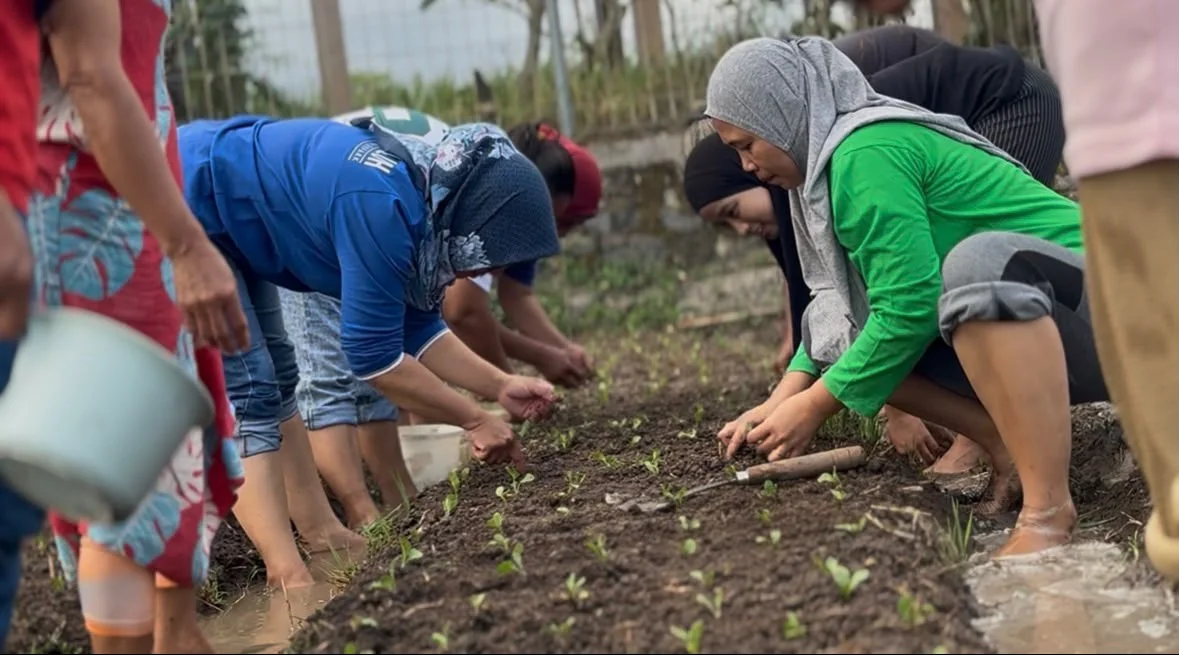
Once the administrative process was complete, the students and residents cleared the area designated for planting. The activity was carried out through communal work (gotong royong) by clearing the land, preparing planting spots, and planting the available seedlings.
The head of the Caturharjo Hamlet Women Farmers Group, Winarti, expressed her appreciation for the seedling assistance and the students' involvement in the activity.
“Thank you to the Environment Agency for providing the soursop and jackfruit tree seedlings that we can plant at the Caturharjo Hamlet KWT in collaboration with the students from UNY,” said Winarti.
The tree planting was not only aimed at greening the area but also as a form of utilizing productive land whose yields can be used by the community in the future.
Jackfruit trees were chosen because they produce fruit that can serve as a food source for residents. Meanwhile, soursop plants are also valuable, as their fruit and leaves have long been used by the community as food and herbal medicine.
Through the planting of productive crops, it is hoped that the KWT land will not only function as a cultivation space but also develop into a food source that provides direct benefits to residents.
This program is also part of an effort to encourage the use of land that was previously underutilized. With sustainable management and care, the planted trees are expected to grow and bear fruit in the coming years.
The UNY Independent KKN 29921 students hope that the land management will continue after the KKN period ends. Regular maintenance is a crucial part of ensuring that the soursop and jackfruit trees grow well.
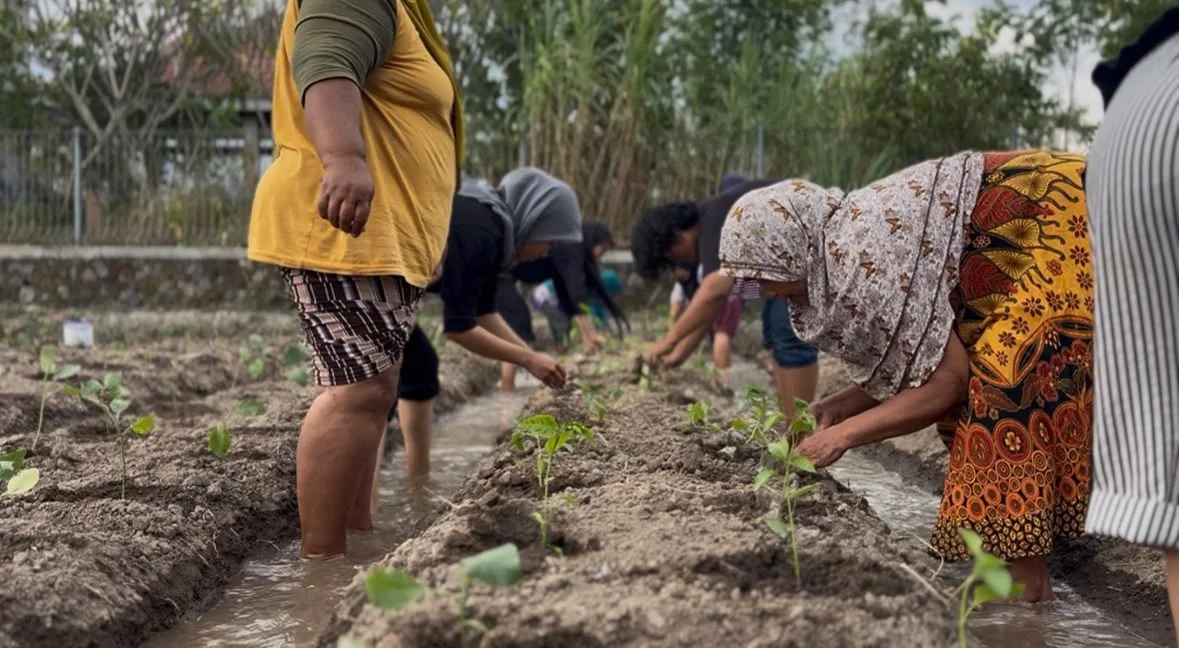
The sustainability of the program also depends on the involvement of KWT members and the surrounding community. Through joint management, the land can be utilized as a productive space that supports food needs while improving the hamlet's environmental conditions.
Utilizing land for productive crops is considered a simple step toward strengthening food security at the community level. The harvest can later be used for household consumption or developed into products with economic value.
In addition to food benefits, the presence of the trees is expected to help create a greener and more beautiful environment.
The collaboration between students, the community, and government agencies in this activity demonstrates that land optimization does not always require large-scale programs. Utilizing available space with productive plants can be a long-term investment if accompanied by consistent care and management.
For the residents of Caturharjo, the 50 seedlings planted are expected to be more than just a ceremonial activity during the KKN period; they are intended to be part of the KWT land development that provides food, environmental, and economic benefits to the community for years to come.
🔗 Full documentation: KWT Land Optimization
📷 Activity video: Instagram - Video KWT Land Optimization Work Program





Comments 0
Write a Comment Share your response